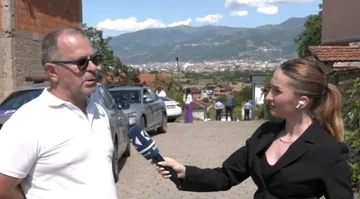
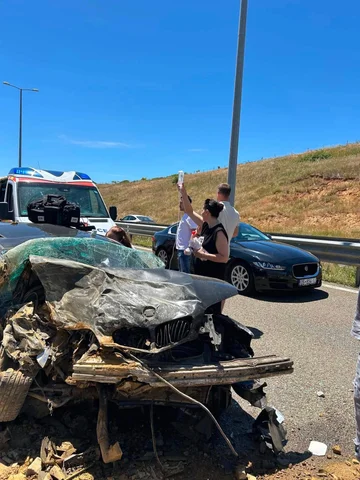
The doctor for the 27-year-old knife attack in Prizren: We couldn't save him. He had chest injuries.
 2 minutes ago
 (3 years ago)
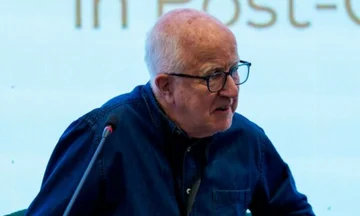
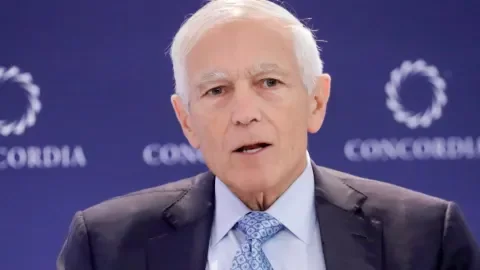
Former High Commander of NATO, General Wesley Clark, who led the NATO bombing campaign against Serb forces in 1999, says the incident in northern Kosovo poses a real problem for stability in the Balkans. Clark said NATO must strengthen its capabilities for being more efficient everywhere in Kosovo, while [...]
Former High Commander of NATO, General Wesley Clark, who led the NATO bombing campaign against Serb forces in 1999, says the incident in northern Kosovo poses a real problem for stability in the Balkans.
Clark said NATO should strengthen its capabilities for being more efficient everywhere in Kosovo, while saying the weapons were likely coming from Serbia, and perhaps this was a co-ordinated action or at least quietly approved by Serbian special forces.
“First of all, it is a tragedy for all sides and is a real problem for stability in the Balkans. It should be a concern for the European Union and NATO, as details of the incident surface. What is most disturbing to me is that after the incident, there was a large collection of weapons in the Serbian monastery. This has happened before.
We know from previous experience in the Balkans in the 1990s, and since then, Serbian monasteries have been home to Serbian nationalism. And that does not rule out their use as arsenals. So this is the most disturbing thing.
I hope KFOR insists that these monasteries be inspected and arsenals confiscated because there is no room for this amid efforts to reach an autonomy agreement for Kosovo Serb citizens. It is counterproductive and there is no room for violent threats and weapons”, he says in an interview for the Voice of America.
Clark says the weapons likely came from Serbia, and perhaps this has been a co-ordinated action or at least quietly approved by Serbian special forces.
“The weapons likely came from Serbia, and perhaps it has been a co-ordinated action or at least quietly approved by the Serbian Special Forces. We've seen these kinds of actions before, because I remember that during the campaign or at the beginning of the 1999 air campaign in Kosovo, a group of Serb soldiers in civilian clothes kidnapped three American soldiers who were part of the patrol on what is now known as North Macedonia.
They had no military uniforms, but crossed the border and kidnapped three American soldiers from the patrol car, beat them and sent them to Belgrade. So, it remains to be seen who were the attackers in the northern part of Kosovo and linked to the special forces and the Serbian government”, he says.
Clark says KFOR should act strongly against violence in Kosovo, wherever or against the parties that practice violence. That, he says, is why KFOR is there.
“But I would also note that these actions in Kosovo are not incompatible with violence in Ukraine. For Russia, promoting unrest in Kosovo, using Serbia as its agent would be the equivalent of a deep attack on hybrid war. Russia would like to see greater instability in the Balkans -- a distraction for NATO, with the claim that democracy doesn't work.
Excavation of Kosovo's independence would be in Moscow's interest. It is all part of an agenda being followed by at least some elements in Belgrade”, he said.
Clark has also spoken of the honour rendered to the slain assailants in Serbia and the announcement of the day of mourning there. The former American general says those who took part in the attack should be punished and not known as heroes.
I understand when it comes to family members. But as a matter of state policy, no, these people are illegal. They violated the rule of law in Kosovo. And those who attended must be punished and not known as heroes. But I know that in Serbia and this region, the legacy of conflict dating back to more than a century are ethnic clashes, religious clashes, World War I, World War II until Tito's era, trying to suppress Albanian nationalism and the coming of Milosevic to power, everything has been associated with violence, hate, interethnic tensions. And it's time to stop it and move on in the 21st century. It's a tragedy. I'm so sorry about the family of these people killed on both sides. And the Albanian policeman who was killed, Kosovo police were doing the job.
He was supporting the rule of law. Serbs (who undertook the attack) were rebels, terrorists. And they don't deserve any official recognition. But, of course, it's a tragedy for them and their families. And we're sorry for all the loss of lives in the area”, Clark said.
11 minutes ago15 minutes ago
 3 hours ago