10 minutes ago
Swiss newspaper í NZZA: Peace in the Balkans at risk, ambitions for Greater Serbia continue, Dodik is creating parallel armies
Periskopi(3 years ago)
(3 years ago)Peace in the Western Balkans is highly endangered by continuing ambitions to form a Greater Serbia. The key to peace in the Western Balkans lies in the Brcko District. This is Achilles' Serbian <x0ndrembram”, writes the German-language Swiss daily newspaper Neue Zürcher Zeitung. In a scripture entitled” How can the EU prevent [...]
Peace in the Western Balkans is highly endangered by continuing ambitions to form a Greater Serbia. The key to peace in the Western Balkans lies in the Brcko District. This is Achilles' Serbian <x0ndrembram”, writes the German-language Swiss daily newspaper Neue Zürcher Zeitung.
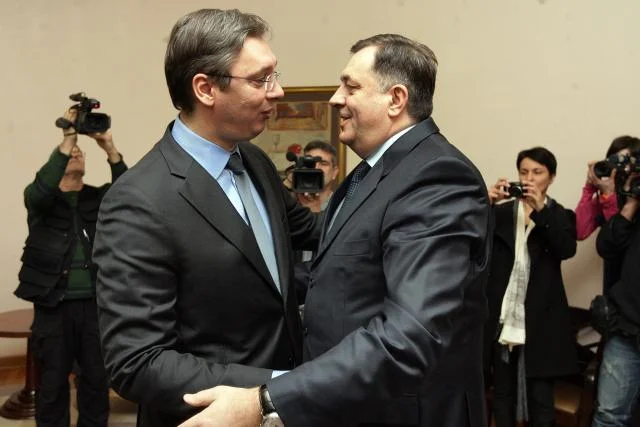
In a scripture entitled” How can the EU prevent Greater Serbia with several hundred” soldiers, author Alexander Rothert writes how Republika Srpska's leader in Bosnia and Herzegovina, Milorad Dodik is trying to create parallel military forces.
Since November 21, 1995, the term Dayton has shown a special kind of diplomacy ʹ all participants were closed until they reached an agreement. That is what the Dayton Peace Accords, Ambassador Richard Holbrooke, wrote in his 1998 book My Mission. Holbrooke's diligent diplomatic efforts, along with NATO bombings on Serbian positions, ended the nearly four-year war in Bosnia and Herzegovina, the NZZ writes.
Rothert has researched events in the former Yugoslavia and worked for the Otto Zur (OSI) Institute, the Eastern European Institute (OEI), as well as for various international missions. As such, he recalls that even today peace in the Western Balkans is at great risk, not just fragile. According to him, this has to do with Serbian President Aleksandar Vuciq's efforts to realise the project to establish Greater Serbia, launched by his predecessor Slobodan Milosevic, the newspaper Express follows.
That plan, writes Rothert, is based on Vladimir Putin's “RussianBot” and is now called “SerbianBota”. His main protagonist is the head of the Serbian Agency for Security and Information (BIA), Aleksandar Vulin.
The seal, which has recently been sanctioned by the US because of its loyalty to Moscow, along with BiH Serb leader Milorad Dodik, have participated in a <x0 security force” in Russia.
Dodik is arming himself
Alexander Rothert describes Dodik as the “Belgrade's main active power in the Western Balkans”. He also mentioned the “Order of Merit” that he gave Putin in recognition.
NZZ quoted the UN Security Council resolution from 2022, which says the “situata in the former Yugoslavia region continues to pose a threat to international peace and security”.
One of the reasons for this are Dodik's efforts to build parallel military forces. If you look at the annual anti-unconstitutional military parade in the case of the establishment of Republika Srpska on January 9th, you can feel that the number of members of those forces is already significant: at the time, up to 2,000 heavily armed paramilitary groups and special police marched, followed by dozens of armoured vehicles and helicopters, the article notes.
The arming of his paramilitary units from Dodik goes parallel to the mass arming of the Serbian armed forces, which Vuciq has been trying for for several years.
Brcko: “
The town in the northern part of Bosnia and Herzegovina is the “membrane of Achilles” of Serbian strategists, estimates Rothert and remembers that the Serbian “Bota” would not be possible without Brcko control.
A powerful international military presence in Brcko could counter any adventure without firing a single bullet. It would be important for units to move to Brcko as soon as possible. In the event of declaring independence, Dodik's units would first take and conquer Brcko, the author of the text at NZZ believes.
One thing must be clear: there has never been peaceful border movement in the Balkans. The military control of the Brcko District by international forces -- whether EUFOR or NATO -- which still has a mission in BiH and is run by an American general -- is a precondition for lasting peace within and around Bosnia in the Western Balkans, he adds.
This is especially true as long as sceziers and politicians working to destroy the state, such as Milorad Dodik, are in power. With Brcko option, the EU can achieve maximum profit with very limited investments, the NZZ's writing concludes.