15 minutes ago
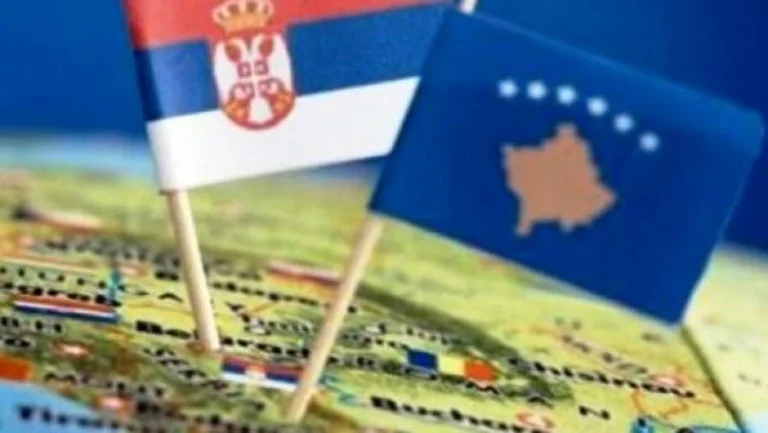
Can Kosovo-Serbia disputes be resolved by 2030?
Periskopi(3 years ago)
(3 years ago)The Kosovo government said it welcomes the vision expressed by European Council President Charles Michel, that the EU will be able to accept new member states by 2030, but that those “should not import conflicts from the past”. In a written statement given to Radio Free Europe, the Government said [...]
In a written statement given to Radio Free Europe, the Government said there is agreement with Serbia on normalising relations and that it is committed to their implementation.
According to her, it belongs to Serbia “to act responsibly”.
On the other hand, Serbia's president, Aleksandar Vuciq, said on Thursday it is Pristina that “will not solve”.
The two countries, under the European Union's mediation, have been in talks on normalising relations since 2011.
Although dozens of agreements have been reached in various fields, the implementation of most of them has stalled.
Kosovo, last December, has applied for EU membership, while Serbia is a candidate country from 2012.
The Possible Solution
Recognitions of European integrations and political processes in Kosovo and in Serbia have different views regarding the two countries' likelihood of normalising relations by the end of this decade.
Demush Shasha, from the Kosovo Institute for European Policy, says that if the resulting history of Kosovo-Serbia dialogue is seen, there is little room for optimism that the dispute between the two countries can be resolved quickly. But, according to him, that is not impossible.
If we want to survive this vision, so by 2030, then, from today or tomorrow, leaders must start to behave radically differently. This will mostly be tested on sensitive political issues, such as dialogue for normalising relations [between Kosovo and Serbia]. Of course, 7 years are more than enough for Kosovo and Serbia to be taught to live as two neighbours, as Slovenia and Croatia, Germany and Austria, etc.”, Shasha tells Radio Free Europe.
Arton Demhay, from the non-governmental organisation “Arise”, says EU and US insistence on continuing dialogue, which has been stalled for months, shows that the West is trying to further the process of normalising Kosovo-Serbia relations.
“ ... then, when the process reaches the end, when Serbia is standing in front of the doors of the European Union, I am convinced that Serbia, by all means, will seek an agreement with Kosovo [for normalisation], to open the door to enter the EU, because otherwise, it is impossible to enter the EU”, Demhaja says.
But, normally, if Kosovo becomes an obstacle to reaching such an agreement, then it will cause trouble [there] in this process [of EU integration]”, he adds.
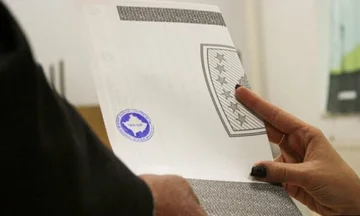
Kosovo Prime Minister Albin Kurti, and Serbia's president, Aleksandar Vuciq, have met for the last time on May 2nd, nine days after extraordinary elections in northern Kosovo, which have been boycotted by the local Serb population. Since then, there have been a number of tensions and crises between the two countries.
On August 30th, the EU reiterated the call for both to create a climate for continuing dialogue.
“
In Serbia, political connoisseurs speak more pessimistic about the possibility that Kosovo and Serbia resolve all disputes by the end of this decade.
Aleksandar Popov, director of the Centre for Regionalism in Novi Sad, says the until-multipular practices in Kosovo- Serbia has indicated that the parties avoid commitments stemming from the agreements reached.
Furthermore, he says, in the past two years, the parties have created situations that do not promise to change access to the normalisation of reports.
The two sides simply do everything contrary to what would bring the situation to normal... [The integration of relations] will depend on whether the same garrisons in Kosovo and Serbia will remain in power. It will also depend on how energetic the West will be in pressure on the parties, so that problems can be solved”, Popov tells Radio Free Europe.
Dusan Janjic, from the Forum for Ethnic Relations in Belgrade, estimates that normalising relations between Kosovo and Serbia will not in particular depend on those two countries alone.
According to him, the European Union itself as a whole has shown inconsistent in its approach to this problem, because five of its countries -- Greece, Spain, Slovakia, Romania and Cyprus -- have not yet recognised Kosovo's independence.
Janjak says, if the European Union would persuade these countries to recognise Kosovo, then the process of resolving Kosovo- Serbia would pave the way.
Be precise. If they [ The EU] are serious in whatever, as well as in setting their priorities, those from the European Commission, first, must deal with those five states. So we accept Kosovo as state and democratic society, according to the principles of 1990? They are called principles for the admission of new states - new democratic states in Europe. Why aren't they doing this?
Despite all, REL's conversationators say that Western Balkan countries' membership in the EU will depend more on the EU's political decision than on meeting the criteria for membership.
It is not the first time since the EU to mention concrete dates for enlargement, but they have not been respected.
For example, the European Commission's Strategy for Future Enlargement, published in 2018, predicted that Serbia and Montenegro could become EU members by 2025.
There are still 18 months to the target date, but the two countries have made little progress in the membership process, while the end of negotiations does not appear.
At what stage of integration are other countries in the region?
Serbia and Montenegro are considered leaders in the EU membership negotiations process.
Montenegro has candidate status since 2010 and has opened negotiations in 2012. Serbia, a candidate from 2012, has opened negotiations in 2014.
Albania and Northern Macedonia have received the green light for opening negotiations in 2022.
Bosnia and Herzegovina has received candidate status in December of last year.