2 minutes ago
Albania, the number of minors involved in criminal acts increases

Periskopi(3 years ago)
(3 years ago)The office of audio-vidio interviewing for minors breaking the law has been opened at the police facilities in Shkodra. Psychologist Altin Nica says it is a innovation that basically preserves the child's psychological well-being and avoids questioning by prosecution or court, thus accelerating legal procedures against minors whose crimes [...]
The office of audio-vidio interviewing for minors breaking the law has been opened at the police facilities in Shkodra.
Psychologist Altin Nica says this is a innovation that basically preserves the child's psychological well-being and avoids questioning by prosecution or court, thus accelerating legal procedures against minors whose crimes are increasing year-on-year.
These are the interview offices, with audio-vidio systems, for questioning minors. There are 4 of them nationally and it is the first time such an office functions, as it is a legal obligation under law 37 in 2017 of the Code of Criminal Justice for minors. These facilities are financed by the Swedish government, and the entire team of judicial police officers and psychologists working in these offices are trained in the juvenile justice system”, he says.
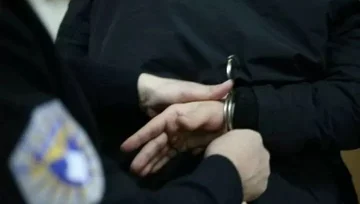
In Albania 5% of domestic crime is committed by minors. According to official data, during the past year, about 1600 minors were committed by 1470 criminal acts with the participation of around 1600 minors.
According to psychologist Nica, with the massive use of mobile phones, internet and social networks by minors, the number of juvenile accounts abuse cases on social networks and the threat through them is rapidly increasing.
Disturbing “remains property-related crimes, mainly thefts. Last time we had a prosecutor's intervention, in co-operation with Shkodra's local police directorate, for four minors who committed in the town of Shkodra 53 documented thefts, but on the other hand, the part of minors in schools, where often conflicts between minors, whether physically or even other elements of social networking or misuse of the social networks, says psychologist Nika.
The crimes committed by minors are an alarm not only for state police, but also for family, school and community.
Youth Centre head “Arka”, Marjan Lukani, says that, in most cases, minors in conflict with the law come from families with socio-economic problems.
The first “is the state of parental education and, second, the economic situation of Albanian families. Third, it is the time parents have for child education because in Albanian families, parents work all day and do not have time to educate their children. We also have the mentality that fathers do not engage in child education and that it is a matter that belongs to mother”, he says.
Most minors who violate the law continue school, so according to Mr. Lucani, school should be one of the barriers to preventing minor involvement in crimes.
“The lack of teacher staff training, how to deal with these cases in order to ensure the prevention, treatment and rehabilitation of minors”, he says.
Due to the facilities offered by the juvenile criminal justice code, out of about 1600 minors in conflict with the law, only 50 have been arrested. Hundreds of others have been investigated in a free state, increasing the risk of returning to repeat criminal acts, as well as exploitation by criminal groups. / VoA