20 minutes ago
“Albania, carried out 10m euros transfer with “offor” in five years
Periskopi(3 years ago)
(3 years ago)Since 2017, when the first data is reported, a total of personal transfers worth 10.5m euros have been carried out from Albania to outland. The figures become known to the Eurostat data system for personal transfers and were processed by the Monitor. Of these, 8.2m euros are transfers that [...]
The figures become known to the Eurostat data system for personal transfers and were processed by the Monitor.
Of these, 8.2m euros are transfers that have been sent towards Albania, and 2.3m euros have been sent from Albania to the outside countries.
The highest rate was marked in 2020, with 3.8m inflow transfers and 0.5m euros in exit transfers.
In 2021, introductions were 1.3m euros, the highest level after 2020, while remittances to financial centres were 0.7 million uro, the highest level since 2017, when data was reported.
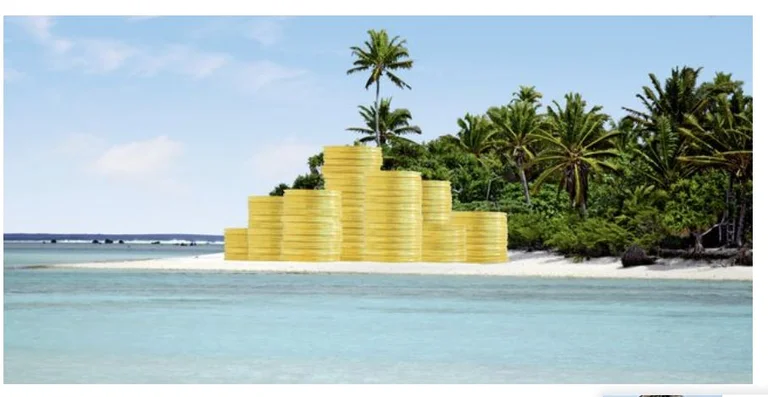
According to the global definition, “An off-sea financial centre, otherwise known as the OFC, is defined as a country or jurisdiction that makes financial services available to non-residents with the aim of bypassing the country's aspects or jurisdiction of nonresident.
These financial centres are generally used as locations for asset holders companies to carry out tax evasion. Very often, they are used illegally for tax evasion”.
Eurostat lists as the bottom financial centre the following places: “Andorra, Antigua and Barbuda, Anguilla, Aruba, Barbados, Bahran, Bermuda, Bahamas, Belize, Cook Islands, Cirançao, Cayman Island, Domaina, Grenada, Guersey, Gibral, Hong Kong, Isule of Man, Jersey, Bits and Nevis, Lebanon, Saint Luciana, Lienstein, Liser, Islande, Marerat, Mauráreveri, Fileusil, Philipes, Stelez, Staires Islander and Synish Islandins Islandins Islander.
Schema using offline countries to evade and pay bribes
Experts have claimed “Monitor” that transactions with so-called offline countries are common, especially for large companies winning high-value and concession tenders and cannot justify spending, on the one hand, and have to pay and bribe on the other.
To justify the increase of costs and bribery payments, the importative-out triangle and final destination (Albania) is used. For example, a product, which is actually purchased in the importer's country for 1,000 euros/entity, gets billed out to one of the officers at 1500 euros/entity. In this way, the cost of the product increased by 50%, while transferring 500 euros to the ossuary, which are tax free and used to pay corruption. Thus, by means of the offline triangle, the value of entrepreneurship increases, the cost swells, and the bribe is paid.
This scheme can also be used in construction, putting shareholders through the alternate countries or other sectors.
Eurostat, in fact, reports only personal transfers made directly and from outland countries, but the rise in figures in recent years shows that this mechanism is increasingly being used. Northern Macedonia, for example, has zero personal transfers at the entrance of exits from the outside countries, while they are used in Serbia and very little in Montenegro. / MANITOR