a minute ago
Maloku for the state chief prosecutor's failure: President's office failed, not KKP
Periskopi(2 years ago)
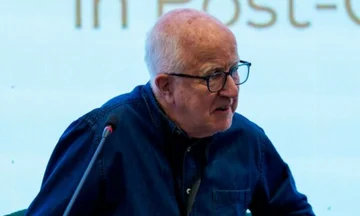
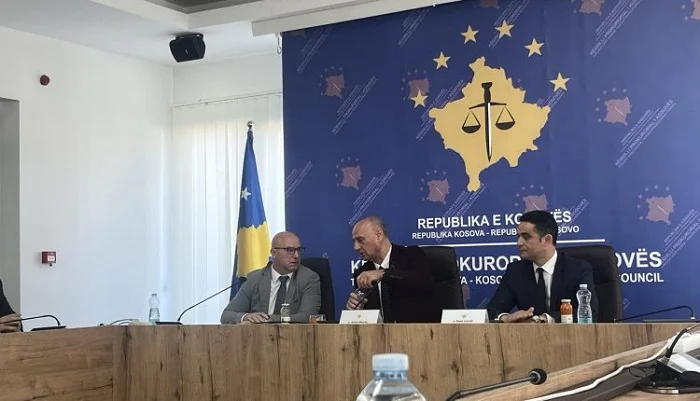
(2 years ago)Kosovo Prosecutor's Council Chairman-in-chief (KPK) Jetish Maloku said that the president's State Prosecutor's Office, not the institution he leads, has failed. Responding to the questions posed by senior researcher of the Kosovo Institute for Justice (IKD), Ramadan Maxhana, at the annual conference, Maloku said [...]
Responding to the questions posed by senior Kosovo Institute for Justice (IKD) researcher Greme Makshana at the annual conference, Maloku said the president had no constitutional mandate to refuse the decree of the head of state, reports “Justice Vow”.
I don't think the Council has failed to decree or fail the State Chief Prosecutor. I think he failed exactly the President's office. He does not have that right either the Office or the President, at least he does not have that constitutional mandate that comes out to refuse the decree after a process followed by the Kosovo Prosecutorial Council and see all of what is today”, Maloku said.
Maloku stressed that they also have an opinion from the Venice Commission, where, according to him, the councils are said to have a social role in cases of high positions decrees, while the president has only ceremonial role.
“We also have an opinion of the Venice Commission, where it says in cases of decreeing for high positions, it's about Supreme Court and State Chief Prosecutor, the Council has a contextal role, while the president has a fully ceremonial role. It means, there's no way the President here will assess the process that's under obligation to the Council, both the Judiciary Council and the Prosecutorial Council. I'm always talking about the two positions that belong to the President of the decree”, Maloku said.
The leader of the KPK said the failure to elect the chief state prosecutor is in the president's domain.
“We think that because of the failure so far or the delay the president has made so far is a failure that appears fully on the president's office domain, but not on councils because she has left more than a year and a half when the Council has announced in a formal announcement why it has not been issued by the decree. Therefore, in this matter we didn't have to see in that respect that the Council has failed, but we think the president has failed”, the KKP leader said.
Otherwise, during the annual KKP conference, Maloku said that at the beginning of 2023, The KKP has finalised the list of 21 most successful candidates for prosecutors, who have also been decreed by the president.
He said the Kosovo Prosecutorial Council has advanced 22 prosecutors as well, and 3 others have been transferred to Kosovo prosecutors.
The Council, via legal ways, has advanced 22 prosecutors and transferred 3 more to Kosovo prosecutors, while two processes are under way in advance”, the KP leader said.
Maloku pointed out that one of the KKP's goals has been the accountability, professionalism and discipline of prosecutors, who, according to him, during 2023. The KKP has accepted nine requests for early disciplinary procedures against prosecutors.
And then, in 2023, The KKP has accepted 9 requests for launching disciplinary procedures against prosecutors and has established 9 investigative panels. KKPK has so far developed disciplinary procedures through the investigative panels and pronounced adequate disciplinary measures against prosecutors, on the disciplinary responsibilities of judges and prosecutors”, he said, stressing that through the commission for assessment, during 1923, the performance assessment for 56 prosecutors has been finalised.
He said the prosecutorial system has arrived since this year's 9-month period, out of 498 corruption cases that have admitted, has resolved 335 or 72%.
As for economic crimes, Maloku said that out of 290 accepted cases, 230 of them have been resolved, or 79 %.
Different, October 17, 2023, at a conference on media, President Vjosa Osmani made it known that he has informed the Kosovo Prosecutorial Council that, based on the violations that have been recorded in the process, he cannot decree Blerim Isufaj for the chief state prosecutor.
“Today I have announced Kosovo's Proquirial Council on this assessment of the procedure, in view of all the cited violations, I am obliged not to make the decree of a pro-opposed candidate for the chief state prosecutor, under the proposal of Prosecutorial Council”, Osmani had declared.
At that conference, the president said that during the entire process, he has fully taken care of its actions as President to avoid potential interventions in the process. She said estimates of non-governmental and international organisations have been taken into account. However, the president said he has accepted threats which he has not reported to law enforcement.
Every other letter that the KKP sent, because they knew all the reasons why the decision was being made, was illegal and unconstitutional pressure, and contrary to any previous practice of inter-institute communication... people who sent messages that if they didn't decree it and they didn't sign it, we'd file, raise the indictment, tie up our hands, say it.
Also, in an exclusive interview for the “Tempus“show, Osman had listed violations that were recorded in the process, while stressing that the chief prosecutor's decree has also accepted threats.
On the same day, The KKP had reacted to President Osmani over the failure to purchase Isufaj as the new head of state. According to them, Osman's statements were “rather built on a political level than constitutional and legal root”. It said the systematic effort to expand political influence on Kosovo's prosecutorial system was proven.
“The KKP has kept the public informed constantly about official communications and paperwork addressed to the President's Office, as well as earlier about the process of electing the chief state prosecutor, so it found that, the president, as guarantors of implementing the Constitution of the Republic of Kosovo, at today's press conference confirmed the systematic effort to extend political influence on the Kosovo Republic of Kosovo's prosecutorial system, with regard to this issue, presented the unstable reason for the non-recognition of the C-ordination of the chief state candidate, which is contrary to legal norms and provisions. The Prosecutorial Council estimated that such public statements constitute direct intervention in the work of the prosecutorial system, at the State Prosecutor's Institute of State” respectively, the KKP said.
On the other hand, European Union Office Chief (BE) in Kosovo, Thomas Szunyog, after the President's decision, urged Kosovo authorities to maintain the highest principles and standards of rule of law in the selection of the new head of state. The US Embassy in Kosovo, on the other hand, has said that the process of selecting judicial officials, including the chief state prosecutor, should be fair and merit-based.
And on October 25, 2023, The KKP has again taken the name of Blerim Isufaj to the Chief State Prosecutor to the presidency.
The KKP, in this letter to the President, has estimated that it has been released at the level of credit rating of the recruiting process as well as the credit of candidates.
“The KKP, considers that under the circumstances of the concrete case, your release at the level of credit rating of the recruiting process as well as candidate/person credit, has essentially violated the constitutional and legal responsibilities of the Council, so for the reasons below, has come to the conclusion that the solution to the institutional crisis in the state chief issue, procrastinated by you for more than a year and a half, can be found only by reviewing your act...”, this letter states.
According to the KKP, Blerim Isufaj's failure to recover is seen as unconstitutional intervention in the Council's independence on certain aspects that, according to the KKP, are unconstitutional in non-defiction actions.
Otherwise, prior to the President's decision, the Constitutional Court published the full decision, where it had been found that prosecutor Albanian Fazliu after the legal deadline had rejected the process of electing the head of state to regular courts.
We remember that on April 6, 2022, the Kosovo Prosecutorial Council (KPK) had unanimously voted Blerim Isufajn for this position, while the decree of decree was in the hands of President Vjosa Osmani. This process has prompted numerous reactions, with the NGO coalition: IKD, GLPS and the FOL Movement have called the proposal for Isufaj's appointment as chief prosecutor unacceptable and have proposed that the contest be repeated.
Also, on the day when the KKP had nominated Isufaj for the position of chief state prosecutor, US Ambassador Jeffrey Havenier had reacted and cited remarks about the chief state prosecutor's selection process.
“We are concerned that the way the KKP developed these procedures has damaged the trust of the Kosovo public and our confidence in the KKP as a public institution... The fact that KKP members ignored the law's complaints and recommendations of the panel reviewing conflict with that standard”, the American diplomat wrote.
To this process, the British Embassy, the German Embassy and the European Union Office in Kosovo had reacted, expressing disappointment with the process.
Moreover, Kosovo's Progress Report for 2022 has highlighted the frustration of international partners and civil society over the lack of justice, transparency and merit principles in the process developed by the KKP.
The chief state prosecutor's appointment has been pending since April 2022 and is delayed. The EU and other international actors, as well as civil society, publicly expressed disappointment with the lack of justice, transparency and merit principles in the selection process. Procedure long-term procedures have caused a state of uncertainty, which reduces the functioning of institutions”, the Report said, among other things.
To discuss the prosecution's selection process, President Osmani had hosted representatives of civil society at the meeting on April 21, 2022.
The IKD has repeatedly stressed the need for the State Chief Prosecutor to emerge from a process that has unsigned integrity. /Betimy for Justice