3 minutes ago
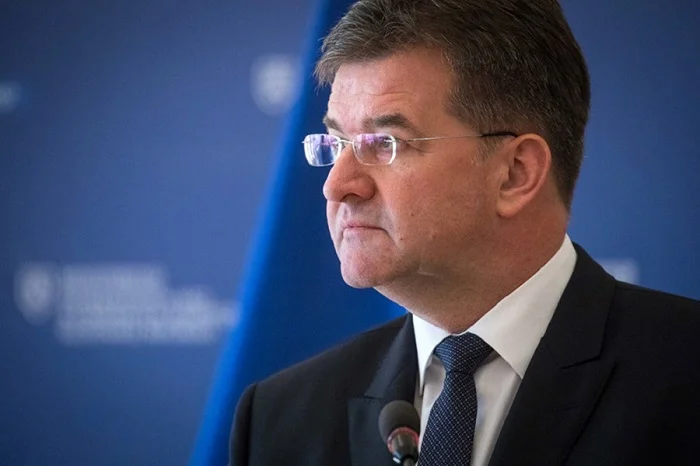
Lajcak: We can make the draft of the Association more understandable, deadline for formalisation of the agreement, January 2024
Periskopi(2 years ago)
(2 years ago)Albin Kurti and Aleksandar Vucic have in principle accepted the draft association status. Due to Chapter 35, the end of January 2024 is the deadline for formalising the Kosovo-Serbia agreement. But, so far, neither has moved towards implementation. The Association station does not need to be signed, since it is not an international agreement. Next, [...]
Next, full interview with Mr. You little pussy.
Express newspaper: In a statement of October 27th, the three European leaders Macron, Scholz and Mellon -- a day after separate meetings with Kurti and Vucinj -- said the two leaders have expressed readiness for the implementation of the European Statut for the Association of Serb majority municipalities. It's been almost two months since this statement. Why isn't the application starting?
Laker: In October, the two leaders expressed their readiness in principle to accept the European Draft-Stitut for the establishment of Association. At the same time, Prime Minister Kurti conditioned Statut's accession with the signing of the agreement from Kosovo and Serbia on the road to normalisation, its annex, as well as that of the Statut himself. At the same time, Serbia has submitted additional questions for clarification.
So the implementation is currently pending because of these demands from the parties, and we are working hard to address them in our quality as facilitators.
My team has once again reviewed the issue of formalisation on Kosovo's request, as well as offered Kosovo some options in this direction, and we are currently waiting for their response.
Meanwhile, EU member states have commissioned the EU for Serbia's pledges stemming from the agreement to be included in negotiating Chapter 35 with Serbia, which covers normalisation of relations with Kosovo before the end of January 2024. So, here we have a clear timetable for formalising the agreement as part of the contractual agreement with the EU and Serbia's membership criteria.
Let me add one more point to Kosovo's bid that Serbia sign the Stattuti. In our view, this is not necessary. The legal act, as it is now designed, is meant to be Kosovo's internal document. With the signing of Kosovo and Serbia, the statue would become an international agreement, what is not.
We are discussing the issue of additional formalisation of the Agreement on the road to normalisation and the annex of its implementation with the Government of Kosovo. In parallel, we were executives of Serbian legal experts in Brussels to discuss various aspects of the document. This is legitimate because this draft is detailed and broad. But let's not forget that accepting the Statut text is only an element of the process and additional steps are needed from the Kosovo side for establishing association.
Express newspaper: Have both sides finally accepted the European Proposal for Association?
Laker: As you mentioned, the two leaders accepted in principle the European draft in the meeting with the French president, the German Chancellor, the Italian prime minister, as well as with the president of the European Council and the High Representative, in Brussels yet it was also concluded that additional work was needed before it could begin with implementation.
Express newspaper: You are holding talks with the parties about steps to implement the Ohrid annex, known as the sequence plan. Have you come close to agreeing? As we know, Kosovo should take a step towards establishing association while Serbia recognises passports.
Laker: The implementation agency agreed on in Ohrid states that pledges stemming from the agreement are implemented quickly and in trust, independently by each other, and that the parties will not block implementation of any of the articles. So far, neither side has met these pledges, prompting a special implementation plan for launching the implementation process.
The implementation plan would have to provide a step-by-step guide to implement the agreement to ensure that the implementation of Kosovo and Serbia's obligations takes place in parallel, as well as guaranteed that when the parties implement something, they will get something else in return.
During our recent meeting of chief negotiators in November, both sides first accepted the philosophy of such a parallel and step-by-step approach. Discussions about their steps and actions and order continue, and we expect the parties to reach an agreement soon so that implementation will finally begin. However, it is clear that as Kosovo is expected to move ahead with the establishment of Association, the fulfillment of key parts of its obligations under the Agreement is expected from Serbia in parallel. This process should be transparent and fair.
Express newspaper: Several draft versions have circulated; many who see the document with concern are said to have been violated by the Constitution, that there is autonomy for northern Serbs, that the arbitration system replaces the Constitutional Court of Kosovo. In Kosovo opinion, the opinion that this statue federalizes Kosovo prevails. How do you respond to such dilemmas?
Laker: You're right. There's a lot of voices and claims about what it's supposed to say, and it's not about Drift-Stitut. According to me, “dilems” that you mentioned are misunderstandings that I can easily explain.
The European Raft-Sttuti was drafted by my team with assistance and advice from renowned European experts in the fields of international law, protection of minorities and local self-government. We are convinced that this document respects not only the constitutional order of Kosovo and its well-known red lines but also the 2013 and 2015 Accords that constitute the legal basis of association, plus relevant international conventions, such as the European Charter for Local Self-Government. Moreover, during the drafting process, we have tried to take into account European models that are consolidated and that function well for local self-government and protection of minorities.
Without going into too much detail here, I want to make it very clear that the jurisdiction of the courts of Kosovo is neither questioned by Draft-Stuti nor denied in any way. In this direction, the European Draft-Statute refers to disputes between Association and the central Kosovo authorities over the implementation and interpretation of the Statut. Without this provision, there would be a legal gap because Kosovo's legal framework does not even contain a mechanism for resolving disputes on this kind of conflict, nor does it foresee the jurisdiction of Kosovo courts in such cases.
For the next work of Association, it is important to discuss different ways of interpreting and implementing the Statut. Only through structured discussions can a joint interpretation of the Statu and, thus, its implementation be carried out.
Again, it is of great importance to understand that the relevant provision does not exclude or in any way prevent judicial review of the Association decisions by Kosovo courts. The European Draft-Stutti addresses also the issue of the judicial review of Association decisions, allowing the review of the association's activities, both by administrative authorities and by the common courts. All this is in line with Kosovo's Law on Local Self-Government.
Express newspaper: Is there room for changing this document, so on your part as a sponsor, as there are many concerns from Kosovo, while the Serb side has made no public comment?
Laker: We appreciate the importance of complete clarity in this document and have the satisfaction of answering any related questions. At the same time, we are willing to make reasonable adjustments and clarifications, especially to improve the reading of the text and make it more understandable.
Express newspaper: How would you describe what Serbs take with Association, what status is this?
Laker: Kosovo's multiethnic character requires protection of minorities. This means that sometimes specific measures must be taken to ensure that minorities enjoy full and effective equality. This concept is in line with international standards and is reflected in the entire Constitution of Kosovo. The establishment of association should be considered such a measure, even a legal obligation for Kosovo after the Kosovo Assembly ratified the 2013 Brussels Agreement.
The association serves the target of double defence: on the one hand, protection of the rights of the Kosovo Serb community; and, on the other, protection of the Kosovo legal framework. Management diversity through comprehensive policies is the essence of a functional multiethnic democracy. Many European models of local self-government that function well and are consolidated testify.
The establishment of association aims to establish a functional and institutionalised relationship between Kosovo Serbs and the Kosovo government, while allowing Serbia's government's support for the Kosovo Serb community to be provided transparently and in full compliance with European standards and standards.
Express newspaper: Have you taken the prime minister's promise that he will take him to the Constitutional Court?
Laker: With the 2015 Agreement, it has been envisioned for the Constitutional Court to establish association. The association will be established in Kosovo, as part of the Kosovo legal framework. For us, as an international community, it is in our interest that the Constitutional Court examines. Moreover, the 2015 Constitutional Court's decision has clearly requested the judicial review of a possible draft status.
Express newspaper: And will the Government's ruling Association be established or should it first go to the Constitutional Court because it seems to be the aim of Kurti Government, although they have not yet formulated it as a public position...
Laker: Eventually, the association will have to be established by Government decision. As we understand it and according to the 2015 Agreement, such a formal decision must be taken before the document is sent to the Constitutional Court. We are willing to study the legal explanation that indicates the opposite order if this explanation is to be presented. In any case, time is essential, since consideration by the Constitutional Court constitutes a cornerstone for the creation of association. Along with the whole international community, I encourage the Kosovo government to take appropriate steps without unnecessary delays.
Express newspaper: As sponsor, do you have any limits as far as “guxon” go to the Constitutional Court of Kosovo to remove “since this document?
Laker: I wouldn't call the EU “ponsor” we are the facilitator who is trying to find mutually acceptable solutions to complex issues, as we're now doing on the issue of establishing association, which is a long-standing legal commitment and has brought a halt to the normalisation process for years.
Now, the document has been drafted in close co-operation with international legal experts and experts on local self-government issues and the protection of minorities. He was also reviewed by Kosovo's closest partners and allies, including the US. We all believe that the document does not violate Kosovo's laws or constitution, but that should eventually be decided by the Constitutional Court. Our goal was to propose a modern European way of addressing the sensitive issue of minority protection in a way that is fully in line with Kosovo's legal framework and not pose any threat to Kosovo's functionality. After all, this association will be in Kosovo, and we want the prosperity of its functioning to benefit all.
Express newspaper: The prime minister insists that these agreements be signed, including draft status. How will you do that?
Laker: I guess I already answered that question. As I said earlier, Prime Minister Kurti demanded that the Agreement for the Road to Normalisation, its Anexi, as well as the Stattuti, be signed by Kosovo and Serbia. We respect that requirement and have considered the matter again. After consulting with international lawyers, we have offered options for Kosovo. Our discussion on this subject continues.
The issue of signing the Agreement on the road to normalisation was only a topic during negotiations in Ohrid in March, where no proposed option for signing was acceptable to both sides. Therefore, with the consent of both sides, we formed the agreement through a statement by the High Representative. This is completely in line with the Vienna Convention on Traffic Law. The EU has said publicly many times that the agreement is legally binding and valid. In this context, I would have to repeat the position of the EU, but also of the US, that formal issues such as the way of approval should not hinder the implementation process. After all, the parties will be assessed on the basis of the implementation record, not the method of formalisation. Lack of signing is not the reason it hinders implementation but is the lack of political will.
Express newspaper: Are there rumours that Prime Minister Kurti will not make moves to form association without completing the government mandate? How much does that bother you?
Laker: I would not speculate or comment on such voices. The establishment of association is a long-standing legal obligation of Kosovo. Therefore, the international community is unified on this issue and expects each Kosovo prime minister to implement. This is clearly stated in all recent official EU statements. Kosovo is wasting precious time not moving ahead. This is especially important in the current context with renewed commitment and momentum for EU enlargement, as well as Kosovo's Euro-Atlantic ambitions. Showing that Kosovo is a reliable and serious partner in its obligations, only benefits can be made for Kosovo's ambitions.
Express newspaper: Austrian diplomat Wolfgang Petritsch, who gives the impression that he is involved in the process, said he does not expect results by the end of 2024 and early 2025. What can you say about that?
Laker: Wolfgang Petritsch is my good friend. I appreciate his opinion as someone who knows the Western Balkans well. At the same time, it is not part of the process, and I expect that we can make progress in implementing the Agreement on the road to normalisation, provided both sides show the necessary political will, courage and leadership to do so.
Express newspaper: You met in Brussels with US Ambassador Chris Hill you discussed dialogue with. You said you also talked about plans for the next steps. How would you describe the role of the ambassador in this process?
Laker: I have excellent and close co-operation with the current US administration, in particular with Assistant Secretary O'Brien, US envoy for the Western Balkans, Deputy Secretary Escobar, and Ambassador Havenier and Ambassador Hill. We work side by side as a team and co-ordinate our policies, messages and steps to the dialogue. I'm grateful for their support, and I can't want better co-operation.
Express newspaper: There's movement for elections in the north. Is the formation of association related? So should we have new heads in offices to create Association?
Laker: Since Kosovo Serbs left Kosovo's institutions in northern Kosovo in November 2022, we have repeatedly demanded that Serbs fulfil their obligations from the dialogue and return to institutions and that Kosovo enable that return to happen. Meeting signatures as a start is a positive step to enable this return to occur at last.
The outcome of the April 23rd local elections has shown how complex and fragile the situation is. The continued lack of Kosovo Serbs from Kosovo institutions and the vacuum they left is not sustainable and is not favourable for stability in northern Kosovo and representation of Kosovo institutions.
It is very important to return to a situation in which Kosovo Serbs actively participate in the election process, in local governance, police and judiciary in northern Kosovo, as it has been in the past. We need both sides to play their part in this.
The establishment of association would certainly help, but the new election process must continue independently and prior to the establishment of association.
Express newspaper: The whispering of Chancellor Scholz's adviser on the day you brought the European proposal to Pristina, as you were asked about the attack in Banjska. What can you say about that?
Laker: There is really nothing to comment on. The EU's stance has been very clear, including the violent attack on Banjska. EU requirements for Serbia are constantly being communicated publicly. As for my work, I am very grateful for the powerful support of all EU member states, and in particular France, Germany and Italy, who traveled with me to present the European Draft-Stitut both Prime Minister Kurti and President Vuciq.
Express newspaper: Since 24 September, when the armed attack took place, there has been a reluctance to consider Serbia responsible. Why is that? Have you been a unilateral facilitator who is one of the direct accusations you are being made?
Laker: Again, our stand has been very clear about the violent attack on Banjska on September 24th. He was sentenced in the harshest possible terms. The EU has also been clear that there will have to be consequences for Serbia if there is irrefutable evidence for Belgrade's official involvement in the September 24th attack. However, EU institutions and member states decide on this issue.
Express newspaper: If you can convince Kosovo and Serbia that Kosovo provides the Association in exchange for de facto recognition, do you think you have found a suitable formula for relations between the two countries at the moment?
Laker: I am convinced that the agreement offers the most appropriate and realistic framework for the normalisation process to move forward and that it is the best agreement Kosovo and Serbia can expect to reach in the current geopolitical context. Kosovo, especially, should have an interest in rapidly advancing its implementation. It would open so much potential for Kosovo. There is so much for the people of Kosovo. At the same time, we have all been very clear that this is not the end of history and implementation would pave the way for negotiations on the final normalisation agreement.
More broadly, the entire Western Balkans would benefit from implementing this agreement, since normalising relations between Kosovo and Serbia would contribute to economic development, EU aspirations and the security and stability of the entire region. This would also help boost efforts and initiatives for ongoing and future regional co-operation. /text level: Periscope.