a minute ago
Petritsch: I fear progress in Kosovo- Serbia won't be quick
Periskopi(3 years ago)
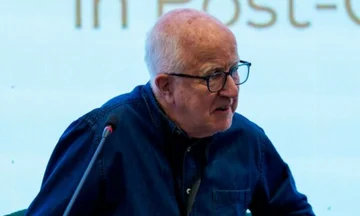
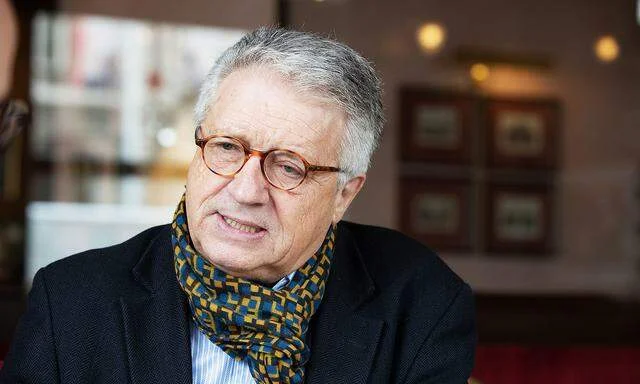
(3 years ago)The former European Union's envoy for Kosovo and Austrian diplomat, Wolfgang Petritsch, says that in a geopolitical situation altered by the war in Ukraine and the Middle East, Kosovo and Serbia and the international community that has been engaged in the Western Balkans for more than two decades must reassess the reality of moving forward. [...]
In an interview, Petritsch says he does not expect rapid progress in the near future in the negotiations process, but says the association of Serb municipalities in Kosovo would give Pristina more control over its entire territory and expects that after the elections in Serbia, Vuciq would have to make clear his country's orientation.
Full interview for the Voice of America:
Voice of America: Mr. Petritsch, for many years and in various roles, you have brokered efforts to end the conflict between Kosovo and Serbia. What is your assessment of the situation today?
Wolfgang Petritsch: I must say that after so many years, there is a moment when we need to reflect. At this point, at the end of 2023, after years of negotiations with the active engagement of the international community, we still cannot see what the real end of this international engagement will be. And that, I think, is the most important issue. We need that now, finally, to find a successful way to finalise and resolve the recent important issues that remain open in the Balkans -- the issue of Serbia and Kosovo -- and the issue of Bosnia and Herzegovina, which in various respects continues to be a very dysfunctional state.
We need to understand that all these developments are taking place in a drastically altered environment for Europe in a geopolitical way. Two wars are now taking place in Europe's neighbours, Ukraine and the Middle East, while we have not yet successfully resolved issues in the region near us, in countries that should already be part of the European Union but are still far away. And that's why we have to re-infect and come up with a new and revived strategy to solve those issues that are much easier to resolve than the big issues of Russia and Ukraine, or the Middle East.
Voice of America: During this year there have been an increase of tensions, including attack by an armed Serb group in the northern part of Kosovo, and the gathering of the Serbian Army along the border with Kosovo that has pushed NATO will increase the number of peacekeeping forces. How do you feel about these developments?
Wolfgang Petritsch: These two examples you gave are very important and should be of great concern to us. As for the security side, in NATO's case with KFOR (in Kosovo), even Bosnia in the case of EuroFOR, which has also been reinforced, is reacting much faster and we are not waiting too long (to react) as 2025 years ago. On the security side, we really have a quick reaction. Politically, however, in terms of negotiations, I fear we will not see any progress over the next year because we have elections in Serbia on December 17th, then next year the European Union and European Parliament elections and in November the US presidential elections. And it is clear that the two major wars now have the full attention of policy makers in Brussels and Washington. With concern, I say we will not see any progress regarding the diplomatic solution to the normalisation of relations between Belgrade and Pristina. Therefore, I think it was well thought that NATO, KFOR, should be reinforced because it should not allow events like those of a few weeks ago.
I recently met with Prime Minister Kurti in Vienna, as well as with (American Balkan envoy Gabriel) Escobar has been talking for an hour and will soon meet Ambassador (Americans in Belgrade, Chris) Hill. We are talking about this situation, and my impression is that both sides -- in Belgrade and Pristina -- feel is that perhaps this escalation was excessive and we have to reduce tensions, which is necessary. The international community cannot only take care of security in the region. Partners must be found for responsible co-operation in the security plan between Belgrade and Pristina, in particular. We need to make it clear to key actors President Vucic and Prime Minister Kurti that they must contribute to the overall security of Europe and the European Union, which is now very threatened by two wars.
Voice of America: What is your impression of the September 24th attack in the northern part of Kosovo?
Wolfgang Petritsch: My impression is he got out of control. Let me explain. I think it was not planned for necessitys and knowingly in Belgrade. However, people involved in this group of mercenaries were exploiting an unresolved situation and were acting on their ideas of chaos and interruption of the EU-mediated negotiating process. There are people on both sides who are not interested in a solution. Clearly, it is harder for the Serb side to approach a solution because they have to give up what they have already lost, from Kosovo. But at the same time, they are standing behind the eternal idea that Kosovo is Serbia. They have the UN Resolution and all these formalities, but there is also the declaration of Kosovo's independence. So I think the two sides should see the truth in the eye and I think the September incidents were a negative re-evaluation of the situation. This isn't absolutely the way forward. It's not in Serbia's best interests, it's not in Kosovo's best interests, especially for Kosovo citizens, for the Serb minority. One issue that often gets no attention is the fact that young people are leaving Kosovo, in particular from the Serb majority, because they are not looking for future there. The demographic factor is probably the worst for a better future for Kosovo and the entire region.
Voice of America: It's about disbelief. There is concern in Kosovo that association may be territorial autonomy for Serbs in Kosovo, and that given Serbia's stance denying Kosovo's independence, the association will undermine Kosovo's territorial integrity. Do you think they're based on these concerns?
Wolfgang Petritsch: Concerns are always, in a sense, based, but at the same time, how should those concerns be overcome? This is the main issue, and I think that concerns are overcome in legal form and in practical terms, thereby ensuring unanimously with the international community that association will not be a Republika Srpska. The international community has learned that such a solution does not suit a state, as in the case of Bosnia. Therefore, be assured there will be no Republika Srpska in Kosovo. But I believe that Serb minorities in Kosovo should be granted cultural rights, some economic aspects and other rights in education, health. You should remember that there was actually a lot of money in Kosovo, without transparency, from Belgrade. Through such an association, this money must be registered and passed through Pristina's (institutions). With the establishment of association, Pristina will gain more rights to control this part of Kosovo, which of course belongs to the state. But there is a minority, and this minority must have certain rights.
Voice of America: How should leaders like Mr. Dodik in Bosnia and other Serb leaders feel empowered under these circumstances react to the region? How can peace and stability be secured in the Balkans?
Wolfgang Petritsch: It won't be easy right now. As I said, this period is actually more complex and not very favourable for a real solution. But I believe that in the end, and this is a fact, that if Serbia, which continues to be the largest state in the region and the most powerful economy, is not fully oriented towards the European Union and becomes a European state, cannot join the EU. It is in Mr. Vucic's great interest that Bosnia is not broken because Mr. Dodik wants that. If you know the entire region and see the dynamic between Bosnia and Serbia and see the dynamic between Serbia and Kosovo the way the whole region looks should be taken into account. You can't particularly judge the situation in Bosnia without counting the political goals in Belgrade, and the political goals in Belgrade are such that they want to sit in two or three chairs, and eventually this situation will not end well.
I believe that after these elections, Mr. Vucic will have to make a difficult decision for himself, for Republika Srpska and for the Kosovo case. I hope that the end of 2024 and the beginning of 2025 will see a new phase in relations and a movement leading to normalisation in the Western Balkans.