15 minutes ago
Buleshkaj: We cannot investigate the assets of officials outside Kosovo
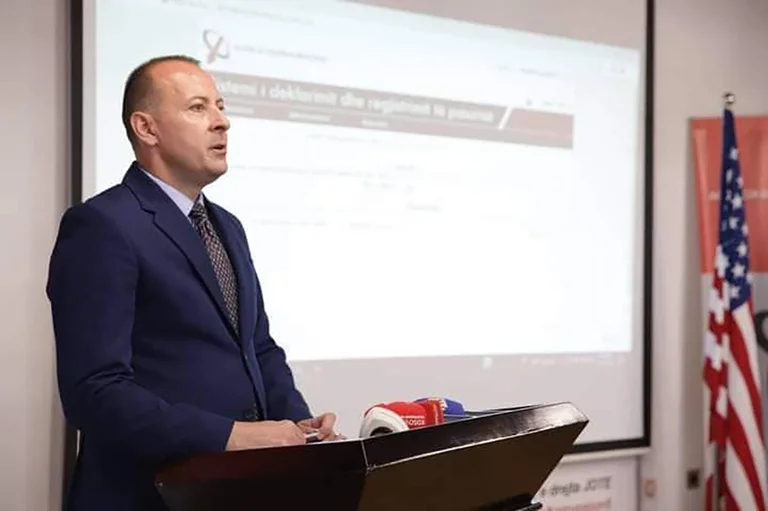
Periskopi(3 years ago)
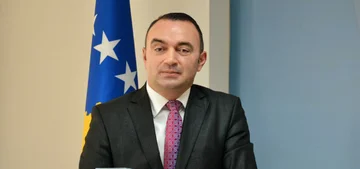
(3 years ago)Chief of the Agency for Prevention of Corruption (APK), Yll Buleskaj, says the agency has handled high-level corruption cases. In an interview for Radio Kosovo, he says there has been no policy interference at the agency. Radio Kosova: Mr. Buleskaj, Kosovo in the progress report, but also in other local reports [...]
Radio Kosova: Mr. Buleskaj, Kosovo in the progress report, but also in other local and international reports over the years has emerged as a country with high corruption, in Kosovo there has been a tendency for corruption to be presented only as perception. Is corruption perception in Kosovo?
Yll Bulshkaj: The progress report has also noted progress in fighting corruption. But corruption is also perception, and for citizens who have perception it is true. I believe corruption is not just perception. We have many cases of media. We have large and serious cases of corruption that do not enter our field of activity. We have the case “Brezovica” recently, complete more. And these show that this is not just perception We, as agencies, have a role in preventing corruption as much as we can. The prevention has to do in some areas, which are the mandate of the agency, such as the wealth declaration, which promotes a transparency and accountability of senior officials in relation to the public. We then conduct a verification of these statements, to verify then how sincere they were in relation to the public. The agency's other role is to prevent conflict of interest, there are many cases that with our intervention have been corrected. It is also a very important mechanism for protecting the beacons, who inform us, the prosecution, other institutions for violating cases that could be very serious.
Radio Kosova: If we see mechanisms for fighting corruption, Kosovo has enough. But how efficient are these mechanisms you think?
Yll Bulshkaj: We've had the fate that this year has changed the core law of the agency. The law that has changed its name to the Agency for Prevention of Corruption. This law has preciseed our mandate. I believe that the key to non-work is whether a task is shared by certain institutions. We already have our mandate very clear. They all have their own weight, and the failure to function a link (police, the Court of Justice) affects them all.
Radio Kosova: What are the most likely cases you've accepted, with which governmental segments are more connected?
Yll Bulshkaj: We, in view of our mandate, the cases we have accepted, mostly signaled from abroad, have been largely related to the conflict of interest and inaccuracies of property statements, but also those of misuse of official positions, but also of cases that have affected cases of procurement or tenders. So far the cases have come both for the municipal level, as for the government, both for institutions and as for public enterprises.
Radio Kosova: Corruption in the judiciary is also widespread, and it does not appear that the judiciary is inclined to investigate itself. How can investigating cases in the judiciary increase?
Yll Bulshkaj: I believe the key to resolving corruption claims in the judiciary is empowering the beacon mechanism within institutions. They are independent branches of power that need self - control. It has recently been appointed to all courts by a competent intelligence officer and I believe that with their appointment and empowerment it will be possible that all those with information present it. I believe no institution should violate the other institution's independence, but there must be a co-ordination. We need to increase the capacity of self - correction, whether in the judiciary or administration, only in cases that cannot be done, then should be handled with administrative or judicial procedures.
Radio Kosova: Usually the agency that you now lead has complained that corruption is being investigated and even less judged, and if these links don't work, what efficiency can an institution like yours have?
Yll Bulshkaj: The agency is struggling from the very beginning when it has received its mandate to upgrade co-operation with these institutions to a higher level. In no case do I believe there is room for non-co-operation with these institutions. We, as agencies, at meetings we've held with these independent institutions, have stressed that we are open to cooperation in every case. It's important to us that whatever is sent to the prosecutor, end up with an indictment and be tried at the end.
Radio Kosova: One of the charges against the agency has been to conceal cases reported of corruption and of conflict of interest. What might change in the Law for the Agency that helps them control themselves first?
Yll Bulshkaj: I think these opinions were created because the agency wasn't very open. Now we're trying to be very open to the public. I can say from the beginning of this year that there is no case that was reported and not delivered to justice bodies, no difference. We can't tell the prosecution how to handle their cases, we have our opinion of how we handle our cases. So far I can say that cooperation with all justice organs is at good level.
Radio Kosova: What differs your mandate from that of others in relation to political influences?
Yll Bulshkaj: We have shown that the impact on our work is impossible. We've handled cases of opposition to the deputy prime minister level, and that shows how impartial we are in our work. I'm not saying it wasn't the others. What makes me feel good is that so far there has been no pressure on policy influence on the agency. So we are independent and there is no tendency for intervention.
Radio Kosova: One of the issues we have seen has been the investigation of wealth by lots but has not produced any results, except the charge of non-pronouncement, while the controversial property of many officials remains intact. This isn't the agency's competence, but how can it be fought?
Yll Bulshkaj: This year the agency has found concessions that have not been observed during the past year. We're improving our every operation. I'm believing that next year the work of declaring property will be taken even more seriously. The number of officials who have declared wealth has now increased. So now it's a very small percentage of officials who haven't taken the property statement seriously. From next year, I believe they will take the quality of the wealth declaration more seriously.
Radio Kosova: Property abroad and officials also remain an untouched field. Could the agency establish co-operation with other states to investigate these undeclared assets?
Yll Bulshkaj: The wealth of senior officials outside the country's borders is regional trend. The current mandate is only within Kosovo. We have good relations with other agencies from the region. But the biggest asset we are believing is in Albania and Serbia. It is a regional treaty that will be used to verify property, which is under way to sign Kosovo as well, to join the treaty. We're developing the verification capacity as much as we can, with current resources that are not as satisfactory.