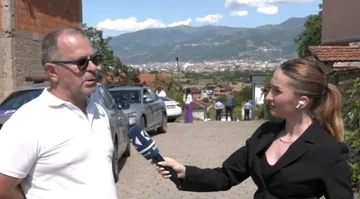
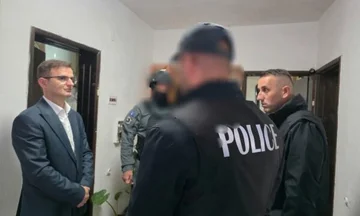
The doctor for the 27-year-old knife attack in Prizren: We couldn't save him. He had chest injuries.
 a minute ago
 (3 years ago)
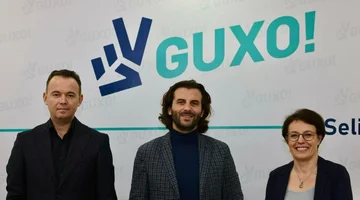
Information on the Albanian labour market is widespread, but nearly 16 per cent of workers in Albania do not have a written contract, says the report “geopolitical and State Capaque” from the Southeast European Leadership for Development and Integrity (SELDI). SELD partner in Albania The Albanian Centre for Economic Research (ACER) in the poll [...]
Albania's SELD partner, the Albanian Centre for Economic Research (ACER), in the survey he made for informal employment in our country has discovered one of five common practices of phenomenon, contract-free employment by the employer.
In Albania the survey has found that 16 percent of employees had no written contracts, and 10 percent of employees are paid more than allegedly in the contract. This was the highest post-Kosovo level where about 19 percent of employees had no written contract.
In northern Macedonia, 9 percent of employees did not have written contracts, and 19 percent of the employees were paid more than contracting. In Montenegro, 8 percent of employees did not have written contracts, and 22 percent were paid more than contract definitions.
In Serbia, only 6 percent of employees did not have written contracts, and 27% of them were paid more than the sum set in the contract, while in Bosnia only 5% of employees did not have a job contract, and 35% were paid more than the contract definitions.
One of the popular practices of informality is that the basis of the contributions paid for social insurance is the sum written on the contract, not the real salary that employees receive
In 2021, SELDI's data on the hidden economy shows informality in the labour market is still high in Rajon.
The decline in Kosovo, Montenegro and especially in Serbia is noted, ranking second in Rajon after Montenegro in terms of informality in the labour market.
Albania has a slight improvement since 2019, but the index results for 2021 are still higher than in 2016.
In the last two years, the negative effects of the informal economy have been intensified by the Comid-19 pandemic. Pandemia distorted competition, affected the quality of public services, and caused less security at work.
Pandemia highlighted governance gaps and created further opportunities for abuses of labour rights and short-term financial support schemes.
All the governments of Western Balkan countries have introduced policies aimed at tackling informality, but have not always been inclusive, consistent and efficient. There is a fragmented and uncoordinated approach to all government bodies responsible for halting undeclared work.
A key aspect of against informality policies is to adapt tax legislation to technological developments, because there may be an added value in formalising economic activity. Efforts to improve the operational capacity of tax authorities, introduction of electronic services, and computerisation of tax administrations have helped fight tax evasion and informal economy in all Western Balkan countries.

10 minutes ago14 minutes ago
 3 hours ago