19 minutes ago
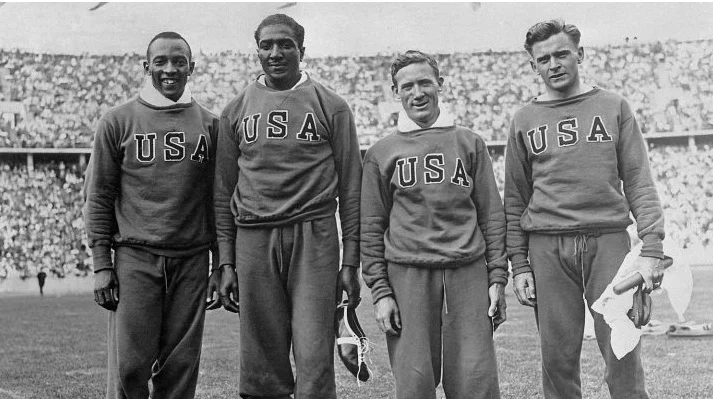
This is the colored man who thwarted Hitler's plans for the 1936 Olympics.
Periskopi(5 years ago)
(5 years ago)In 1933, shortly after taking power as German Chancellor, Adolf Hitler's intentions concerned his plans to turn the 1936 Summer and Winter Olympics into a success for his regime. Through these Olympic games, Hitler expected to spread his superior Aryan race. Games [...]
In 1933, shortly after taking power as German Chancellor, Adolf Hitler's intentions concerned his plans to turn the 1936 Summer and Winter Olympics into a success for his regime. Through these Olympic games, Hitler expected to spread his superior Aryan race.
The 1936 Olympics were a demonstration and infusion of extreme nationalism and politics. He ordered the construction of a new massive stadium in Berlin and allocated additional funds for the construction of an airport to welcome international visitors.
The 1936 Olympics were held in a tense, politically charged atmosphere. The Nazi Party was established in 1933, two years after Berlin had won the right to host the Olympic Games, while racist policies of the Nazi regime provoked a major international debate over the boycott of the Games.
Fearing a massive boycott, the International Olympic Committee, IOC, pressured the German government and received guarantees that qualified Jewish athletes would be part of the German team and that the Olympic Games would not be used to promote Nazi ideology.
Adolf Hitler's government, however, was not able to fulfill such promises. Only one athlete of Hebrew origin was a member of the German team (Helene Mayer) while the pamphlets and speeches about the natural domination of the Arian race were common. Rach Sports Field (Ritch Sports Field, a newly built sports complex that covered 131.5 hectares and included four stadiums, covered with Nazi slogans and symbols. Nevertheless, participation in such a sports contest was considered very important from many parts of the world, and at the end of 49 countries decided to attend the 1936 Olympics in Berlin.
Moreover, the Olympics aimed to be the first to reach audiences worldwide via television, as well as the first to display the traditional element of the Olympic torch staff.
Of course, while the Olympic Games are supposedly intended to bring together a host of races and cultures to a competition show, Fuhrer had few of such notions of unification. In fact, he had deliberately downplayed his Germany's chances of success by keeping Jews as far away from clubs and athletic events, eliminating potential Olympic medal winners, such as high jumper Gretel Bergmann.
Hitler saw Afro-American racers as danger to his success
Close-American athlete Jesse Owens, turned into an international star at the 1936 Olympics. His vivid personality and dominant efforts led to his worship by millions of fans worldwide and his country among the best athletes ever to compete in the Olympic Games.
Jesse Owens was shown as a racing sensation in the United States. He achieved the world record in the 100m run while still in high school and his performance at the Championship. Big Ten Championships In 1935, in which he placed three world records and faced a fourth in a space of 45 minutes, one of the most remarkable achievements in the college history of sports remains.

Getty Images
He wasn't the only African-American athlete to leave behind success in these Olympic Games. The other African, Ralph Metcalfe, was a silver medallist at the 1932 Olympic Games and at one point shared the world record in the 100m course.
And also, a spinner racer of Temple University Named Eulace Peacock appeared to be a formidable opponent of Owens, even beating him many times in face - to - face competition in 1935, before he suffered a stem injury that destroyed his 1936 Olympic hopes.
United States nearly boycotted the 1936 Olympic Games
Before the 1936 Olympics began in Germany, there was a potential danger of Jesse Owens losing the chance to be part of them. Aware of Hitler's discriminating policies against the Jews, yet unaware of the purpose of the horrors to come, American decisionmakers had developed a heated debate about whether to boycott the 1936 Olympics.
The president of the Amateur Union, Jeremiah Mahoney, argued that the Third Reich was being supported through participation, but such was averted by American Olympic Committee head Avery Brundage, who insisted that the Games were for athletes rather than politicians.
Like other African elite athletes who were raised in a discriminated society, Owens viewed the moral attitude towards Germany as hypocritical and was not inclined to allow the case to go off in a global scene. He eventually expressed his desire to compete in these games, a stance that prompted the response and condemnation of this action through then African-American newspapers, as well as the reaction of Walter White, the leader of the National Association for the Advanced of Colorful People, NAACP.
Jesse Owens became the first American to win four gold medals in an athletic contest.
Almost from the very beginning, Owens received the effigy of the 1936 Summer Olympic star. He won the Golden Medal since his first race, running 100m, and followed with a very pompous victory against German champion Luz Long in the long jump.
After setting an Olympic record in the 200m race category towards a third gold medal, Owens went on with an impressive US performance in the 4 miracle100 category. He became the first American to win four gold medals in athletics at a single Olympics, a record that remained intact until American athlete Carl Lewis broke it in 1984.
Although it was reported mainly that Hitler “had been treated with contempt” Owens because he had discredited his precious Arian athletes, indeed, he responded to a request to treat the winners equally and refused to publicly congratulate any of the athletes after the first day of the race. Other reports said the Fuhrer had greeted Owens from a distance, perhaps influenced by the great cheers of fans in the direction of Owens.

Getty Images
Despite “conveying” from Hitler, Owens left huge global traces
Just as with the so-called “granization” from Hitler, the confession about the 1936 Olympics has softened and simplified over the years. Despite the achievements of Jesse Owens and his teammates, Germany could again claim athletic superiority by winning more medals.
Most important, the Berlin Olympics succeeded, at least in propaganda, highlighting the Nazi Party as hospitable and orderly even though it was on the verge of another war and the extermination of millions of Jews.
On the personal level, the main attention about the 1936 Olympics was focused on the next career of African Jesse Owens, who faced the cold reality of being a nigger in America of the era of the Great Depression. Unable to materialize his economic opportunities, he was forced to compete against horses and do other humiliating work for years until he was finally appointed as government ambassador in the 1950 ' s.
Although the story of his triumphal performance at those Olympic Games remains alive and as such failed to stop the machines of the Nazi regime, Owens undoubtedly stole the attention of the Nazi head of the state.
Furthermore, he showed that the Colory Man may be part of success and achievement in a world equal to all, an attempt that then opened the way to future African-American sports stars, such as Jackie Robinson, baseball player, enabling civil rights movements to fight for their equal rights with all the peoples of the world.