a minute ago
In Washington for Economy, Entrance Agreement, Brussels Responsibilities
Periskopi(6 years ago)
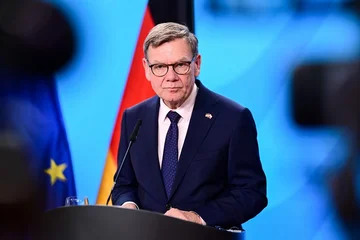
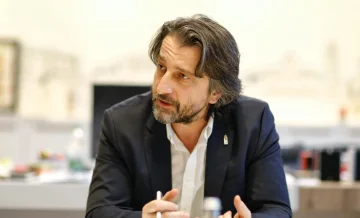
(6 years ago)In the Kosovo-Serbia dialogue, the European Union is aiming to shift from more technical issues to major political questions so that a comprehensive deal can gradually be reached, says Valeska Esch, deputy executive director of the German Aspen Institute. Esch in an interview for Radio Free Europe says the European Union and the envoy [...]
In the Kosovo-Serbia dialogue, the European Union is aiming to shift from more technical issues to major political questions so that a comprehensive deal can gradually be reached, says Valeska Esch, deputy executive director of the German Aspen Institute.
Esch in an interview for Radio Free Europe says the European Union and special envoy Miroslav Lajcak are responsible for facilitating dialogue between Kosovo and Serbia in order to reach a comprehensive and stable agreement, and for that it says the United States has given support.
German Institute Deputy Executive Director Aspen has also answered the question of why all this reluctance for visa liberalisation for Kosovo.
I think this is a question for the respective countries. I think at this point it is not clear who supports this process and who does not, because there has not yet been a vote in the Council. Germany has been reluctant for a while, but, as I have understood, they have exchanged a series of concerns with Kosovo and I hope other countries do the same, so that Kosovo will eventually gain visa liberalisation. I really hope that in the autumn, when the European Commission releases the new progress report, we will also see the issue of visa liberalisation. But, of course, I don't know if this case will be included”.
Whether Kosovo citizens are expected to move freely by the end of the year, Esch said “Honestly, I hope this happens”. Display COVIDD-19 statistics