7 minutes ago
Croatia plans triple military presence in Kosovo, sends combat companies within KFOR
Periskopi(6 years ago)
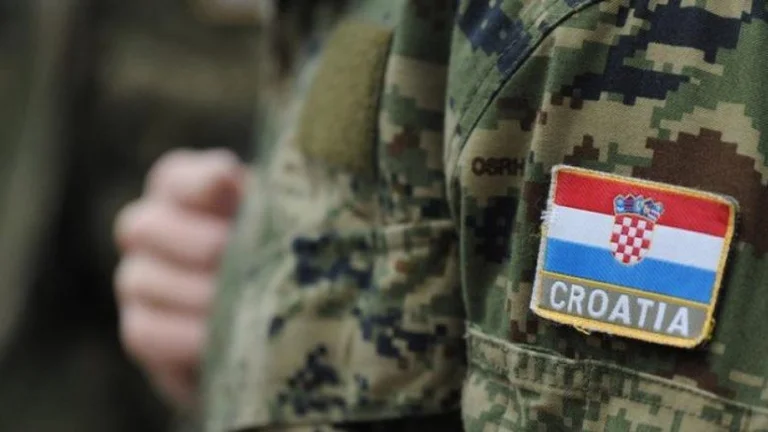
(6 years ago)From next year, Croatia will triple its military presence in Kosovo if the country's government and parliament accept the proposal to send a combat infantry company to KFOR for the first time. That country's current contingent in Kosovo consists of 38 members with two Mi-17 transport helicopters and officers [...]
From next year, Croatia will triple its military presence in Kosovo if the country's government and parliament accept the proposal to send a combat infantry company to KFOR for the first time.
That country's current contingent in Kosovo consists of 38 members with two Mi-17 transport helicopters and staff officers.
Croatia is also involved in the development of the Kosovo Security Force (FSK) through the work of NATO Liaison and Consultative Team (NALT).
Our “Contingent should have 145 members by early 2021. We are waiting for a decision that will be made by all those institutions in Croatia that have to make that decision... We already have our own air component, military intelligence component and national support element” there, Croatian Army Commander General Boris Sheric said, at the “Afficiency exercise 20”, the Balkan Security Network wrote.
In the exercise held last month, training of the motorised company, which would have to join KFOR, was appreciated. She will be on standby by 2021.
Portal analyst Igor Tabak says of the Balkan Security Network it is still unclear whether Croatia will increase its contingent in Kosovo in 2021, because that topic has not yet gone for parliamentary procedure.
“Croatia is not the only NATO country to participate there and it is not an activity that would arouse any particular attention and emotions in Croatia. Such a mission is also evidently less dangerous than in Afghanistan”, he added, broadcasts Telegrafi.
The portal -- Obris -- recalls that for the additional engagement of about 100 Croatian soldiers, the government's support, the respective parliamentary committee and parliament must be secured, but it also estimates that this is something that, according to all likelihood, “should happen by the end of”.
If Zagreb strengthens the contingent in Kosovo, it will mean joining the trend of strengthening the presence of regional armies on that mission. They now make up a significant part of KFOR's overall presence of 3,419 members, the Telegraph broadcast.
Hungary in the KFOR mission left 418 troops -- Slovenia 271, Greece 119 and Romania 53 -- while Montenegro was an officer. The latest contributor is Northern Macedonia, which sent 44 troops to Kosovo on 17 October. Hungary has earlier expressed its ambition to take over KFOR and increase the number of contingents.
With the added commitment in Kosovo, Croatia would gain an additional reference within NATO and the opportunity to improve capacity tailored to the Alliance's needs in terms of a low-risk mission such as KFOR.
By contrast, Croatia has very developed relations with authorities in Kosovo in the field of security, mainly in the field of training and schooling, thus further advanced intelligence activities in the region.