7 minutes ago
About 500m euros, government owes citizens

Periskopi(6 years ago)
(6 years ago)The government has failed to pay citizens and businesses 457m euros as it owes them. But he has not even managed to register from businesses, even though counted, 64m euros. Doing these obligations would have helped the country have better budget stability, said [...]
The government has failed to pay citizens and businesses 457m euros as it owes them. But he has not even managed to register from businesses, even though counted, 64m euros.
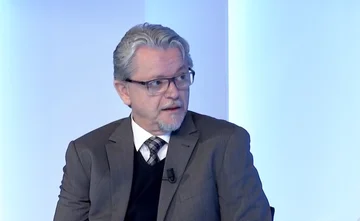
Keeping these obligations would have helped the country have better budget stability, said in an interview for Online Economy, General Auditor Besnik Osmani.
We have expressed concerns in relation to Government on several issues related to public finances in Kosovo. Management unpaid obligations and accurate accounts. The government has failed to pay businesses and citizens 457m euros it owes. It has failed to register from businesses even though calculated 64m euros that would have better budget stability”.
Osmani argued that the government finances large projects that were not in the strategic plan, clarifying that 22m euros of the budget have been miscalculated.
“We have a report on the medium-term framework government finances large projects that are not in the strategic plan and this deviation exceeds 75% from the priority list. Financial control framework not respected to the proper extent. 22m euros in miscalculated budgets and a preliminary increase for 6m euros indicating the situation is deteriorating and recommendations amount to their failure or improvement”, Osmani told EO.
Osmani said public companies also have 144m euros of unpaid obligations, so according to him, the new Parliament and the new Government expect significant recommendations for improving public administration.
We have 10 companies we have given in spare opinion, which are a disturbing figure of the financial stability of public companies because these alone have 144 million unpaid lending obligations that will hardly be able to pay. We have shown that the principle of the existence of these public enterprises in the future is uncertain and we need to have a certain number of measures to be taken. The new parliament and the new Government expect some important recommendations for improving public administration in Kosovo”.
He is not even satisfied with meeting the recommendations on the part of institutions, where he says the average does not exceed more than 39%.
The “level implementation of our recommendations continues to be low despite a slight improvement. Because the country average does not exceed 39% of the recommendations. 1160 recommendations in June of this year and we are measuring their implementation. But if we compare past years we are not satisfied and without their implementation we will have no improvement in good governance in Kosovo”, he has said.
Osmani has isolated the health sector as one of the institutions that has well fulfilled audit recommendations, while saying municipalities continue to fare worse in implementing them.
“Recommissions are mandatory and budgetary organisations should apply recommendations that stem from a process and audit and the actual situation confirmed and translate into concrete recommendations. We don't have an institutional assessment but that conveys recommendations implementation trends. We've had a notable improvement in the health sector in the previous year, even at the central and local level in the overwhelming majority of the” municipalities.
As far as financial management and reporting quality are concerned, we have a slight improvement in resource management in this sector. We have other institutions, especially at the local level where municipalities stay badly. The implementation of recommendations is lower and does not exceed 25 %”, Osmani says, adding that the biggest recorded violations are in the public prosecution of signing contracts.
Until he says co-operation with the prosecution is harvests and institutionals.
The “Sector where we have recorded that there are greater violations in the public prosecutor part of the contract signing part rather than part of the contract execution. With the prosecutorial system in Kosovo, we have a co-operation agreement where we exchange information when we encounter in the field of audiences and should be addressed in justice and headed there for further treatment. In many cases after addressing them, our auditing teams and activities, depending on the case of the institution, co-operate with state prosecutors to give our expertise, then see even investigators from the Kosovo Police. Co-operation is correct and institutional”.
I don't have any information that's come up with an indictment, the goal is not to make an indictment but that when we face information and evidence that might be in the interest of the justice system to address it. We are involved in the debate that took place in the Kosovo Assembly. We don't favour auditing by our institution, if that happens on the parliament's side and a law is elected, then we'll do it”.
Osmani argued that they have the capacity to audit political subjects, but, as he says, the Assembly must issue a special law.
“We have the capacity for auditing political parties, but we think it is still important that an institution that is rapidly developing and auditing in the Kosovo republic is taking its burden not to disrupt this trend of integrity and reputation. There should be certain rules that I know they have to manage those expenses”.
Each year the Assembly is obliged to choose an internationally licensed company to do auditing the annual mirrors of the Audition Institute. They're transparent and there's the results on the web. That budget that the assembly gives us to maximumize through the central audit.
Osman arrived in 2019 considered membership in the International ITOSAI Audition Office. According to him, this organisation will help review reports at the European level.