2 hours ago
The Most Effective Tool for a Bed

Periskopi(7 years ago)
(7 years ago)Run to the park and train the gym. And still swimming in the pool and walking in green environments or bicycle exercises. What matters is the movement. Because according to researchers at the University of Texas Southwestern Medical Center, there is no diet that produces more results than exercise, physical activity to have a belly [...]
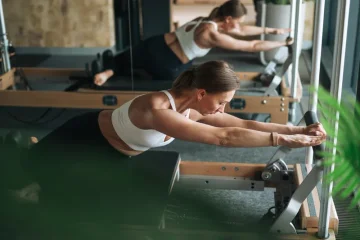
Run to the park and train the gym. And still swimming in the pool and walking in green environments or bicycle exercises. What matters is the movement. Because according to researchers at Texas University's Southwestern Medical Center, there is no diet that produces more results than exercise, physical activity to have one Plain womb and to overcome hidden fat, accumulated in the stomach, even more than pharmaceutical treatments, commonly used to lose weight and even surgery.
fat
We should start with the assumption that there are different kinds of fat tissue in the womb: visceral and under skin. The internal fat, examined in this research, is part of the fat tissue concentrated inside the abdomen hollow and distributed between the internal organs and different from the one under the skin, which is focused only on the layer under the skin. According to earlier research, visual fat would be more harmful: a study by Michigan University, published in 2017, has shown that it is the primary responsibility for producing fibroblast - a protein capable of transforming normal cells into cancer cells.
Sports and Medicines
While it may seem quite clear that physical activity helps you to lose weight, few research has so far focused on what was the best strategy for having a flat stomach. To understand this, researchers reviewed some 2,500 studies, comparing two different types of weight - loss interventions: one focused on lifestyle change, introducing more physical activity and the other based on pharmaceutical treatments, usually used for weight loss approved by US Food and Drug Administration (FDA). The results of the study showed that both physical training and pharmaceutical treatment cause a reduction in visual fat. But the surveyed reductions were more important for every total weight of the body's physical activity.
More moves, less inches
For example, say researchers, a loss of about 18kg of weight would be required with a pharmacological treatment compared to about 40 pounds [14 kg] lost with training to reach a square drop of 3cm of visual fat. When research actually uses body weight or mass index as parameters, it is not possible to determine whether interventions reduce fat in any part of the body or simply near the surface.