10 minutes ago
Economy expert: There can be no investment where there is no hope for citizens

Periskopi(7 years ago)
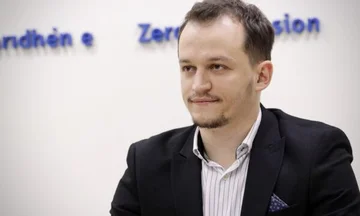
(7 years ago)The bad image that was created for Kosovo before the world has caused it, 20 years after the war, to have no strategic investors, said Agim Demukaj, economy expert. The civil and military presence of internationals makes Kosovo still qualify for crisis, so, according to him, it is logical that this frightens [...]
Demukaj, who has been working for several years as an expert on economic issues at the World Bank in Kosovo, in an interview for “Kahen Ditore” has cited several major projects that have failed, and as a result, Kosovo is not part of the investment map.
He's been talking about the impasses in the realisation of money-making projects through loans and cases in which international financial institutions have been forced to withdraw the means they have in store for them.
In the interview, he has also talked about resources Kosovo can offer to foreign investors. According to him, Kosovo can take pride in youth, but not in their professional preparation. It has said that Kosovo has a surplus of diplomas, but not even quality, since, as it has said, most graduates at Kosovo universities are not capable of the labour market.
KD: How much does Kosovo have capacity to absorb loans and implement projects?
Demukaj: Kosovo for the fact that it still has donor presence is evidence that it does not have the capacities what it should have. The World Bank is not present in developed EU countries, but in countries where capacity is always lower. The World Bank each year conducts absorption capacity analysis and is in some form part of the fund aloption formula.
On the basis of that, Kosovo stands above average, but is still far from what we want to be. This is seen in the implementation of projects that have been signed with loans to the World Bank or other financial institutions that have been blocked.
When it's capital investment, it's easier. Suppose he makes the procurement of a school, and the means are immediately withdrawn. But in the project for efficient energy, there's the implementation, and that's until the procurement procedure has not been carried out.
KD: Government and General Auditor reports tell of the problems emerging in the withdrawal of loans for the initial agreements projects. In what obstacles have international financial institutions faced over these loans?
Demukaj: Hostages have been procurement procedures. International institutions have their procurement procedures, which are valid for procurement of jobs financing them. These dominate the Prokuring Law in Kosovo.