16 minutes ago
Bigora: Jihad does not mean shedding blood into foreign conflicts but building up our country

Periskopi(8 years ago)
(8 years ago)Kosovo's Imams will soon begin to hold religious lectures for the rehabilitation and reintegration of persons imprisoned through the ten corrective institutions of the Republic of Kosovo, in particular for convicts who have been part of foreign wars or condemned by terrorism and religious radicalism. Laws will be coordinated with commitment [...]
Kosovo's Imams will soon begin to hold religious lectures for the rehabilitation and reintegration of persons imprisoned through the ten corrective institutions of the Republic of Kosovo, in particular for convicts who have been part of foreign wars or condemned by terrorism and religious radicalism.
The laws will be co-ordinated with the commitment of Kosovo's Islamic Religious Community (BIK), as part of the agreement reached last month between this religious institution and the Ministry of Justice, which aims at the convicts' repentance for their deeds and after the suffering of the punishment to make their contribution to society.
From the Kosovo Islamic Community for Anadolu Agency (AA) shows that the number of Kosovo citizens who have participated in foreign wars is about 340, including men, women and children, part of whom have returned, while another part has been killed in those countries.
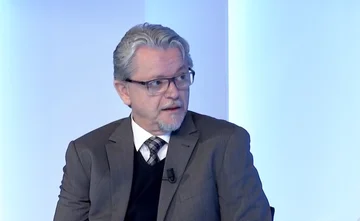
BIK leader Sabri Bajgora, in a pronomination for AA says the dangers of religious radicalism are present worldwide and that no state of the world is immune (disfellowshipped) from this phenomenon. Stressing that even in Kosovo there are no such risks missing, he says BIK has always raised its voice not to go through these wars and conflicts.
Kosovo's <x0moids with their speeches at mosques have contributed to young people being conscious and not taking that path, which has been wrong. Because if we take it from the religious spectrum, the holy jihad that we call, it doesn't mean war, but it means trying to build our country. This is the jihad that we must promote, this is our fight to advance our country, not to shed blood on conflicts that do not belong to us”, claims Baygora for AA.
) “program predicted to contribute to 1,600 to 1,800 prisoners”
BIK's role models and hosts will have access to prisons along with a wider spectrum of psychologists and sociologists. It is predicted that they will contribute to the rehabilitation of some 1,600 to 1,800 prisoners, including those convicted of radicalism and religious fanaticism, whose numbers are supposed to be about 50.
Based on the list that has been processed to the Ministry of Justice, Bajgora noted that in this process in Kosovo, 20 theologians will be engaged, among whom two professors at the Faculty of Islamic Studies who will legalise in corrective homes with the feminine world and children.
Meanwhile, the other 18 are scheduled to legalise in ten corrective houses, including the Duz High Security Prison and Dubrava Prison, which has mostly prisoners.
According to Bajgora, this practice designed to be implemented by BIK with legalisation for prisoners is implemented by all European countries, which engage in a special treatment for freedom deprived.
He further explains that the hosts will be closer to the prisoners by communicating from the spiritual spectrum, as, he says, prisoners for acts of radicalism and terrorism are known to be hurt and more repentant than others.
Bajgora points out that the communication of prisoners with hokers, sociologists or psychologists still depends on the desire and will of those deprived of the sentence, but emphasises that those engaged in this BIK task are educated with additional training to meet this class of prisoners.
“Religious lines for prisoners will be held once a week”
The exact time for speeches to begin is not yet known, but Bajgora points out that such speeches are expected to be held once a week, while their length has not yet been determined. Meanwhile, for prisoners with different dolphins, there will be another resociation programme, respectively, a preparation for them to be once again part of society after the suffering of punishment.
Their” Styles will be more of an educational aspect, a moral, ethics or courtesy standard. Then with the other group we'll have more self-aware speeches, with them to see what their arguments have led them to take those radical actions and to give against our arguments which are the arguments of Islamic world scholars”, says Bajgora for AA.
Baygora ultimately stresses that BIK support from the country's government, as well as security segments dealing with the phenomenon of radicalism and terrorism, has been irrevocable. It suggests that the Kosovo government in 2015 has also passed two laws that effectively prohibit the participation of Kosovo citizens in foreign wars, under which the condemnation of these people is possible.