<x0) Record films arrive in Kosovo 18 - 20 June
 (2 years ago)
It returns to Kosovo “Fare Cinema”, the summary of Italy's Ministry of Foreign Affairs and International Co-operation promoting Italian cinema and film industry in the world. The meeting begins between June 18th and 20th at the “Kino Armata” Pristina and June 19th at the school “Nena Cabrini” in Prizren. The show is scheduled to [...]
It returns to Kosovo “Fare Cinema”, the summary of Italy's Ministry of Foreign Affairs and International Co-operation promoting Italian cinema and film industry in the world. The meeting begins between June 18th and 20th at the “Kino Armata” Pristina and June 19th at the school “Nena Cabrini” in Prizren. The show is scheduled to appear twice (in 18th in Pristina as national premiere and 19th in Prizren) for the film that broke record “Céè ancora doman” by Paola Cortelles, “La Chimera” by Alice Rohrwacher (19 June) and “Rapio” by Marco Bellocchio (20 June). Films will be shown in the original language (literally) with English titra, and for film “Céè ancora doman” will also have Albanian titra.
“We are extremely happy that we are returning to Kosovo the festival Fare cenemaı with Italian films most appreciated at multiple prices last year. This event will offer the opportunity to plunge into stories, characters and artistic vision of some of the most internationally beloved Italian directors and actors. Through this initiative, we also aim to strengthen cultural ties between Italy and Kosovo, encouraging an exchange of ideas and prospects that will enrich the two communities”, Italian Ambassador to Pristina Antonello De Riu and the director of the Italian Institute of Culture of Tirana (even for Kosovo) say. Alessandro Ruggera.
With a movie Céè anchora domaniʹ in particular, we complete the national holiday celebrations. The film, in fact, takes place in 1946, a year in which free elections were held in Italy after the end of the war and 20 years of fascism; with this opportunity for the first time, women were able to vote and elect. The fight for women's rights is the subject we will devote a particular debate after the film ends. The second film, Kimerra, is how spiritual, historical, and documentary dreamer, with a rare look that makes us realize how much they affect our present, in general, evidence of the past and art. Finally, R eptoʹ refers to a very, little - known event that occurred on the eve of the Italian State proclamation in 1861, which invites us to reflect on respect for individual autonomy and the consequences related to forced indoctrination and denial of identity”, add De Riu and Ruggera.
“Fare Cinema” is thematic summary dedicated to promoting Italian cinema and film industry, organised in co-operation with the Ministry of Culture, ANICA, ICE, Istituto Lucée énecità, Italian Film Commissions and the Italian Cinema Academy. Launched in 2018, it envisions organising events from the diplomatic-consultary network and Italian culture institutes abroad with a double purpose, promotion of cinema, as well as Italian professionals in the sector.
Parts
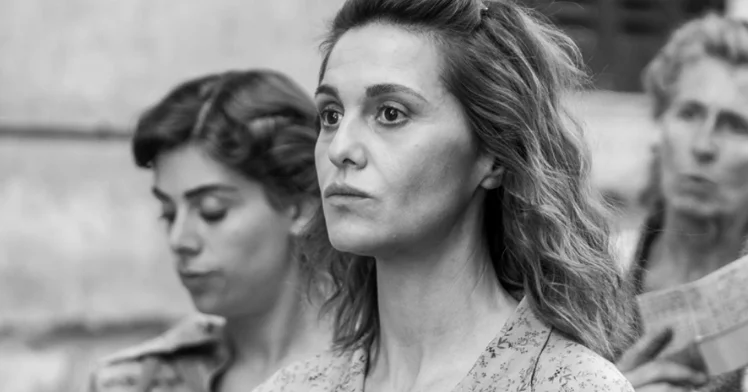
black and white film “Cíè ancora doman” (2023) tells us the events of a family in Rome in 1946; the war has just ended, and the city is still occupied by American soldiers. Protagonist Delia, wife and mother, sacrifices herself every day trying to make everyone happy, even though no one seems to see and appreciate her efforts. She is forced to lead multiple lives in parallel: caring for home and children, performing a hundred different jobs to supplement her family income, caring for her disabled and tyrannical father-in-law, and being the victim of continued violence by her husband Ivano. Her daughter's marriage changes her outlook on an unfailingly predetermined way of life: Delia is unable to accept this fate for her daughter, and probably not even for herself.
“Kimera” (2023) is held in Tuscia in the 1980s. A group of cemetery robbers earn a living stealing Etruske's findings. Among them is Arthur, a young English archaeologist who has the gift of finding out where the ancient tombs are. Arthur befriends Italy, a Brazilian single mother who follows her inner voice and rebels against the systematic desecration of sacred sites. Each character follows his own key. The film is screened among almost documentary scenes of village life, the historical reality of illegal trafficking in archaeological finds, the life of a large bourgeois family, calls of the afterlife, and efforts to create a different life in a municipality of women and children, almost repropossing the values of mysterious etruscan society, whose artifacts bring back the bright smiles of refined and autonomous women.
“Rapio” (2023) is inspired by a true story. We are in Bologna in 1858, the pope's soldiers enter the home of the Jewish Mortara family to force their seven - year - old son Edgardo. As a baby, he was secretly baptized by the servant girl, and the canon law is irreversible: he will have to live in Rome to receive a Catholic education. His family will do everything to bring their son back, even moving international politics, but the pope will refuse to return the child. In the background are the historical events of the time: The power of the Catholic Church is moving toward the fall, and the troops of Savoc will invade Rome, which will become the capital of Italy.
Show Calendar
- Tuesday, June 18, Kino Armata, Pristina
“Céè ancora domani” by Paola Cortelles (2023), Italian with titra in English and Albanian (in English kindly translated from “Centro Dante” in Pristina). A moderate debate comes from Fjolla Mucaj (The Centre for Information and Social Improvement) with Bjeshe Guri (The Youth Initiative for Human Rights Kosovo) and Adelina Berisha (The Women of Kosovo) and finally a cocktail case.
- Wednesday 19, Kino Armata, Pristina
<x0)
- Wednesday 19, 20, Nanna Cabrini School, Prizren
“Céè acora domani” by Paola Cortelles (2023), Italian with tista and Albanian.
- Thursday 20 June, 19, Kino Armatta, Pristina
“Rapito” by Marco Bellocchio (2023), Italian with tista.