Kosovo Council of Europe ambitions towards finish-up
 (2 years ago)
Kosovo can take a step closer to membership in the Council of Europe on 16 April, when its Parliamentary Assembly examines a report recommending its membership. The vote will be held in Strasbourg, and if two-thirds of national parliamentarians, representing the organisation's 46 member states, give the green light, [...]
The vote will be held in Strasbourg, and if two-thirds of national parliamentarians, representing the organisation's 46 member states, give the green light, the issue will pass before the Council of Europe foreign ministers exactly one month later, and they will make the final decision.
Membership in the Council of Europe a goal of Kosovo since declaring independence from Serbia in 2008 would, among other things, mean representing its parliamentarians at the organisation's Parliamentary Assembly. Kosovars could also present their cases to the European Court for Human Rights. The country would join the Union of European Broadcasting, paving the way for its participation in the annual Eurovision song contest, reports REL.
The odds are that two-thirds of the vote is reached. A report on this issue was adopted on March 27th by the Committee for Political Affairs and Democracy of the Parliamentary Assembly of the Council of Europe, which declared that Kosovo's “aspirats to join the Council of Europe must receive positive answers”.
Currently, 12 out of 46 Council of Europe member states do not consider Kosovo independent state less than the blocking minority.
These include Serbia and Bosnia and Herzegovina, five EU countries: Cyprus, Greece, Romania, Slovakia and Spain, as well as Armenia, Azerbaijan, Georgia, Moldova and Ukraine.
They do not have any common reason, but most of these countries oppose Kosovo's independence either because of their internal territorial disputes, or because of their issues with minorities, which could potentially require independence.
However, not all representatives of these countries can vote on political views expressed by their capitals for Kosovo.
Ukrainian representatives, for example, will have “a free vote”, and it may happen that other countries follow suit.
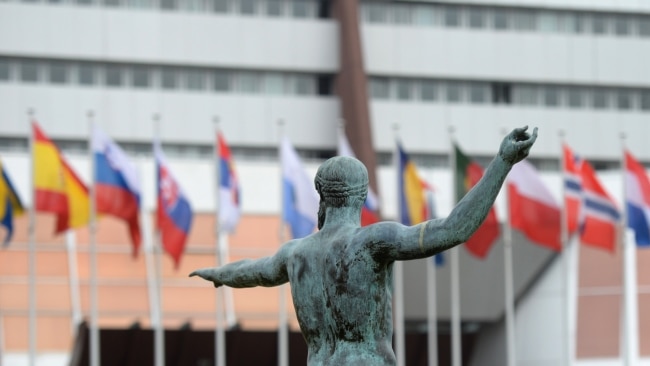
Likely, there are many representatives who will choose to abstain from what would pave the way for a green light for Pristina. It is also significant that the author of the report, Dora Bakoyannis, is former foreign minister of Greece and the sister of current Greek Prime Minister Kyriakos Mitsotakis.
Consequently, it cannot be ruled out that the Greek delegation ʹ despite the formal stance of non-recognition of Kosovo should support its membership in the Council of Europe.
So there will be a number game in Strasbourg.
MPs from Hungary's ruling party, Fidesz, will likely vote against Kosovo, despite the recognition of Kosovo by Hungary. This reflects Budapest's ever closer ties with Serbia.
The group of those whom the Council of Europe calls the distinguished <x0 jurists”, who have studied the issue of Kosovo's eventual membership legally.
They have stated that the assessment of citizenship is, after all, a political decision, and have stressed that Kosovo's presence in international organisations does not bring any executive competence, that Kosovo authorities exercise jurisdiction over Kosovo's territory and population, that Kosovo has international relations and that the International Court of Justice has concluded that Kosovo's declaration of independence has not been contrary to international law. So there is a legal basis for membership.
But why is this happening now?
There are several reasons for this. Initially, Russia was excluded from the Council of Europe immediately after Ukraine's full-scale invasion in February 2022. With Moscow out of the organisation, Serbia has lost one of its biggest allies in this war. Then there is the fact that Kosovo, now, has joined several bodies linked to the Council of Europe, such as the Venice Commission and the Council of Europe Development Bank.
Linked to this development is the dialogue on normalising relations between Kosovo and Serbia, mediated by the EU, which continues at different diplomatic levels since 2011.
It is fair to say that this dialogue is now at the lowest level ever, due to a number of incidents that took place last year, including Pristina's decision to use Kosovo plates, the mass resignation of Kosovo Serbs from police and other public offices, local elections without Serb participation and the Belgrade-related attack on Banjska Monastery, which has resulted in the murder of a Kosovo police official.
But prior to that, there has appeared to have been a major breakthrough with the Ohrid Agreement, which Kosovo and Serbia have achieved in March 2023.
Serbia forms team against Kosovo membership in Council of Europe
At one of its points it says “Serbia will not oppose Kosovo's membership in any international organisation”. Two other provisions are also important in this context: that Kosovo “will commit to providing a proper level of self-awareness for the ethnic Serb community in Kosovo” and “will ensure the security of the Serbian Orthodox Church's property within its limits”.
There are two things to know about this agreement. First, it has not been signed by either side, even though Kosovo Prime Minister Albin Kurti has expressed at least readiness to do so. So the legality of the agreement is questionable. Second and more importantly, there is no reconciliation as to what needs to be implemented first.
Kosovo, in a sense, has moved first. That happened when her government decided in March to hand over ownership of 24 hectares of land to the Serbian Orthodox Church Monastery in Decani, in the western part of Kosovo.
Kosovo's Constitutional Court has ruled in favour of the monastery since 2016, but successive Kosovo governments have refused to comply with that decision.
Kosovo takes step towards implementing Decani Monastery decision
This twist has prompted Bakoyannis to recommend Kosovo's membership in the Council of Europe.
But Kosovo has two more tasks to carry out: the establishment of the Serb majority municipalities' association and the handling of the property expropriation issue in those municipalities. According to the Bakoyannis report, both issues should be a “age after membership” Pristina. And the question is whether the wider international community agrees.
If the case goes to the Parliamentary Assembly of the Council of Europe, true politics, then it will be made about the Committee of Ministers' decision next month. As in the Parliamentary Assembly, the decision may be made in a two-thirds majority, but it would be unprecedented ministers, so far, have always reached consensus on accepting new members.
Serbia has already hinted it will do everything possible to prevent Kosovo membership and it can succeed.
A scenario may be that in May no final decision will be made.
The so-called QUINT, composed of France, Germany, Italy, the United Kingdom and the United States, wants to see a real bill submitted by Kosovo to the Association of Serb-run municipalities before agreeing that the issue will be in order day at the ministerial meeting.
They see this as the last chance to pressure Kurt to reconcile the issue, as membership in the Council of Europe is the last Western carrot to be offered to it. EU membership is still a dream.
For the establishment of this association, Kosovo and Serbia were hired in 2013, but the Constitutional Court of Kosovo has questioned the legality of the agreement, both for executive competencies that would enjoy association and for its ethnic composition, as there seems to be no non-Serb employed there, which, as argued, would be unconstitutional.
So Kosovo could be given a boost this week during the vote at the Parliamentary Assembly of the Council of Europe, but the final decision by 46 foreign ministers could be postponed for at least a year, unless more progress is achieved in the coming weeks.