5 hours ago
A new plant can eliminate humans and render the Earth uninhabitable
Periskopi(3 years ago)
(3 years ago)The formation of a new “supercate continent” can eliminate people and all other mammals still alive in 250 million years, researchers are saying. Using the first models of the remote future supercomputer climate, scientists from the University of Bristol in the United Kingdom predicted how climate extremes would intensify [...]
The formation of a new “supercate continent” can eliminate people and all other mammals still alive in 250 million years, researchers are saying.
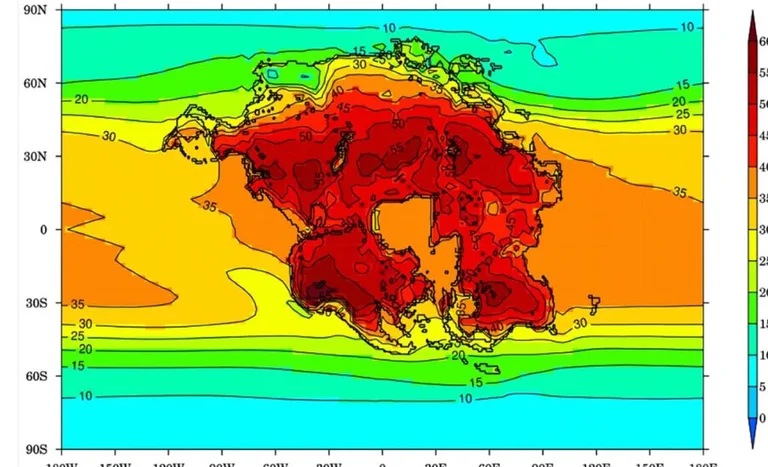
Using the first models of the distant supercomputer climate of the future, scientists from the University of Bristol in the United Kingdom predicted how climate extremes would intensify after world continents unite to form a supercontinent, Pangea Ultima, in about 250 million years.
They discovered that it would be extremely hot, dry, and practically uninhabitable for humans and mammals who have not developed to cope with prolonged exposure to excessive heat.
Researchers simulated trends in temperature, wind, rain, and moisture for the supercrucate and used models of the movement of tectonic plates, ocean chemistry, and biology to calculate carbon dioxide levels, CNN writes.
They found that not only the formation of Pangea Ultima would lead to more regular volcanic eruptions, extracting carbon dioxide into the atmosphere and heating the planet but also the sun would become brighter, generating more energy and further warming the earth, experts in Nature Geoscience noted.
The newly displayed “Superk continent would effectively create a triple blow that includes the effect of continent, the hottest sun and more CO2 in the atmosphere,”, Alexander Farnsworth, senior research associate at the University of Bristol, and lead author of the letter, said in a statement Monday.
Farnsworth noted that increasing heat would create an environment without food or water sources for mammals.
It is essential not to forget our current climate crisis, which is the result of human greenhouse gas emissions,”, co-author Eunice Lo, researcher on climate change and health at the University of Bristol, said in the report.