5 hours ago
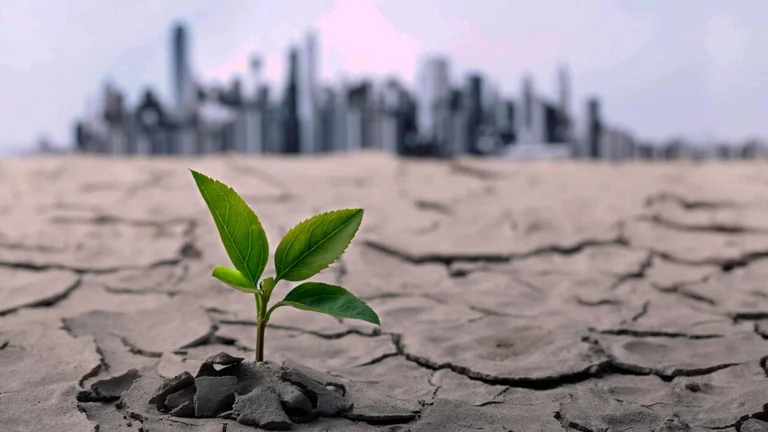
How disturbing are climate change?
Periskopi(3 years ago)
(3 years ago)Climate change on Earth has occurred with certain cycles throughout the history of the planet, including the arrival and evacuation of glaciers in different ages. We all know that one of the most disturbing and controversial problems today, the fact that it directly affects life on earth, is [...]
We all know that one of the most disturbing and controversial problems today, in the very fact that it directly affects life on earth, is climate change.
But our response to climate change seems to be increasingly polarizing. On the one hand, there are people who say that high temperatures show that the world as we know it has only decades and then the end comes, and there is nothing we can do to prevent it.
On the other hand, we have those who claim that the very notion of man - made climate change is an international conspiracy.
None of these extreme positions stand. Climate change caused by humans is not a conspiracy theory, but it is equally true that global disaster is not a imagined outcome.
It's certain that rising greenhouse gases in our atmosphere are increasing temperatures worldwide, and this process will continue until we stop the emissions of more of them. In other words, climate change is happening and we can stop it if we decide. What's uncertain is what we're actually going to do to fight it.
So we have security and uncertainty, the known “ ” and the known “ “, as former US Defence Secretary Donald Rumsfeld said. Unfortunately, people, both on an individual level and on a social level, cannot face such a combination.
We get the first known ones. Besides the unbelievers, most people are aware that climate change is happening and we have to do something about it.
The problem is that this acquaintance is so well known that it has become part of the background of everydayity. Very few of us are able to spend a proportional amount of time worrying about climate change, given everything else the world asks us to pay attention to whether our jobs, families, rising inflation, poverty, or even war.
And because public feelings change, so does the political will to address this issue: at the moment, very few governments are willing to have frank conversations with voters about costs, risks and benefits of climate change, beyond generalistic promises to achieve zero emissions, without actually specifying how.
Climate activists, including Greta Thurberg and the Just Stop Oil movement in the United Kingdom, have used various forms of protest in an effort to raise awareness of climate change, on the noise of the background of everyday life.
However, despite their efforts, a recent YouGov survey of adults in the United Kingdom found that they thought the environment was only the fourth most important issue facing the country, after the economy, health and migration.
Ironically, all these issues will be massively affected by the warming of the world, which will damage productivity, cause early death and increase migration as people seek to leave the parts of the world that are becoming more and more immortal.
Extreme events, as we have just experienced in July with the hottest month recorded, focus more attention on the diplomatic predictions of the future, but even then reactions can be mixed. For example, record temperatures in Death Valley, California, have become a tourist attraction.
One way to clarify the connection between such events and the long-term climate trend is to increase climate attribution studies.
While we may at one time have had to speak in general, saying that certain types of events will become more likely than climate change, we can now be specific. According to the World Weather Attrition initiative, the heat waves in the US and Europe this July would have been virtually impossible “to” in a world without climate change caused by people.
Let's go back to the unknowns now. For people now involved in the dangers of climate change, these are the biggest concerns.
Should we have predicted the extreme weather of July?
Is global warming worse than expected?
How will we adapt to extreme heat?
Can we experience “turning” in a helmet resulting in lightning heat?
These are all valid questions.
But focusing on them to the extent of paralyzing action, as some who predict the end of the world, is like allowing fear of a deadly car accident to prevent you from moving the wheel to avoid it.
Then there are unknowns related to our actions. Can we decarbonize fast enough to avoid the worst scenarios? Will we be able to make untested technologies like catching and preserving carbon work? These are more difficult to answer and require much more view of crystal ball, but the good news is that switching to renewable resources is happening faster than we can understand, with strong actions both from the US and China.
In fact, we may be just a few years away from the beginning of the end for fossil fuels.
Finally, how concerned should we be?
What we can do is always have a clear and discreet assessment of science. No end to the world. No denial. Just reality. /abcnews. al