7 hours ago
“appears tonight Blue superhenna”, will no longer be seen until 2037
Periskopi(3 years ago)
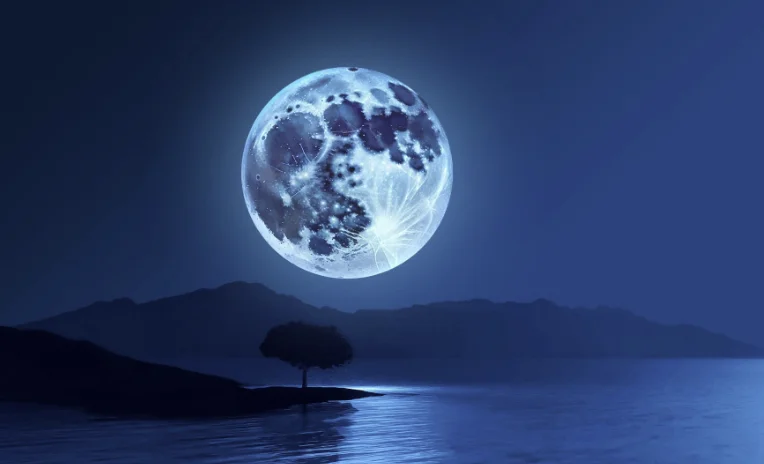
(3 years ago)The second quarter of the month, which also happens to be the nearest and brightest moon of 2023, will appear Wednesday evening. The moon will be closer than usual, only 222,043 miles away on the night of August 30, 2023, making it look more [...]
The moon will be closer than usual, only 222,043 miles away, the night of August 30, 2023, making it appear more common and larger than the title of “superene”.
But this is no feature of this full moon. Because it's the second moon at its end, it's called “superene blue”. The last time two full super moons decorated the sky on the basis of time was in 2018. It was not in 2037, according to Italian astronomer Gianluca Massi, the Virtual Telescope Project. The first quarter is the year was in July. The fourth and last will be in September.
When do you want “superene blue”?
According to NASA, the full moon will be Wednesday night, August 30th 2023, appearing in front of the sun at 21:36 EDT.
What's a blue moon?
Despite what might be the name suggest, a blue moon has nothing to do with the sun's color, so the moon will not look blue on Wednesday evening. Sometimes, though, volcanoes have caused the moon to look blue. According to NASA, more than a blue moon is defined and the magazine Sky & Telescope in 1946, and that name has two days to have a full month.
What's a super haven?
The moon orbit around the earth is an elips, not a circle tells. A moon and a super moon when she comes within 90% of her consciousness, its point closer to Earth. According to NASA, the nearest super moons about 17 percent larger and 30 percent larger are larger and fainter in the year. That 17% is not actually done for the day before, but NASA says the super moons are more true than they are. The broad duke for the nearest full-fledged view, “superhea” is not an official astronomical term. In fact, it was created by an astrologer in 1979.