All of what is known about mosques in northeastern Skifty, which are frequented by suspicious tissue
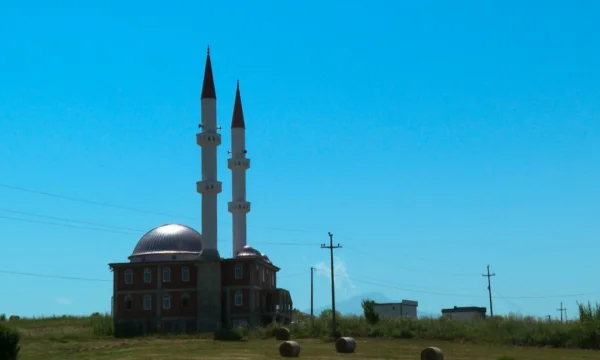
 (3 years ago)
Kosovo police say that the control and management of two mosques in the municipality of the Year, allegedly controlled by the self-declared “imimimma”, belongs to the Islamic Community of Kosovo (BIK). In a written statement sent to Radio Free Europe, Kosovo Police say they have rejected no complaints or denouncing in connection with [...]
In a written statement sent to Radio Free Europe, Kosovo Police say they have rejected no complaints or denouncing in connection with the two mosques case.
The Islamic Community of the Year, which operates under BIK, says that two mosques, one in the village of Skifteray and the other in Ramnishh, are out of BIK control and management and that they are frequented by suspicious people.
Hoxha: Glasses run by extremist groups
“... is an extremist group, not subject to the procedures and rules of the Islamic Community of the Republic of Kosovo”.
The reason for this, says Council of Islam Community of the Year Chairman Husamedin Hoxha, has been the failure to meet the conditions and standards stemming from the Constitution of the Kosovo Islamic Community for the position of the mosque imam. According to him, Missin has no adequate schooling to be imam.
We've already announced a contest. No one was notified, because of the group, which manages the mosque and which, in the sense of Islam, is an extremist group, not subject to the procedures and regulations of the Islamic Community of the Republic of Kosovo, and, at the same time, the Islamic Community Council in the year”, says Hoxha about Radio Free Europe.
He adds that the other mosque, in Ramnishh, is built without the permission of the Islamic Community of Kosovo. From last year, he says, that glass is managed by a group of individuals, even though the Islamic Community of the Year Council has tried to put it under its umbrella.
We opened the competition to manage it. But we have never been given the chance to go any imam [appointed by the Islamic Community of Kosovo], because of these groups, which I am calling extremist”, Hoxha points out.
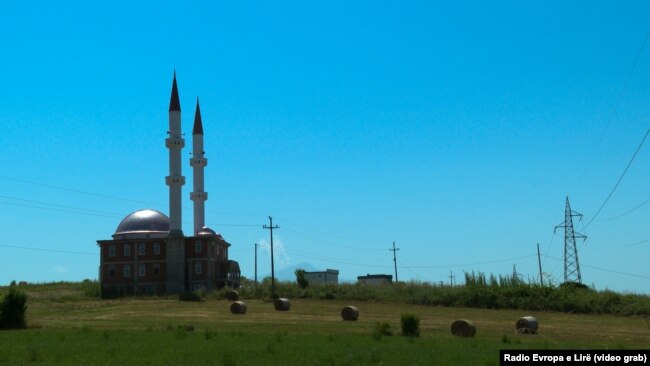
The mosque in Ramnishh is headed by Ilir Emine.
The chairman of the Islamic Community Council in the year, Hoxha, calls the self-declared “” both Misin and Emin.
However, he does not specify any evidence of religious extremism activities in these mosques, but says his doubts have conveyed them to the law organs.
In the mosque on Skiftey “there is no extremism” ) for imam “Sets djemat”
Free Europe Radio visited mosques in Ramnishh and in Skifteray.
The mosque in Ramnishh was closed while its leader, Ilir Emine, was not available.
The mosque's leader in Skifteray, Mubarek Misini, did not want to be promoted for Radio Free Europe, over concerns Hoxha expresses.
Dzafer Rexhepi, resident of the village of Skifteray and member of the mosque Council in this village, says Mubarek Misini is imam at the village mosque for 20 years now.
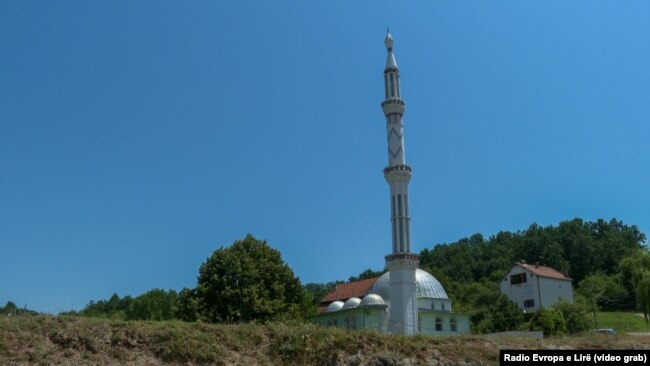
The decision of the Islamic Community of the Year, of 2021, so that Missini does not exercise the duty of imam, he sees it as controvers and uncoordinated with the mosque council and its Jeremiah, or the community that frequents it.
According to him, against Misin is only chairman of the Council of the Islamic Community of the Year and not the Islamic Community of Kosovo, with whose officials, according to Rexhepi, the mosque Council in Skifteray has talked.
They're not against Mubarek. Against Mubarek is Husamedin Hoxha with the people behind him. We don't know who they are. We, like Jeremiahs, have made a unanimous decision based on the fact that we have considered this decision [for Missin's departure from imam's duty] as personal, private and contractorial... to continue with Mubarek Missin. It means 180 houses [of the village]”, Rexhepi says.
He rejects Hoxha's claims that the mosque in Skifteraj is viewed by suspicious and extremist “persons and extremists”.
“Why extremists? What extremists? Where is and where do you see extremism here? My statement matters. So if I say that there is no extremism in the village's mosque of Skifteraj village, no people from outside the village, the statement of everyone falls into the water, because I am here at any time, along with the rest of the”, Rexhepi says.
He adds that the Council of the mosque in Skifteray is willing to operate under the umbrella of the Islamic Community Council in the year, but on the condition that Mubarek Misini be imam of this mosque.
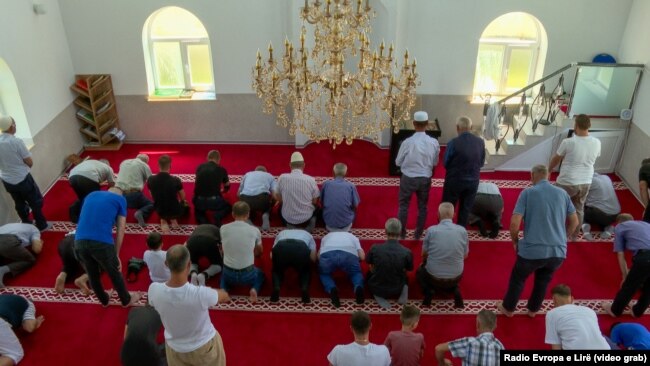
BIK backs Islamic Community Council in the Year
“We stand behind the decisions of the Islamic Community Council of the Year”, say by the Islamic Community of Kosovo through a written statement sent to Radio Free Europe.
BIK Secretary Ahmet Sadriu stresses that the Council of the Islamic Community of the Year has long been informed of problems and concerns surrounding mosques in Skifteraj and Ramniash.
“The same [extinges] has addressed [KBI Chairman Husamedin] Hoxha, even near municipal and security organs. We've also announced the top security organs at the central level for years”, Sadriu says.
In the statement given REL, Kosovo Police say that “the control and management of mosques in the municipality of the Year belong exclusively to the Islamic Community of Kosovo and the Islamic Community Council in the year, so these two institutions must find solutions” for problems in their mosques.
Police add that “all the information they receive from the ground will be sent to the relevant units to prove that there is any illegal activity”.
Unidentified “Problem” or “suming BIK's” properties?
Committee of the Year officials say that at the Community's Municipal Security Council meeting on July 20th, Husamedin Hoxha, as a member of this council, has raised concerns about the two mosques. I told Husamedin Hodge yesterday that your job was to go and stop illegal”.
Hasan Alia, deputy chairman of the Committee of the Year, tells Radio Free Europe that the situation created for mosques in Skifteray and Ramniash, is unclear.
He voiced doubt that the Council of the Islamic Community of the Year has not well identified the problem, along with local residents of these villages.
“must identify what it wants. Are they trying to pump an imam, a hodge, or what's the problem there? When we identify this, I believe the Islamic Community will be easier, but it will be easier for the security organs”, Alia says.
He suggests that KBI officials have had to negotiate with local residents and with the gamma of these two mosques, so that the issue of imams and glass management is resolved through dialogue and within the regulations of the Kosovo Islamic Community.
Viewing KBI's mosques as illegal in the year, according to Deputy Mayor Alia, raises the problem.
If you, as chairman of the Islamic Community, say I have two mosques working illegally... I even yesterday [on Thursday, July 20th] told [Husamedin Hoxha] that your duty was to go and stop illegality. It had to go and close those two mosques and a decision like this is sent to police”, says Ala... if there are other elements suspicious of activities that are not legal, these problems would have to be taken by other law enforcement agencies”.
But, according to Husamedin Hoxha, the eventual attempt of KBI to close mosques or attempt to appoint emaemics there, according to BIK regulations, can only create greater problems with supporters and, as he calls them, the self-declared “ims.
In the concrete case, he says, mosques are properties that have been usurped by the Islamic Community.
Nobody understands, not even from the municipality, how this problem is solved. The Islamic community has no power, no power in hand”, Hoxha says.
Hasani: Let the law enforcement organs be taken from mosques
Kosovo religion sociologist Ismail Hasani estimates that the activity of mosques in general in the country is legal, if they operate within the system of the Islamic Community of Kosovo.
In this context, according to him, mosques in Ramnishh and Skifteraj, whose leaders are opposed by the Council of the Islamic Community of the Year, their preaching and communication position with believers would have to develop within the legal regulations of the Islamic Community of Kosovo.
In the concrete case, if there are other elements suspicious of activities that are not legal, then other law enforcement agencies would have to deal with these problems. This, because the Islamic Community of Kosovo has long lost credibility in some cases, to act with the force of arguments, in the cleanup or in the internal regulation of religious institutions, in the concrete case of mosques”, Hasani estimates.
He points out that in mosques, which are not under BIK management or control, the potential possibility of disproportionating Islamic religious extremism is created, even “in the most radical form”.
Hasan emphasises that the trend should go towards preventing the escalation of the situation between BIK and the community that frequents two contested mosques and insists on appointing imams at their own convenience.
In concrete cases, he says, all available legal measures must be used to avoid undesirable situations. If not, then, law enforcement agencies must act.