2 hours ago
Scientists discover on Saturn's moon the key element of life creation
Periskopi(3 years ago)
(3 years ago)A team of scientists has discovered new evidence that Saturn's underground ocean contains phosphorus, a key life building element. Team used data from Cassini mission NASA, which has explored Saturn and its rings and moons system for over 13 years. Spaceship [...]
A team of scientists has discovered new evidence that Saturn's underground ocean contains phosphorus, a key building element for lifen.
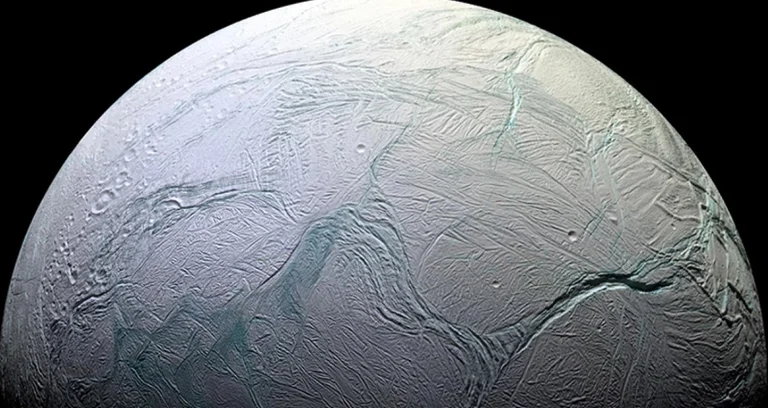
Team used data from Cassini mission NASA, which has explored Saturn and its rings and moons system for over 13 years. The spacecraft discovered Enceladu's liquid water and examined samples from a cloud of ice and gases extracted from cracks on the ice surface of the moon.
The analysis showed the presence of sodium phosphates.
“We found abundant phosphorus in ice samples taken from the underground ocean,” said Christopher Gline, a leading expert in alien oceanography at the Southwestern Research Institute in San Antonio and one of the authors of a paper in Nature magazine that describes research.
Phosphate in the form of phosphates is vital for all life on Earth. It's essential to the creation of DNA and RNA, the molecules that carry energy, the cell membranes, the bones and teeth on humans and animals, and even the microbia of the sea plankton.
“We found phosphate concentrations at least 100 times higher in the lunar ocean waters that form plumes than in the Earth's oceans,” explains Gline, adding, “This is a surprising result for Astrobiology and an important step in seeking life beyond the Earth. ”