Bianchini: Kosovo, Serbia have radical positions, political will to resolve tensions
 (3 years ago)
Kosovo and Serbia do not have the political will to resolve tensions between them. So says Stephano Bianchini, professor of politics and Eastern European history at the University of Bologna. In an interview for Radio Kosovo, he says Russia through problems existing in the Balkans is trying to keep the region tense. Radio Kosova: From [...]
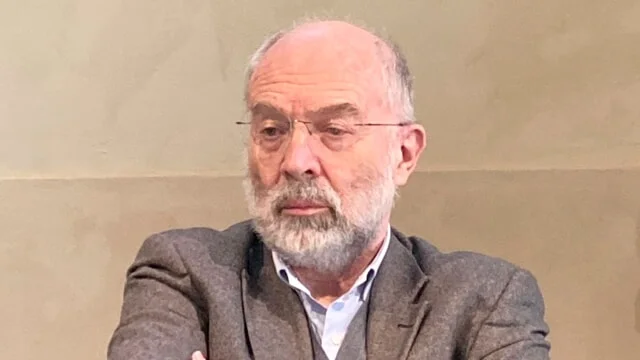
Kosovo and Serbia do not have the political will to resolve tensions between them. So says Stephano Bianchini, professor of politics and Eastern European history at the University of Bologna.
In an interview for Radio Kosovo, he says Russia through problems existing in the Balkans is trying to keep the region tense.
Radio Kosova: From the Russian invasion of Ukraine, we have also seen Russia's influence from what is being described as its hybrid war in the Balkan region. What are Russia's strategic interests in the Balkan region, including Kosovo?
Stefano Bianchini: I think Russia is using only internal problems that are in the Balkan region to create tensions in the region. Russia's role in this context is marginal, because it is an important fact that all Balkan countries, excluded Serbia and Bosnia and Herzegovina, are members of NATO. Kosovo is not a NATO member, but is closely linked to the United States of America. So this creates conditions for Russia to have a very restrictive, or peripheral role in the region. Russia can see to keep on fueling already existing tensions in the region, and whose origin I said is only local.
Radio Kosova: Is Russia impacting through Serbia on (not) the political stability and security of Kosovo?
Stefano Bianchini: Understandably, Russia can also prove itself. But tensions between Kosovo and Serbia exist from political developments which have conveyed Kosovo, Serbia and the former Yugoslavia, starting at the beginning of the 80s. I think these issues have not been arranged in a satisfactory form for both sides. That's why I think tensions are local. They may be slightly influenced by Russia, but they are not decomposing. The tension mechanisms are mostly local.
Radio Kosova: Have political developments in the Balkans been influenced by global foreign policy changes?
Stefano Bianchini: Yes, they can be very affected because we now have processes we had not expected before the invasion of Ukraine. We still do not know the impact of the war on Ukraine at the global and EU level. What we can see is that the process of globalisation will be fragmented between the close ties that will create Western countries, including the EU, the US, Canada, South Korea, Japan and Australia and New Zealand. On the other hand, we have the bloc of countries known as BRUCS ( Brazil, India, China, Russia and South Africa). Now there are ten countries that have applied for membership in this bloc, which is currently also building a banking system as an alternative to the World Bank. So all these developments can also affect the Balkans, because the question is how the region will react to these dynamic developments. I think there is no way out except for Balkan countries to join the EU. The main question is that under these conditions, how the enlargement process will develop, because membership procedures will change.
Radio Kosova: Why is there a reluctance by the EU for the integration of the Balkans into the EU, especially after the war in Ukraine?
Stefano Bianchini: This hesitation comes from the enlargement process that took place between 2004 and 2007. The enlargement process was seen as the EU's democratic process and on the part of the US. But then countries like France and Holland began talking about enlargement as a tiring process, about the need for the integration process for new members to be slower. You know that EU countries have internal problems. Since 2013, when Croatia joined the EU, the enlargement process has been continually postponed. This has affected that governments, but also the population in the Balkan countries, no longer believe that the membership process will take place at an imminent time. Another issue is that the EU suddenly granted the country's candidate status to Ukraine, Moldova and Bosnia and Herzegovina. At the meeting held in Tirana in December last year, among the 27 EU member states and six other Balkan countries, the European future of Balkan countries, at least approaching norms that were characteristic of enlargement by 2021, has been confirmed once again.
Radio Kosova: In Kosovo we have been developing dialogue between Kosovo and Serbia for years, but it seems that this dialogue is going nowhere. Is there a lack of political will on both sides to reach agreement between them?
Stefano Bianchini: Definitely. To put it in a more summary form, Kosovo Prime Minister Albin Kurti, though there is an agreement ratified by the Parliament of Kosovo for establishing the Association of Serb majority municipalities, does not prioritise this association without recognition of Kosovo's independence on Serbia's part. On the other hand, Serbian President Aleksandar Vuciq wants to discuss association only, and on the other hand in any form does not want to recognise Kosovo's independence, at least not at this time. So from this point of view, where both sides have radical attitudes, I don't see how it can be mediated between these two positions. The EU is supporting some changes but are invisible to the huge contrast of positions between Pristina and Belgrade.
Radio Kosova: What role can the international factor play in facilitating political dialogue and finding sustainable solutions?
Stefano Bianchini: I think instead of talking about the international factor, we need to talk only about the international factor coming from the Western world. I don't see that the UN can do anything meaningful in this context. So I don't think there's enough mediation capacity in the context of the Western Balkans. In my opinion, and I am the most radical in this regard, I think the EU continues to insist heavily on its national policies, the sovereignty of member states.
Radio Kosova: How can the results of political dialogue affect the European integration of Kosovo and Serbia?
Stefano Bianchini: Probably. I have to be more radical in this regard. I think the best solution will be the once integration of all Western Balkan countries into the EU. This could reduce tensions in the region. But I don't see that there is such a mood within the EU now, because many member states think differently and have other priorities. All Balkan countries are suffering for this and the consequences of the breakup of the former Yugoslavia, and also the signing of all peaceful agreements in the Balkans have failed to calm the situation in the countries of the former Yugoslavia again.
( Stefano Bianchini is professor of Eastern European politics and history at the University of Bologna. As an expert on Balkan issues, he published and co-edited 36 books and more than 150 articles in Italian, French, English and other languages. He was advisor to I CTY, The Hague. )