5 minutes ago
For the first time, NASA creates a 3D map that describes the Mars planet
Periskopi(3 years ago)
(3 years ago)For the first time, a 3D map has been developed that describes the planet of <x0 red>” in its realistic form, through which it can sail through rocky areas that are repeatedly discovered by NASA robotic exploration vehicles. Now both scientists and the public can study or enjoy some alien images by [...]
For time The first is created a 3D map that describes the planet of <x0 red>” in its realistic form, through which it can sail through rocky areas that are repeatedly discovered by NASA robotic exploration vehicles.
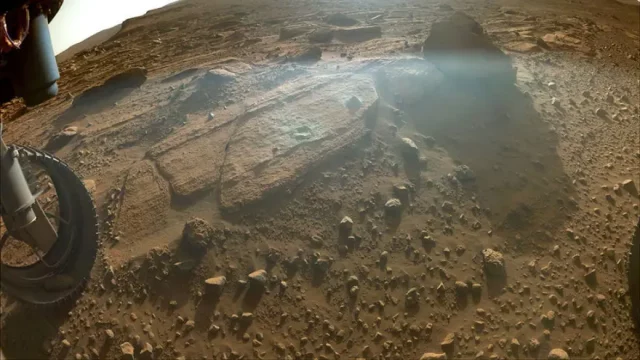
Now both scientists and the public can study or enjoy alien images with a three - dimensional spherical view of Mars. The slopes, rocks, craters, and even traces of dust scattered in the atmosphere are caught in incredible detail on the map.
This is a project of unifying 110,000 images on all sides of the planet and now producing this pioneer result. The initiative was undertaken by Caltech using data from NASA Intelligence Orbiter Mars, eventually releasing the famous digital map.
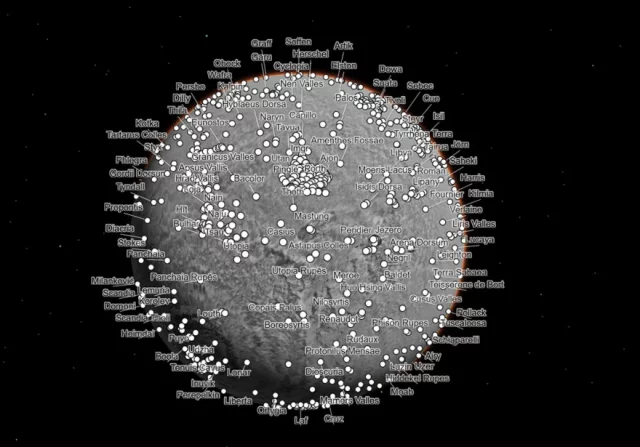
Taken from the black and white camera of the ship, images cover an area of about 25 square feet [25 sq m] per pixels. This was done by the “Mosaic Global CTX of Mars” providing images with the highest recorded resolution of the planet. CTX is one of three cameras on Mars Reconnaissance Orbiter (MRO). His ability to capture larger areas of the landscape has made CTX especially useful for the discovery of craters on the surface of Mars.
The map is a product of Caltech's Bruce Murray Laboratory for Planetary Visualisation and took six years and tens of thousands of hours to develop. It is so detailed that more than 120 scientific works are based on information provided by the map. Also, someone can use it easily enough.
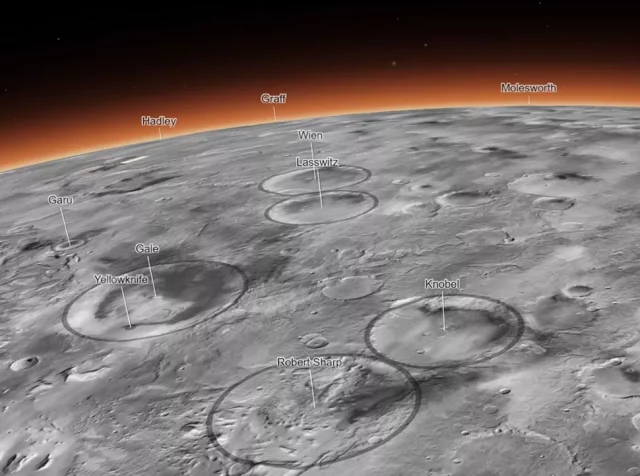
I wanted to do something that was accessible to everyone,” said Jack Dixon, project leader and an image-processing scientist running the Murray lab. “Even children can use it now. My mother, who is 78 years old, can use it now. The goal is to reduce barriers for people interested in exploring Mars”, he concluded. /abcnews. al