7 hours ago
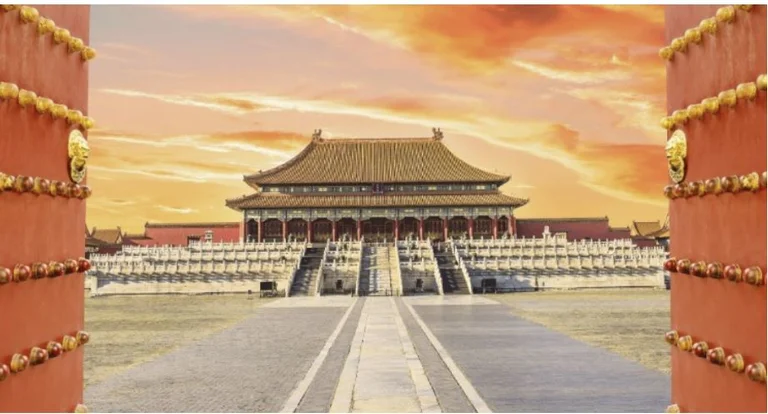
The Forbidden City, symbol of the mystery and power of the emperors of China
Periskopi(3 years ago)
(3 years ago)The Forbidden City, a large imperial palace once inhabited by the powerful emperors of China, is a marvel of ancient architecture and Chinese history. With an impressive surface of 720,000 square feet [220,000 sq m], the site listed at the World Heritage site of the U. NESTO contains the world's largest collection of preserved ancient structures [...]
With over 800 buildings and nearly 9,000 rooms, it is easy to lose in its splendor. The banned city in the current capital of Beijing was built during the reign of the Yongle emperor of the Ming dynasty, beginning in 1406 and completed in 1420. It became the imperial palace and residence of the emperors of China for the Ming and Qing dynasty, from the beginning of the XV to the beginning of the 20th century. It was called the Forbidden City because ordinary people could not enter this complex except with special permission. It was an exclusive space for emperors, their family, their concubines, and a large number of eunuchs, courtiers, and servants.
The entrance to the Forbidden City was strictly controlled. Even high officials could enter only certain areas of the palace complex, depending on their rank and status. Anyone caught breaking without permission in the Forbidden City faced a severe sentence, including the execution of death.
The exclusiveness of the Forbidden City was intended to emphasize divine and supremely superior status as the Son of Heaven. As the center of the Chinese imperial system, it symbolized the emperor's power and authority over all of China. The Forbidden City was built to replace the imperial palace of the ruined Juan dynasty.
Great stones were extracted and used in its construction. The heavier of which weighed more than 220 tons, and had weighed more than 330 tons before being crushed. Archaeological findings have revealed that the largest blocks used for the construction of the Forbidden City were taken from a quarries some 70 miles [70 km] away.
In view of the fact that the wheel was invented in China about 1500 BC, it was initially believed that large stones were transported using this technology. Last year, however, a 500-year-old document was translated, which discovered how giant stones slipped for miles on specially constructed stone, and dragged onto slippery ice tracks by a team of men over 28 days.
Workers dug wells every 500m to pour water over the ice to lubricate it, making rock slide easier. In addition to 800 buildings and 9000 rooms, the city contains many gardens and courtyards. There were also numerous works of art, including paintings, sculptures and calligraphy.
The palace complex is divided into two main parts: the foreign and the interior cabinet. The Foreign Court was the place where the emperor held his court and carried out his official duties, while the Court of the Interior was reserved for the private residence of the emperor and his family.
The only men allowed in the Interior Court were eunuchs (trained males) in order to ensure “auticity” of the emperor's descendants. The Forbidden City was one of the most protected sites in China. Security was very sophisticated, with numerous protective layers and a large group of guards, officials, and eunuchs in charge of the protection of the emperor and his family.
The city was surrounded by a moat over 50m wide, filled with water from nearby rivers. The palace was also surrounded by walls over 30 feet [10 m] high, built with bricks and stones. Four main gates secured entry into the Forbidden City, each guarded by heavily armed soldiers.
Also, the palace had many secret passages, hidden rooms and traps designed to prevent the invasion of enemies to the emperor. The Forbidden City was created to satisfy the emperor's satisfaction by offering a life of luxury, pleasure, and entertainment.
As an absolute ruler of China, the emperor possessed great resources to satisfy his every whim. The emperors of the Ming and Qing dynasty had many concubines to satisfy their sexual desires.
Historical records say that during the Qing dynasty, the emperor's harem had some 20,000 women! The palace organized feasts and grand feasts, where the emperor and his guests would be served a variety of delicious foods. Empress Douager Cix's meals were reportedly made up of 108 dishes, an amount that may have fed several thousand of its poor subjects.
Despite the power of the emperor and his wealth, life in the Forbidden City was much like living in a golden cage, since the emperor was not free to walk beyond the walls of the Forbidden City. When the emperor traveled outside the Forbidden City, detailed precautions were to be taken to ensure his safety.
The first Westerner allowed to enter the Forbidden City was Italian Jesuit missionary Mateo Ritchie. Although Ritchie's objective was to spread Christian faith in China, his admission to the Forbidden City in 1601 was not because of his religious faith but because of his scientific knowledge.
Another Westerner who managed to enter the Forbidden City, this time during the Qing dynasty, was Andreas Van Bram Hookgest, an American citizen. The confession on his visit to the Forbidden City in 1795 was preserved in his diary. It offers its readers some remarkable stories about life in the Forbidden City.
For example, he wrote that they served meat cut off by the emperor himself. Evidently, it was a great honor done by him. The Forbidden City first opened to the public in 1925 after the fall of the Qing dynasty in 1911.
After the last emperor of China, Puji, was expelled from the palace in 1924, China's new Republican government decided to turn the palace into a museum. Since then, the Forbidden City opened to the public for the first time, offering ordinary citizens a picture of imperial family life and the splendor of the Chinese imperial system.