Why is Bertolt Brecht staged worldwide?
 (3 years ago)
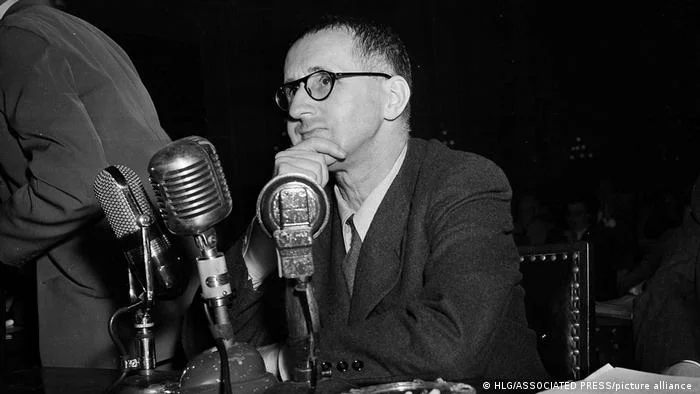
On February 10, 2023, marks the 125th anniversary of German playwright Bertolt Brecht. Exhausted by the Nazis Brecht lived in migration 15 years. His heroes were always the common people. His hometown of Augsburg honours Bertolt Brechtin on his 125th birthday with a festival under the motto “Worldwide Brecht”, because the writer, [...]
His hometown of Augsburg honours Bertolt Brechtin on the 125th anniversary of birth with a festival under the motto “Worldwide Brecht”, because the writer, who expelled from the Nazis, was forced to live 15 years in migration, has long become one of the most frequent authors in the world's scenes.
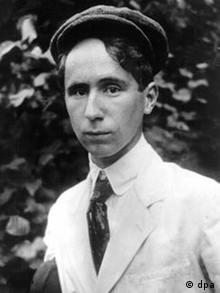 Betolt Brecht in 1918
His operetta “Opera for three grosh” written in 1928 is among the most frequently staged music theaters worldwide. This work took over not only scenes in Great Britain and the U.S. but also in Japan, Togo, and Poland, where his works continue to be staged. “Opera for three grosh” addresses the problems of the time Brecht lived but are still present today. The characters bring to the stage a world where a pocket thief seems to be the most honest and honorable man and corruption, and the theft has reached its peak: the chief policeman is the chief mafia and the head of the criminal network.
In the center of the “Opera for three grosh” is the figure of Maci Thika, a gangster who, by his exploits and iniquities, imposed power. The motive was taken by the fictional figure Captain Macheath treated by both John Gays to The Beggar therefrom Opera. Brecht reused this image in his work. At the opening of the opera, the character of Maci Tac with stanza accompanied by Kurt Weil's music shows directly:
The shark has teeth, its looks.Um in the face
And Macheath holds a knife you can never see
Ah from the shark's fried tail you know!W It's stained in blood.
But Macki Thika holds gloves so that the iniquity is not detected at all”
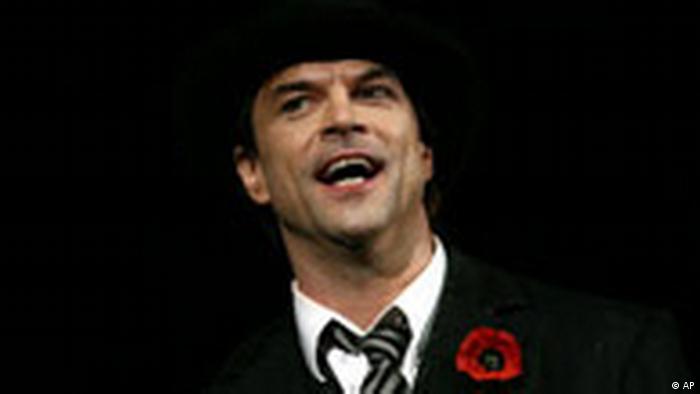 Singer Campino in the role of Mackie Messer (Miki Thika) from “Opera for three grams”, re-open in Berlin in 2006
Even at the “under her courage and children” (1941) the focus are the lowly people of society. It's about a mother trying to get her children out of the war. In Lomé director Ramsès Alpha has staged “Mother of courage and her children” which is also one of the best known parts of Brecht. Ramsès Alfan, says that this part reminds him of harvest aids in Togo's nuts, which with their children on their backs work in hot heat for a bite of bread. Or it reminds them of street vendors in the capital, Lomé, who in exchange for customers move with heavy loads of lemons, fruit, or stock, knocking from door to door to door to houses to provide little income to sustain the family spirit.
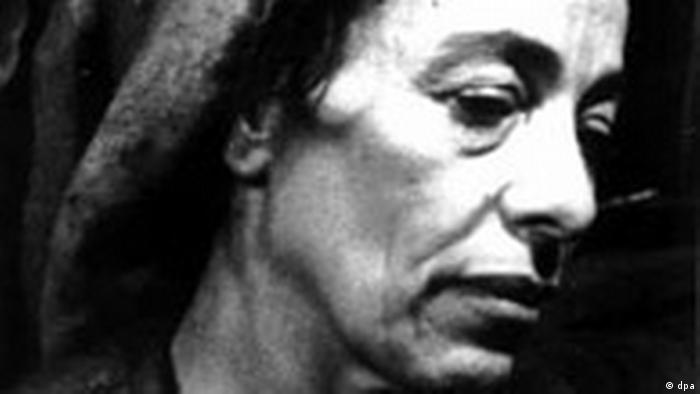 Helen Weigel, an actress and wife of Bertolt Brecht, in the role of Mother Courage and Her Children
But not only in Togo, Japan is also well - known. According to research by researcher Monica Ayugai from City University in New York, at the beginning of the 21st century Brecht was listed near Shakespeare. It's Japanese literature. Invited to his colleague Hella Wulolijoki in Finland, he discovered the Japanese drama “Historia of a woman, the story of Chink Okichi”, in which a 19th century geisha lures a consul from the United States to save her town Shimoda from American attacks, but he is humiliated as a traitor. Brecht began to translate this section, marveling at the fate of the sex worker, who despite her heoric act is humiliated by society.
Brecht a stranger in eastern block
Brecht spent 15 years of his life in immigration before World War II returned to Germany, but in the Democratic Republic of Germany (RDGJ). A day after the fire fell in Rajshtag in 1933Berthol Brecht along with his family and wife, Helen Weigel, fled to Paris and then to Denmark. Shortly after that, his books were burned by National Socialists and banned. In 1941, Brecht settled in Los Angeles, U.S.A., and in 1949 he returned to East Berlin.
He in his parts repeatedly criticized the injustices of capitalism. The “Sounds paradoxically, but Brecht as a man and artist with extreme left views could be very close to the ideology and aesthetics of Soviet Russia, and in fact it wasn't so”, claims Russian theatre researcher Marina Davydova. She notes, that Brecht was accepted with much hesitation and reservations in Soviet Russia because the country's leaders felt the explosive potential of his art. Brecht is sharp and uncompetitive in his art. He speaks directly to the public without gloves, according to the researcher, has caused Soviet leaders to have reservations about his works.
Only after Stalin's death and his 1970s did his work succeed in the Soviet Union. Not today in Putin's Brachti Russia again is there no longer any chance of being staged, Davydova explains.
Brecht has been highly controversial even in the West, being considered a communist. However, he has left traces of his work, which according to Togo Ramsès Alfa's director, even today after 70 years of death, is quite a favorite, since he tells about people who have few, oppressed and marginalized. Brecht wrote from a very young age: For its first sections “The fall of the night” and “Bal” in 1922 he was awarded the Kleist Award. / DW