3 hours ago
This information about human vision can shock you a little, but it's real!
Periskopi(4 years ago)
(4 years ago)Although science is not complete, we are known enough to have great confidence in our observations. Unfortunately, overconfidence is common. He often encounters it during conversations and interviews with extraordinary claims and critical thinking issues. Without hesitation, for example, many people give unwarranted credibility to the confessions of [...]
Although science is not complete, we are known enough to have great confidence in our observations. Unfortunately, overconfidence is common. He often encounters it during conversations and interviews with extraordinary claims and critical thinking issues. Without hesitation, for example, many people give unjustified credibility to eyewitnesses of alien visits, Bigfoot, ghosts, etc. (Harrison 2013).
Science has found that man's vision is much closer than video surveillance. But how many people know that? Most are unaware that sight is primarily a creative act, a process that presents a version of reality rather than an exact reproduction. Our eyes and brains simply don't grasp and show the world the way it really is. Instead, the brain produces a personal representation of a scene.
A Brief Look at How We See
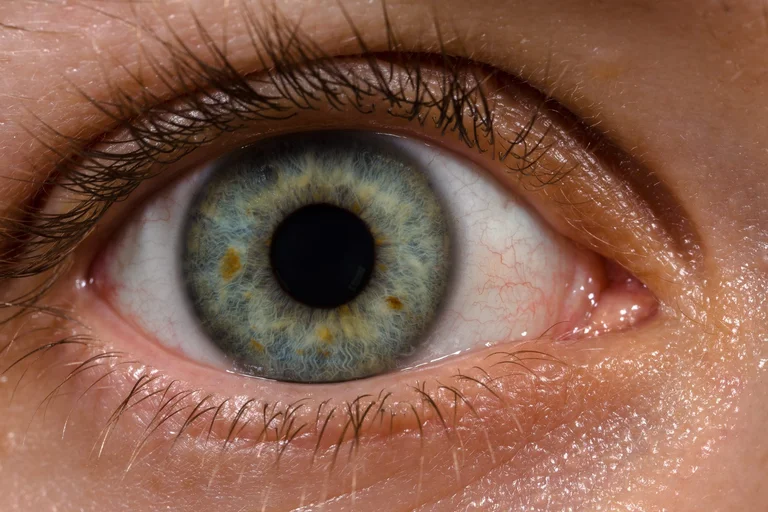
Human vision begins when photons (light beds) hit the eye. Retina performs little natural magic by turning this energy of light into electrical information, which goes along the optic nerve to the brain, where these raw data is read or translated as models. This is how we identify a large, round shape from a small square shape or realize that a lion is not a beautiful flower.
While strange and imperfect, our vision works very well for us most of the time. But cognitive errors are common because the normal process of sight includes seeing things that are not there and the lack or misinterpretation of what they are.
Many people mistakenly assume that human vision functions as a camera and accurately transmits reality to our brain. This is a problem because overconfidence can cause one to have fewer doubts or not to seek confirmation evidence after witnessing something important (for example, legal evidence). We are all inclined to deceive ourselves in many ways, but overconfidence in vision is one of the fastest and safest ways toward self - deception.
The vision takes a large part of the overall activity of the brain, so it makes sense that the brain will seek efficiency by minimizing the data mess. When we look at a lawn, we don't need to be overwhelmed by the visual details of every blade of grass. Unfortunately, most people may not understand how many details have been left out.
The brain shows us only an extremely small area of conscious focus. Typically, more than 99% of the surrounding environment is effectively lacking. Perhaps the most disturbing, however, is how our beliefs and past experiences can affect what we see.
Do you know that the scenes we see in our head are not only incomplete and very edited, but they also routinely include imaginary elements? (Ehinger 2017)
If one morning, for some unknown reason, a big hole will open up in the floor of your living room, you may not see it. It's right in front of you. But it goes without being seen in your brain. Why? You don't see it because it shouldn't be there. It's a sudden deviation from normal. You believe in a solid floor of the living room, and that's what your brain sees.
The impact of belief on our visual perceptions is likely to explain the countless eyewitness claims of extraordinary and impossible phenomena. An unidentified light in heaven, for example, can be seen very differently from people of different beliefs. FO's enthusiastic followers are more likely to see a space shuttle with UFOs than someone who does not believe.
Not only do we fail to see the world accurately or fully but we neither see it in real time. All we observe about us is old news. It already happened (Anwar 2013); Maus 2013). We visually experience our environments with a delay of hundreds of milliseconds. That may not sound much, but sometimes it does. The human brain evolved to cope well with this delay in most scenarios. Naturally, he makes conscious efforts to assess the speed and route of the objects in motion and then shows us the projected or expected images of where they will be. This means that the present “” we see around us is a mixture of the past and a projected future.
None of this is intended to belittle or denigrate our eyes and brains. The human vision system is amazing and wonderful, a magnificent evolutionary achievement. But it's vital that we understand its unusual ways and pay attention to our own “weaknesses.
Source Layer: Psychology Today