3 hours ago
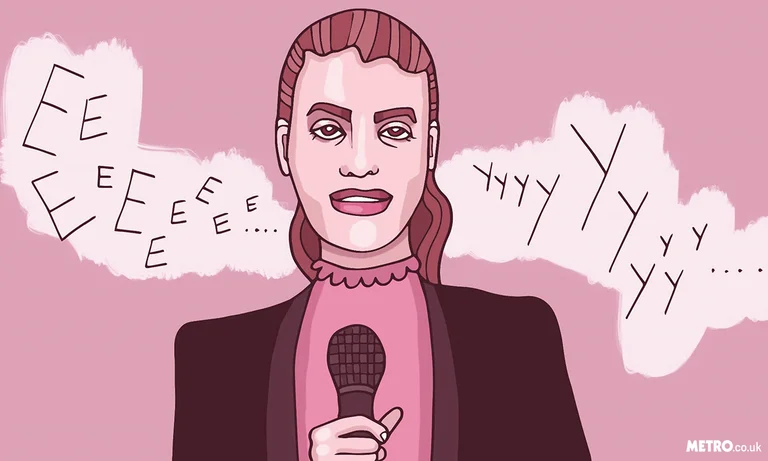
Do you hate your voice? There's a scientific explanation for this.
Periskopi(4 years ago)
(4 years ago)As a surgeon who specializes in handling voice problems, I routinely record my patients speaking. For me, these records are highly valuable. They allow me to track slight changes in their voices from visiting, and this helps confirm whether the operation or therapy with [...]
As a surgeon who specializes in handling voice problems, I routinely record my patients speaking. For me, these records are highly valuable. They allow me to track slight changes in their voices from visiting, and this helps confirm whether surgery or sound therapy is toward improvement.
However, I am surprised by how difficult these sessions can be for my patients. Many get upset when they hear their voices.
Some become so unstable that they refuse to listen to the census.
This embarrassment we have during listening to our voices in audio recordings is perhaps due to a mixture of physiology and psychology.
First, the sound from an audio recording is transmitted differently to your brain by the sound generated when you speak.
Even when you speak, the sound from your voice reaches your inner ear in another way.
Thus, people usually perceive their voice as deeper and richer when they speak. The recorded voice, by comparison, may sound smaller and higher, which many consider weak.
There is a second reason that listening to a recording of your voice can be so disturbing. It's actually a new voice a difference between your self-perceptive and reality. Because your voice is unique and an important component of self-identity, it can be unstable. Suddenly you realize that other people have heard something else all the time, and that might bother you a little bit.
So, if the sound in your head is different from the voice coming out of a recording device, that's a normal thing, but it's probably your inner critique by reacting too much and you're judging yourself a little bit sharply.