Economic capacity, Ukraine's problems
 (4 years ago)
Gone capital, stuck in reform, corruption and outdated techniques are some of Ukraine's economic problems. But many positive things will be difficult by the war. With over 600,000 square miles [600,000 sq km] and more than 43 million inhabitants, Ukraine is one of the largest countries in Europe. Crisis [...]
Gone capital, stuck in reform, corruption and outdated techniques are some of Ukraine's economic problems. But many positive things will be difficult by the war.
With over 600,000 square miles [600,000 sq km] and more than 43 million inhabitants, Ukraine is one of the largest countries in Europe. The crisis has shaped the country's economy since independence 30 years ago. Following the global economic crisis in 2009, there was also the threat of national bankruptcy, which could be prevented by only billions of loans from the International Monetary Fund (FMN).
Russia's Crime Reporting in 2014 and eastern fighting also brought serious economic turmoil ( The IMF helped again, but urged reforms which Ukraine had successfully overcome until the Russian attack on February 24th 2022.
Public debt had a significant pre-war decline
According to experts, national debt had dropped from more than 100 percent of gross domestic production (PBB) to a little over 50 percent. In 2020, the country experienced a brief recession due to the Corona pandemic, but growth last year was again estimated at 3.2 per cent. The gross domestic product in 2020 was $353 (a comparison: Germany has $4,733, Russia 10.037). No one knows what will happen after the war ends.
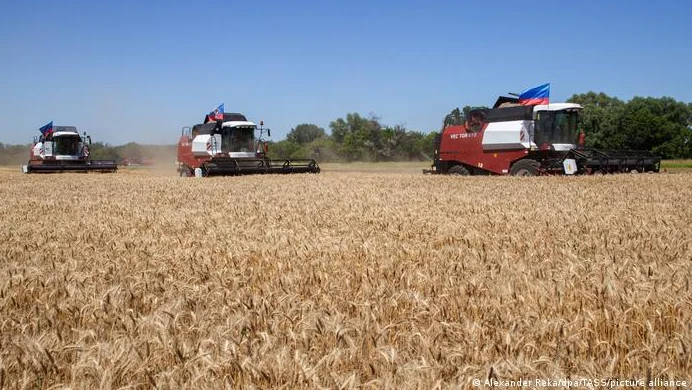
The most important branch in the industry in Ukraine is the food industry. Ukraine is one of the largest wheat exporters in the world. It is also known as Europe's <x0-year-old” because of the vast area of arable land, which is more than a quarter of the equivalent surface across the EU.
Food and metal industries
The metal industry is in second place. Due to the industry's high importance, Ukraine is very sensitive to fluctuations in world steel market prices, according to an analysis by German foreign trade agency German Trade & Invest (GTAI). According to her, the sector's investment needs were high even before the war.
The light industry and its suppliers are becoming increasingly important. International companies, particularly the automotive industry, benefit from low production costs due to low wages and proximity to the EU. In general, Ukraine's integration into supply chains is still low, GTAI expert Fabian Nemitz wrote in September. However, immediately after the Russian attack, large car producers had to restrict or even stop their production in other countries because important precautions such as cable armors produced by suppliers in Ukraine were lacking.
The Meaning of Odessa
Porti Odessa is important for imports and exports. The Port of Marine Court Ozesa (OMTP) is the largest Ukrainian port and one of the biggest ports on the Black Sea. Odessa has an annual exchange capacity of about 40 million tonnes in abundance and 25 million tonnes of fluid. Port work closed when the war began.
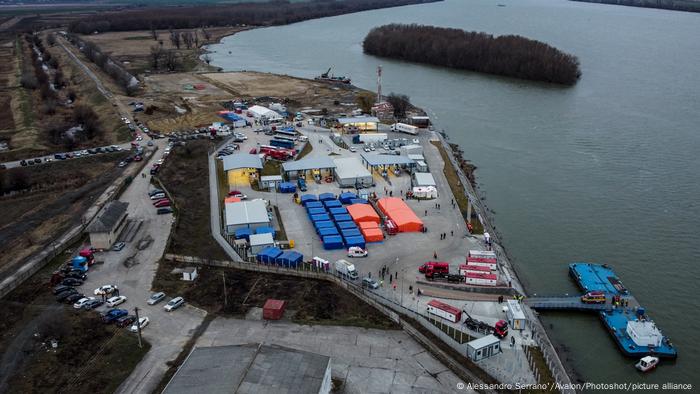
Hamburger Hafen und Logistic AG (HHLA) operates on a container terminal in OMTP, which has been constantly expanded in recent years. The HHLA terminal in Odessa handles about 300,000 standard containers (TEU) annually. “Odesa is Ukraine's largest port and Ukraine's main supply point from the sea, especially since the Crimea and the Azov Sea have become difficult to sail”, says Philip Sens, manager of the HHLA International Operations.
Large transfers from fuel consumption from immigrant workers
Private consumption is considered the most important pillar of Ukraine's growth. Raising wages and high remittances from immigrant workers play an important role here. All this is good for retail.
The IT sector is also flourishing with an increase in the number of professionals and university graduates in major cities. The transport sector is also an important branch of the economy.
EU a major Ukrainian partner
Before the outbreak of war, The EU was Ukraine's biggest trading partner, representing 40 per cent of Ukraine's total foreign trade volume. However, Brussels saw great potential and hoped for an expansion of trade with Kiev in the medium and long term, the Tagesschau news portal wrote in mid-February.de. “From the first 30 critical substances such as litium or cobalt that have identified the EU, only Ukraine has 21. The European Union would like to build an alliance on raw materials and batteries with Ukraine.” In addition, Ukraine can become a hydrogen supplier. Ukraine has numerous untapped potentials. / DW