14 hours ago
How do negative thoughts change the brain?
Periskopi(5 years ago)
(5 years ago)If you have a tendency to react to stress, this may be because of changes in your brain brought about by negative thinking. Negative experiences are stored in the brain by amigdala. Amigdale is also responsible for the brain war or the flight response. Pre-front Cortex regulates our response to [...]
“Amygdala”, memory and negative thinking

If you have a tendency to react to stress, it may be because of changes in your brain result in negative thinking. Negative experiences are stored in the brain by amigdala. Amigdale is also responsible for the brain war or the flight response. Prefronal Cortex regulates our response to stresses.
Someone who has faced a stressful situation like being in traffic jams normally evaluates the level of threat to their safety and concludes that the threat is less than the concern factor and talks through relaxation itself until it is over.
How does “talamus” perceive stress?
/thalamus-image-56feb42e3df78c7d9e3d34dd.jpg)
Talamus is responsible for sending sensitive and motor signals to the rest of his body, but he does not realize that negative thoughts are not the same as real danger. When you think negative thoughts, the Talmud assumes that it must prepare the body to leave. As a result, our bodies experience real symptoms of rapid heart rate, elevated blood pressure, and a elevated wake - up state.
Imagine that you simply sit quietly and suddenly experience physical symptoms of fear. You can feel that your heartbeat increases, your breathing increases, you go on, and your blood pressure increases. You start looking for the cause of symptoms, but when there's no rational explanation for the response to fear, it's the Talmud that causes you a panic attack.
How does stress and negative thinking change “ ”?
Stress from negative thinking creates brain changes that may affect your likelihood of mental disorders such as anxiety, depression, ADHD, schizophrenia, and mood disorders.
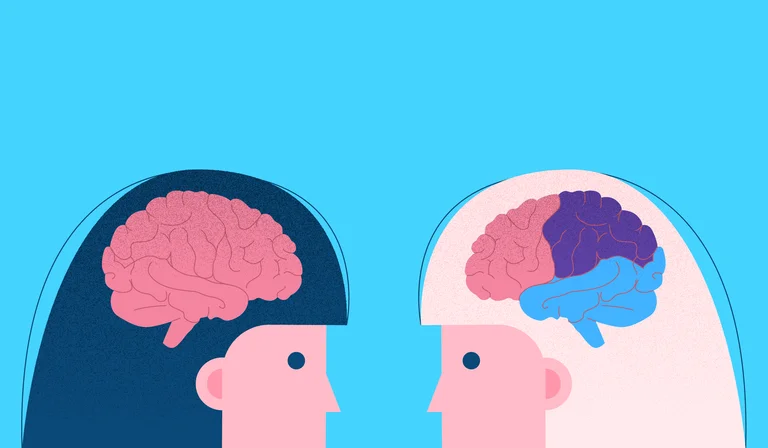
People with post traumatic stress disorder (PTSD) are shown to have anomalies in their brains. The amount of gray matter versus white matter. The difference is that the gray matter is where information is processed by neurons and the white content is a fibrous web that connects neurons. Chronic stress produces more links to white matter but less neurons.