12 hours ago
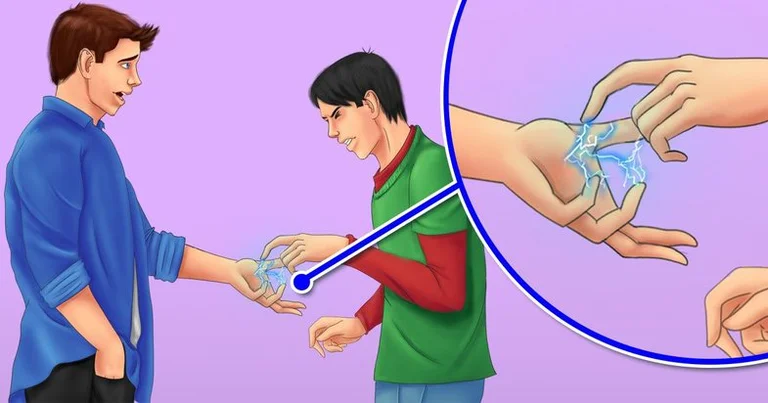
Why you can feel a slight electrical blow when you touch someone
Periskopi(5 years ago)
(5 years ago)The human body can bring miraculous surprises. Consider, for example, the fact that we are sometimes able to convey electricity in small quantities to other objects. Have you ever received light electrical shocks when you approach someone or touch an object? If you have wondered why this phenomenon occurs and [...]
The human body can bring miraculous surprises. Consider, for example, the fact that we are sometimes able to convey electricity in small quantities to other objects. Have you ever received light electrical shocks when you approach someone or touch an object? If you have considered why this phenomenon is happening and how it works, find out the following reasons.
The atoms in our body have positive, negative, and neutral energy
Everything about us is made up of atoms, and of course, this includes the human body. Atoms, on the other hand, are made of protons, electrons, and neutrons. Each has a positive, negative, or neutral load, respectively. And while atoms generally have a somewhat stable number of these three types of particles, electrons tend to travel from place to place all the time. That means they can move from our furniture to our clothes, and from there to the shoulders of a colleague when we greet them or give them a bump on their shoulders or a handshake.
Statistical electricity is what happens when negative energy is not balanced
When there is a lack of balance between electrons and protons, or in other words, a negative and positive energy imbalance creates something that scientists refer to as “static electrity”. Despite its complicated name, you may have created static electricity itself. For example, if you're rubbing your hair with a balloon, actually you're gonna have “take some electrons more than you've had before. However, if a little later, you approach an object loaded positively, think, for example, of a metal object or something else done by a conveyor material, you might feel a little electrical shock. These are electrons moving from place to place, trying to regain balance.
Small electrical shocks are more common when weather is cold and dry
During winter, or in parts of the world where the climate is especially dry and cold, static electricity may be more frequent. This is because wet air is actually a natural attendant who can help avoid stronger discharges, such as those that occur in areas where moisture is lower. In the latter case, a lack of moisture can cause frequent electrical discharges when someone is touching certain surfaces.
There are some materials that give us their electrons and others that make us give off “to trigger”
As you know, metals are the main components of electricity so much that they are used to create special objects whose sole purpose is to convey electricity. However, there are also fibers, such as polyester, that have a low level of transibility and can still be involved in the transit of electricity that travels from country to country when we suddenly give or receive these light shocks. Poliestra, for example, is found in many objects that we use in our daily lives, including furniture and clothing.
Source Layer: US National Library of Medicine, Brighton Side