12 hours ago
How Japan's famous event took place this year
Periskopi(5 years ago)
(5 years ago)In this period a year ago, thousands of people gathered for Japan's H jepniat Matsuri, also known as the “Lakuriq” in the Okama Prefecture in the southern part of Honshu Island. Today, photos and videos from the last festival are a reminder of how much has changed. Also known as Saidaji [...]
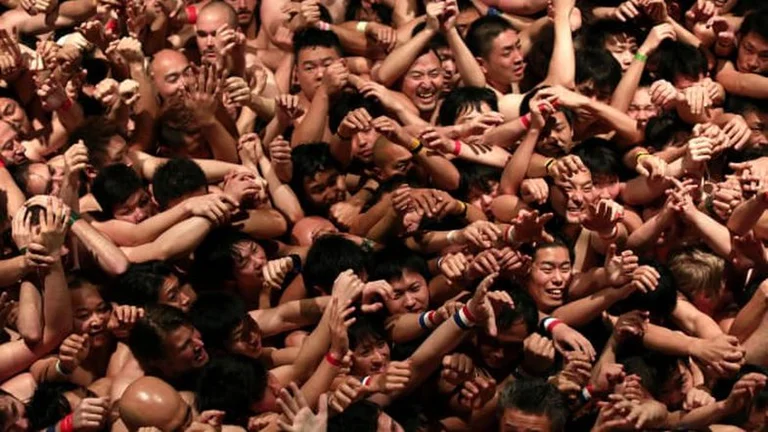
In this period a year ago, thousands of people gathered for Japan's H jepniat Matsuri, also known as the “Lakuriq” in the Okama Prefecture in the southern part of Honshu Island. Today, photos and videos from the last festival are a reminder of how much has changed.
Also known as Saidaji Eyo, H jepniat Matsuri takes place on the third Saturday of February at the Saidaji Canon temple, and this year was no exception.
H jepnirat Matsuri celebrates the blessings of a prosperous harvest, prosperity and fertility. In normal time, it begins in the middle of the afternoon with a event for young boys aimed at promoting interest in new generations. In the evening, about 10,000 male participants spend an hour or two running through the temple grounds preparing and cleaning with ice - cold water before entering the main temple building.

They are not as naked as they are thought to be from the name of the festival. They usually wear a Japanese cover called “skiti” and a pair of white socks called “tabi”.
When lights go out at 10: 00 a.m., a priest throws 100 flocks of twigs and two sacred sticks measuring 20 inches [20 cm] in a crowd from a four - foot - high [4 m] window. Men, fight each other to catch herds and/or sticks. Anyone who succeeds will receive a blessed year.
The whole event lasts about 30 minutes, and participants come out with several cuts, bruises, and repressed knots. Visitors usually come from all over Japan and some abroad to attend.

But the organisers of the event confirmed to CNN Travel that this year's festival, which took place on February 20th, was limited to only one selected group, comprised of about 100 men who had succeeded in shubs and chopsticks in the previous years.
Instead of fighting for chopsticks, the men gathered at the temple of Saidaji Canon to pray for fertility, end of pandemic, and peace in the world.
Asked by CNN why they did not cancel the festival, organisers noted in a statement that it has continued indefinitely for more than 500 years.
The Lakuriq festival evolved from a ritual that began 500 years ago during the period Muromachi (1338-1573), when villagers competed to catch paper charms, which were given by a priest at the temple in Saidaji Canon.