4 hours ago
Canadian soldier who also became a mother to Kosovo children during the war
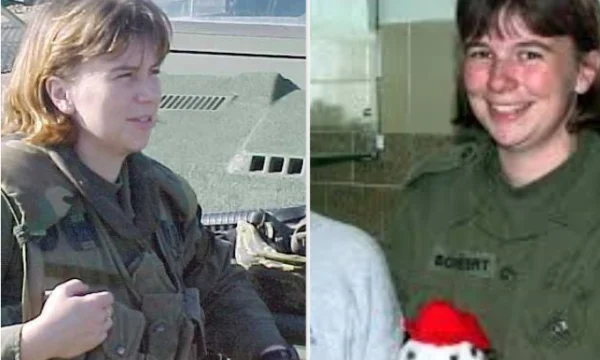
Periskopi(5 years ago)
(5 years ago)Sophie Boisvert Levesque was a Canadian soldier who served in Kosovo during the last war, yet Kosovo became much more than a war zone, while Kosovars were far more than refugees and persecuted. It tells in detail its experiences during and after the end of its mission in Kosovo [...]
It tells in detail its experiences during and after the end of its mission in Kosovo and the way Kosovo children changed their lives forever.
Below, find her full confession:
I joined the Canadian Army in 1990, when I was 18, with expectations that one day I would be sent to the world to help. I chose to have a family at an early age, and my daughter was born when I was 20 years old and my first son was 23 years old. So I was unable to serve somewhere before joining “408 Tactical Helicopter Square in Edmonton”, Alberta, Canada.
Early in 1999, we were told to get ready because we were to settle in Kosovo. My cousin came to take care of my children, and I spoke to the Mayor at the time to make sure I came.
This was my dream, and with news coming from Kosovo, I knew it was time to help.
We were supposed to leave in late June 1999, but because of the elections in Greece (there we would take our truck and other equipment), we were forced to leave earlier. We finally left Greece on June 8th.
At the time, everything to me was action, excitement and adventure. When it comes from a quiet place and you've never been able to see war before, it seems like something new.
When we arrived in Greece, they wanted us to leave the first day. We did not need them there during the elections, so we downloaded our equipment and waited for ships to arrive on our trucks. As soon as we took all the stuff, we settled in Macedonia. As we were leaving Greece, there were X-rays everywhere, in which they wrote: “return to your home, killer”, “returned to coffins”.
We stayed in Macedonia for several weeks before we settled in Kosovo. I don't remember the exact date, but I'll never forget what I saw that day. Seeing refugees and disasters in the news is bad, but seeing it with your own eyes is terrible. We broke up in groups. Flying over all those destructions was heartbreaking. Men, women, and children who moved into refugee camps. Small white tent, mass graves, burned houses... To me as a Canadian, I remained written in my heart forever. And this was just the first day.
We settled in Kosovo, near Glogocit (tash Drenas), in a 1 square mile [1 km] camp that would become our home for the next five months during our ministry there. As soon as we arrived, the children approached the wire and asked for food. One of us had candy and chocolate and gave it to them. One of the children asked why I wasn't smiling. My answer was short and simple: “Give me a little time until I can devour this whole situation”. My mother's instinct was deeply hurt. That world, my future was changing.
During the next few days, two military police officers came to our home, and they were looking for a wife to deal with refugee children, and they asked me if I wanted to become their leader. Since I love my children, I also loved them at that time, and I wanted to do something good, and I readily accepted.
My army chief gave me permission to go with them once a week.
The first day I visited the children was a bit strange. Strange because they had large eyes and sorrows, and they did not know what to expect, yet they were ready. We photographed all the children and looked like prisoners of war. No smiles, fair faces, and very insecure. To me, though, it was the beginning of an everlasting love confession.
Those 21 kids became mine. They were sincere and intelligent.
I was never a coach before, and I didn't know much about the actions I had to do with children, but we had different activities.
One day I told the children to draw what would be done when they grew up.
In Canada that was a common question. When you asked Canadian children, they wanted to be policemen, firefighters, teachers. But I took a sad look from my Kosovo children. Two of them gave me answers, but the others did not know.
I came to the conclusion that, when you don't know if you'll be tomorrow, if you have what to eat, when your house doesn't have a roof, what you're going to do in 20 years is completely insignificant.
Every week they gave me flowers and cookies. Every time I kept the flowers, I felt a sense of relief because one day more, my children had escaped the mines and I would have more time to love them.
I was amazed at how few those children had and how much they wanted to share things with me. I couldn't take the flowers with me, but I never threw them away and never ate the chocolates and other gifts I got. I even keep them. If I didn't keep them, I would feel as if I were ruining my relationship with my children.
Two of my girls came one day with two dolls. They wanted to give it to my daughter. I told them that most likely my daughter had more dolls, so it would be better to wear them. I will never forget their answer.
They were giving me those dolls to thank my daughter for sharing her mother with them for six months.
My days became happier when we were able to see the lights returning to the surrounding villages. When we saw that their life was being restored, it was a comfort to me and to many others. The children were finally smiling back.
I remember we weren't allowed to give medicine or anything to people around us, but we did.
One of my kids came to the tent and asked for me. His mother had a severe pain and couldn't go to the dentist. I met our dentist and told him the truth that I needed help but that the medicine was not for me, and he still helped me.
It was a trick, but we couldn't stay without doing anything.
Then, one of my girls had cots in her hands. I had one, so I was able to take medication. I gave it to her. Our translator helped me explain to her how to use it. We told her to use it every day after the shower. For us, a shower a day was normal. She looked at me and told me she couldn't take a shower every day, so we told her to wash her hands carefully every day and then use the medicine we gave her.
We were two separate worlds because we never had to survive any war.
I was missing my children very much, but I knew that helping Kosovo's children was also valuable.
The last meeting was very difficult. We were lined up to say goodbye and shook hands. I was the only woman at the end of the row. The kids started crying in front of me, and I took them in my arms. This was slowing down, but I was so hurt that I had no choice but to say goodbye in that form.
Hell started when I got home. I didn't know how to be a mother to my children and I was afraid of those I left behind. The war wasn't over for me because I was at home and I was afraid they were hurt, or at worst, my children were killed.
Before I left, I gave my address to all the children so they could write. I was in a very dark time in my life when I received a letter from my little Labino.
I never answered his letter and I regret it. All contacts have been cut off for the next 19 years. I wanted to know, but I was so scared of the answer I could get, so ma'u showed a post-traumatic stress disorder and I've never been able to be the same as my children and my family.
Every day, every week, without telling my family, I was thinking about my 21 children, my children from Kosovo. It took me a long time to muster up the courage to do something. I was a proud and strong warrior there, but I turned out to be a helpless and frustrated person.
On June 8, 2018, I told myself enough! I mailed to a group I had joined a few weeks ago, “Young People of Kosovo” and asked them for help in finding children.
I feel like the whole country helped me, everybody was ready.
A policeman had gone door to door in Drenas to find information. Some called me, others wrote me, but it only took 72 hours to find everyone alive and well.
Kosovo is like my second home. I've contacted my children across the Internet, but I want to take them back in my arms and never let them go again.
I feel like I gave them up for adoption and now I found them years later.
I know that they had parents, families, and love, but I was left with an incurable wound in me, not knowing what had happened to them.
My biological children should forgive me. I wasn't a good mother to them because of what was happening in my head and heart. But now I'm full again. I have my family here and my family there. I am leaving my house again to return to my second home in Kosovo.
Many of the Kosovars thank me for my contribution and treat me like heroin, but the real heroes are you. You experienced and survived a terrible war. The best thanks for us is to see you progress in life. I'm proud of all of you.