The Tragic History of the Wisest Man the World Ever Seen
 (5 years ago)
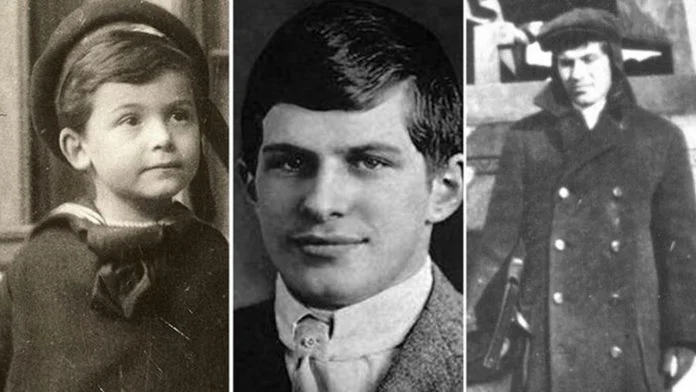
It is considered the most intelligent man in the world, with a wonderful mind and intelligence between 250 and 300 points. William James Sidis was considered a real calculator and the genius of linguistics, one of which expected remarkable success thanks to his intelligence. However, he had to face the problem [...]
However, he had to face the problem that accompanied him along the road to life, leading to premature death - sadness. Imagine an 18-month-old kid reading “New York Times”, Eight-year-old spoke fluent French, German, Russian, Turkish and Armenian, dominant Latin and, of course, English, native language. Imagine a 9-year-old who managed to create a new language called “vdergood”, studied by the linguistics and judged as complete, accurate, and fascinating.
William James Sidis was born in New York on April 1, 1898, the son of two Jewish immigrants from Russia. Much has been written about him, but as is common in such cases, unfortunately, it ends up mixing fiction with reality, overlaps, and biographies invented with fiction pens and fantasy ink, when in fact, he had a hard life despite extremely interesting psychologically. Evidence and documentaries illustrate the most important elements, one of particular fundamental importance: William J. Sidis never had a childhood, was not allowed to live as a child, just because of his extraordinary intelligence. When he was nine years old, he was admitted to Harvard University, and an inflammatory January 1910 night at the age of 12, he gave his first lecture on the fourth dimension before the press and the scientific community of time. The parent, a well - known Russian psychologist and one of the most important doctors of the day, had a clear purpose: they wanted him to be a genius, the smartest man in the world. They devoted themselves to cultivating the mind, neglecting what was far more important - his heart, his feelings.
Genetics, trends, and a particularly favourable environment
William's parents had brilliant minds, an important genetic core of high intelligence developed in their son. The couple's purpose for the future was simultaneously clear and controversial: they wanted to train the boy's brain to become a genius. Besides genetics, it was highly favoured by the surrounding environment, especially stimulant and oriented toward a specific goal. His father, Boris Sidis, used sophisticated techniques, including hypnosis, to maximize his son's abilities and potential. His mother left medicine to devote herself to education, using innovation strategies in teaching. Still, it cannot be denied that William was inclined to learn, even though one aspect of his life marked and traumatic him forever - public exposure and media.
The parents published academic reports to document the boy's progress. The press, as well as the scientific community, made him uncomfortable. During his time at Harvard, the press literally persecuted him. After graduating perfectly, impressing academics with his fourth - dimension theories, he moved to Houston University to teach mathematics as he began to study law. He was only 16 years old, when his mind said: “is enough”. Then what he himself began called pilgrimage to hell.
Despite his intelligence, William did not complete the jury, nor did any other. He was not even 17 years old when he decided to rebel against the academic and experimental environment, which forced him to feel like a laboratory cavio, observed with flowers and analyzed in every aspect of his mind. In 1919 he was arrested for recruiting young people and launching a Communist demonstration, but thanks to his parents ' influence and reputation, he was immediately released. Yet, it was repeated when, to protect himself from parents and society itself, he provoked a youth uprising against capitalism and was very arrogant before judges. He was sentenced to two years, thus taking what he so desired - loneliness and isolation.
After he regained his freedom, the first thing William J. Sidis was to change his name. He wanted a life in the shadows, yet both the press and the parents continued to track him down, forcing him to undertake a pilgrimage to the United States, when he asked for sporadic work and devoted himself to what he wanted most - writing. He published several works with various nicknames, wrote books on his history, but also on theories on black holes. According to experts, there may be dozens of forgotten books hiding behind a false identity, the image of Willem J. Sidis.
An Early End and Alone
William J. Sidis loved only one woman: Martha Foley, an Irish activist with whom she had a complex and troubled relationship. Her picture was the only one they found between clothes, when his body was found lifeless, in a small apartment in Boston, in 1944, at the age of 46, from a stroke.
William Sidis spent the last few years from one court to another. The press liked to define it: “The wonderful child that didn't achieve anything, now gets excited while working warehouse “, the world's most intelligent “, makes a miserable life”, “Turns up the math and linguistic genius”, “Sidis got tired of thinking”
It is not known whether he really got tired of thinking or even living. However, reading his biographies clearly shows that he was tired of association, family, and academic environments that had enormous expectations, even before he was born. He got tired of not being able to be himself, and when he could do it, he couldn't. He was an expert in fourth dimension and black holes, but the most important topic in life, the art of learning and fighting for his happiness, always saved them from their hands, from their perspective and from their hearts...
William James Sidis continues to be the smartest man in the world to date, with the highest IQ ever recorded. In second place, we find Terence Tao, the new Australian mathematician with IQ 225-230 who currently teaches at Los Angeles University.
There may be an unidentified, intelligent child in a distant corner of the world, but that doesn't matter because the numbers remain numbers. In such cases, the important thing is that such children are allowed to have a real childhood, enjoy secure emotional relationships, and an environment where they can be fulfilled as people who pursue their own desires in freedom, without pressure. Because, as history suggests, at times great intelligence is not a symptom of happiness.