10 hours ago
Some Fine Ways to Improve Your Memory
Periskopi(5 years ago)
(5 years ago)“The memory is man's greatest friend and worst enemy” A good memory and organized routine go hand in hand. This helps to bring clarity to your life and to help you achieve your goals without forgetting things. For those who think [...]
“The memory is man's greatest friend and worst enemy” Gilbert Parker (British politician)
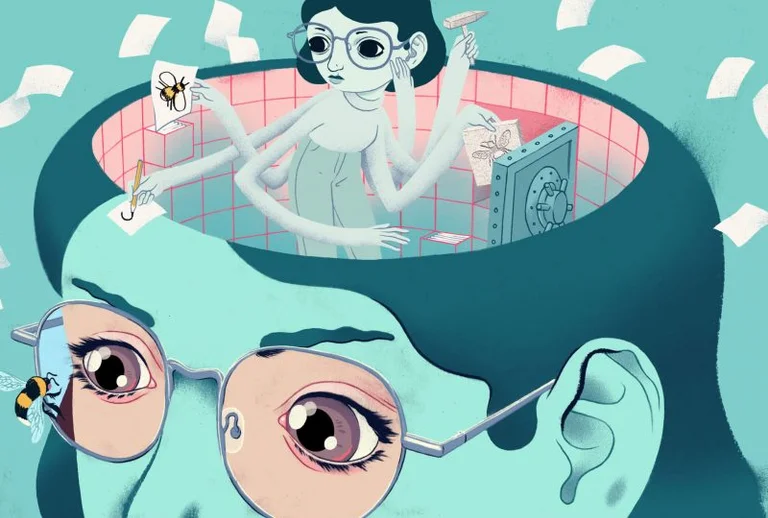
A good memory and organized routine go hand in hand. This helps to bring clarity to your life and to help you achieve your goals without forgetting things. For those who feel that it is easier to say than to do, look below to discover some fine ways to improve your memory:
1. Learn Music
The benefits of learning music go beyond hearing in the brain and extend to other areas. Such skills are transferred to the memory of work. If you do not want to learn music, let us listen to music, as we do every day. By learning the lyrics, we automatically increase our levels of brain-building chemicals: acetilcolin.
2. Write things down
Most of the story is recorded in writing, even though it has its vocal forms conveyed through the ages. That's because it's easier to remember and it doesn't change with time, unlike verbal tradition. That's the whole idea of taking notes in class. Here are some repeated reasons for writing things physically in pen and paper:
Writing helps make your dreams a little closer to reality.
You can get ideas across the country, unlock hidden goals and ideas, and review them later (if you do it on a white board).
Checklists will help you list priorities. This especially helps when you're out shopping.
Writing things slows down the gear of time (at least for your brain).
3. Make sure you exercise:
No matter what kind of physical exercise you do, just move! There's a lot of research being done on this subject. Such work was published in the proceedings of the National Academy of Sciences. The main point is this: even 10-minute installments of tender exercise cause the brain's memory part: the hippocampus.
4. Train Your Brain
Like the rest of our bodies, the brain also needs training! When properly done, your brain training can exercise the main cognitive functions below:
Memory, attention, hunting, logical thinking, spatial sciences, visual justice.
The things you can do to improve your brain include:
Focus on a new activity, compared with many, and give your time and attention.
Subscribe to an hour of recreation, such as painting or cooking.
Program time for practice.
The ideal activity must be:
Challenger for your brain
Complet but interesting ( Digital phosography)
Practice (Keep working in your hobby to benefit more from it)
5. Division is careful!
While reading is good for your brain, you can take the benefits to the next level by reading or studying aloud. In fact, researchers have seen it more effective to read aloud than to read silently. You can improve that concept by teaching someone else something, or by reading it aloud for someone else. This reinforces the concept in our minds. Reading something out loud is also likely to inspire comment or discussion.
6. Meditate!
If meditation sounds too young to you, remember that scientists have viewed it well as a cure and medicine for certain conditions.
Regularly done with the right technique, meditation can increase the size of cerebral bark, which is responsible for higher mental tasks, including learning, memory, concentration. A study by the University of Pennsylvania confirms this.
7. Make sure you get enough sleep:
Sleep is essential for the brain to review and reinforce concepts learned during the day. The better you rest, the better your memory.
In a research paper entitled “Jium promotes the specific formation of the dendical sphines branch” (published in Science. 2014 6 June; 344 (6188), 1173;1178. Doi: 10,1126 / science.1249098), sleep is essential to memory and learning. During sleep, neurons involved in waking experiences and memory preservation are resurrected.
Sleepless mice saw less memory after a teaching assignment than rats who had enough sleep. A thrilling development is that scientists have discovered that in certain cases the brain is capable of learning new information while sleeping.