12 hours ago
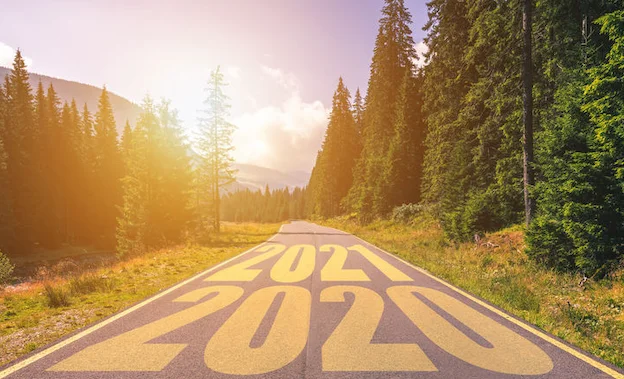
11 Things That Will Change in Our Lives in 2021
Periskopi(5 years ago)
(5 years ago)Maria Salzman's predictions, Deputy. Communication President at Philip Morris as a contributor and Forbes CMO Network, American communications expert Marian Salzman, is known for identifying our lifestyle trends, long before they appear. In 2019 the title of the trend report was “Caosi new normality” and [...]
Maria Salzman's predictions, Deputy. President of Communication at Philip Morris
As a contributor and Forbes CMO Network, American communications expert Marian Salzman is known for identifying our lifestyle trends, long before they appear.
In 2019 the title of the trend report was “Caosi new normality” and predicted 2020 would be a challenging year. The coronary crisis and the consequences of our lives showed that predictions were correct.
During the last month of 2020, she introduced 11 things we should expect to change during 2021.
1. Zoom in & Zoom out
First expectations: strengthening <x0” We are expected to focus more on our immediate environment beginning with professional daily life to private relations and spiritual reflection.
2. Time and Space Mixed
Second trend: reconceptive of <x0 working hours”. According to Salzman, the coronary crisis made us realize that the classic office work at 9 to 17 hours is gradually being removed. Work hours flexible is a positive trend, as more flexibility allows us to combine private and professional lifestyles better. Even more companies will spend a four-day work week.
3. A return to “
A new sense of community in 2021. The coronary crisis is making us redefine our social relationships. The crucial factor here is the experience of isolation. Moreover, a new form of connection is created through virtual communication options. Keywords: Hometime meetings with family or post-work virtual sessions.
4. Real becomes unrealistic/ereal becomes real
Digitalization boom caused by pandemic: People will increasingly seek intelligent solutions to better unite these two worlds in the future. One aspect involves that we need to deal more with “digital dioxide” (remaining away from electronic and internet devices).
5. Drons and Robots
The automation of our economy and our work. Pandemia has shown us the weaknesses of the human factor. In the future, robots will increasingly take on high - risk activities in order to minimize the dangers of human failure.
6. Attitude: Always ready
We'll pay more attention to “resistance” in times of crisis. Salzman speaks of “mentality bunker” which makes us take precautions in case of emergencies. This includes caring for essentials, such as food or medical products, and stretching into a new form of IUD mentality (do yourself).
7. Reassigning What Is Essential
Reassigning our basic needs. Key words: Maslow's Hierarchy needs. At the time of the crisis from the pandemic, we became aware that internet access is no longer a luxury, but an essential thing, in order to be able to be part of social and economic life.
8. Saved by the Internet
2020 also made it clear that we can transfer “multiple areas of our social co-existence into the digital world from telemedicine to virtual meetings. Although we will become much more aware of the loss of traditional cultural techniques such as cooking or presleep stories for our children.
9. Corporations as Changing Agents
Increasing co-operation between the public sector and private sector. Therefore, in the future governments will increasingly rely on working with private companies to find solutions in times of crisis. This applies to both the coronary and the climate crisis.
10. The Land of Review
Repoint urban and rural areas. In the future, metropoliss will have new functions due to remote “workback”. Cities will be dominated less by trade spaces or travelers. This creates new spaces that can be used for green areas, for example. In addition, rural areas will increasingly care to welcome employees, who will work everywhere because of new digitalisation and ways of work.
11. Time to make peace with uncertainty
Finally, in her report, Marian Salzman explains that human civilization has always been characterised by “uncertainty”. In 2020, however, we faced new facts about risk assessment. In the future, this will result in trying to create our life-style more independently. We will also try to reduce dependence on large systems.