3 hours ago
Why the EU has no deadlines and what Americans told the 4 September meeting, Lajcak speaks
Periskopi(6 years ago)
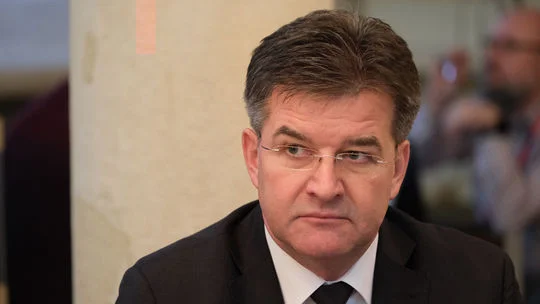
(6 years ago)The European Union's special representative for the Kosovo-Serbia dialogue, Miroslav Lajcak, said dialogue between the two countries for normalisation of relations is currently the most important issue in the Balkans, and warned there will be intensification of reports between the two sides. The two sides understand that dialogue and normalisation cannot be avoided. Europe [...]
The European Union's special representative for the Kosovo-Serbia dialogue, Miroslav Lajcak, said dialogue between the two countries for normalisation of relations is currently the most important issue in the Balkans, and warned there will be intensification of reports between the two sides.
The two sides understand that dialogue and normalisation cannot be avoided. Europe has been at the helm of this process since 2011, because both Serbia and Kosovo have European prospects. For us, this is the question of our neighbours and future members, not any public relations activity”, Lajcak said at the 15th Black Strategic Forum in Slovenia.
Lajcak said there are no deadlines in the negotiations, because, as he put it, “if you set deadlines, you will have something that can affect the process”, but that's why it has “red”, which the EU does not want to pass, he said.
We have red lines. It's not fair to say that whatever the two sides agree on, it's okay for us. Because, my mandate says the angle that needs to be achieved in the process is for normalisation of relations to be in accordance with international law, to be acceptable to EU members and to calm the situation in the region”, Lajcak said.
He added that Europe would accept the help of any third party, including the US, if it offers concrete solutions.
Lajcak said colleagues from the US have only informed him of the upcoming meeting between representatives of Pristina and Belgrade, which should be held 4 September at the White House.
“We have not been consulted on the date or content of the appointment, but we have only been informed that the meeting will be held and that it will be of a strict economic nature. It will not be part of the process, but just a meeting, and I have no reason to doubt that”, Lajcak said.
The latest meeting of experts from two delegations was held 27 August in Brussels.
He concluded with the assessment of representatives of Kosovo and Serbia that the process has marked steps backwards and on mutual charges.
According to unofficial information from delegations, experts from Pristina and Belgrade will meet again in Brussels on September 6th, while Kosovo Prime Minister Avdullah Hoti, and Serbia's president, Aleksandar Vuciq, will meet again in the European capital on Monday, September 7th.
Lajcak also spoke on Monday about the role of the European Union and the international community in normalising relations in the Balkans.
The responsible politicians understand that the further process of EU membership is important, while populists fight with people's emotions against membership -- which is against-productive -- because Europe wants all European countries to share the same values, legal system and infrastructure, because it can make them stronger”, Lajcak said.
In the panel with the “theme Europe after Brexit and COVID-19”, which began on Monday, Hungary's Prime Minister Viktor Orban has said that “pa European Union enlargement and Serbia's admission as a full member of the European bloc cannot complete the security and construction process in Europe.
Orban estimated that “Europe is in trouble” because it should restore economic stability due to the coronary pandemic.
He made these comments as participants of a panel of leaders of Western Balkan and Central European countries within the framework of the Bled Forum.
Europe must realize that it is no longer a major player in the world because it is now China and the United States. In modern economies, the scientific progress center primarily belongs to the military sector. And since Europe does not have an army, it does not have a scientific centre for technological progress”, Orban said.
The idea of European Union enlargement in the Western Balkans was also mentioned in the speech of Czech Prime Minister Andrej Babes, who said a concrete plan for developing security in Europe is in expanding territories.
“We must immediately include Bulgaria, Croatia, Romania and Serbia in the Schengen zone. We promised our friend Zoran Zaev (North Macedonia Prime Minister) that we will start membership negotiations. He and Boyko Borisov (Bulgaria's prime minister) defend our borders much better than some other Schengen colleagues”, he said.
On the panel, Serbia's president, Aleksandar Vuciq, also spoke. Asked whether there is a kind of “false Europeanism in Serbia”, he said Serbia is on the European road, but it is aware that it is not the main topic in the European Union, and that public opinion in Serbia is not “very enthusiastic” when it comes to EU membership.
Serbia is not very enthusiastic about the issue. About 40 per cent of people oppose our policy of membership in the EU, mainly because they see the European Union as a pressure organisation on recognising Kosovo's independence. That's true, but it doesn't matter. The political leadership we are on our way to the European Union and we are facing numerous problems”, Vuciq said.
Speaking of EU membership, Vucic said it is always better to belong to that club than not to be a member.
When we talk about the European Union, yes, we would like to join that club. We have great support in the EU, we have never underestimated the support we have received so far. But, at the same time, we have our own ideas, we see what is happening within the European Union and what is happening between the US and the EU “, Vuciq said.
The Bled Forum is currently held for 15 years and is a project of the Government of the Republic of Slovenia, organised by the Republika Slovenia Ministry of Foreign Affairs and government organisation Centre for European Perspective.