15 hours ago
6 Things Your Language Can Reveal About Health
Periskopi(6 years ago)
(6 years ago)You may be surprised, but your tongue may point to many health problems. You can take a mirror and look closely at your language. After that, you can comply with the information we've prepared for you the location of organs in language is a whole map, where each part is responsible for [...]
You may be surprised, but your tongue may point to many health problems.
You can take a mirror and look closely at your language. After that, you can match the information we've prepared for you
- The Location of Language Organs
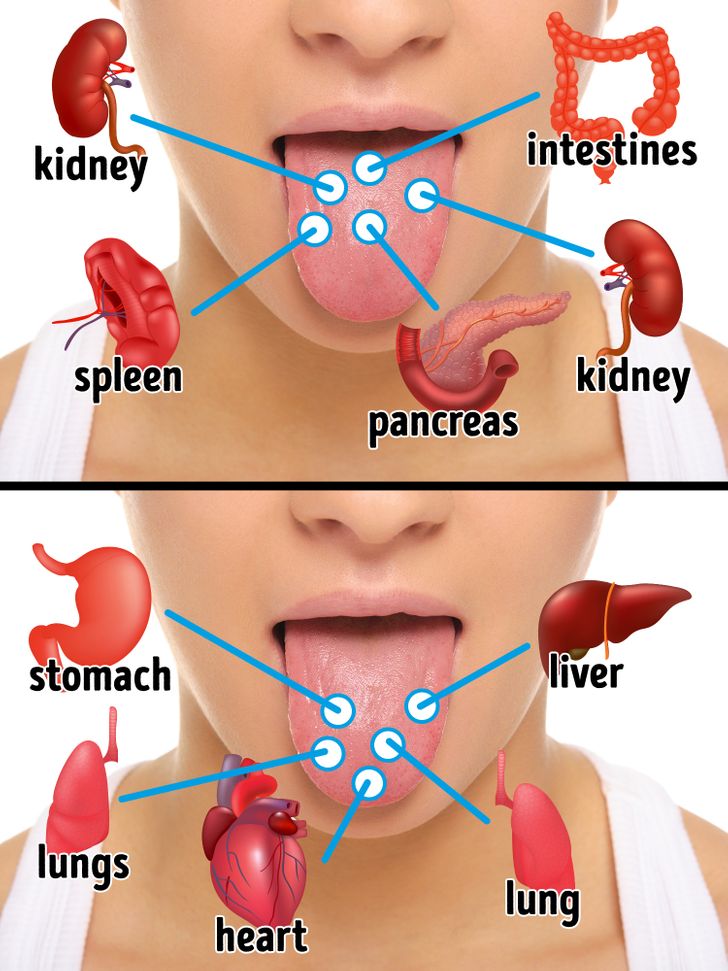
The language is an entire map where each part is responsible for a particular internal organ. Any change (plate, stain, bladders, etc) may indicate a malfunction in these organs.
- So the tip of the tongue shows the heart.
- The lungs are on the sides near the top.
- The center of the tongue tells about the stomach and the pancreas.
- The liver and the throat are along the edges.
- At the end of the tongue are the intestines.
- There are kidneys on the sides near the bowel.
- Language Form
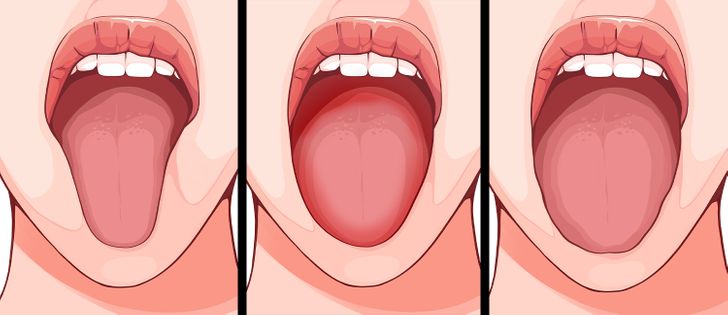
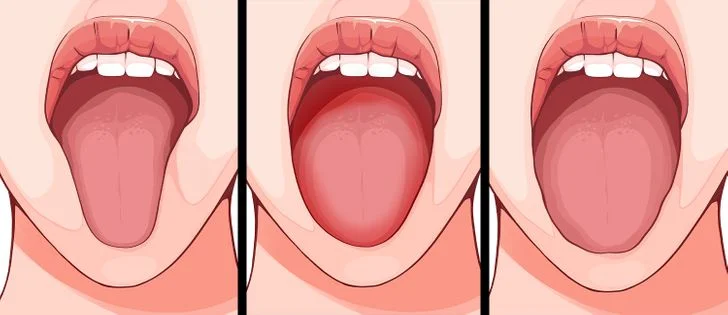
We know that color and clothing may indicate various health issues. But the language form can also tell us something.
- A fine tongue can mean dehydration and metabolic problems.
- Inflated language may indicate thyroid problems or infections.
- A thick tongue may indicate that you lack vitamins B12.
- Verticalkuring
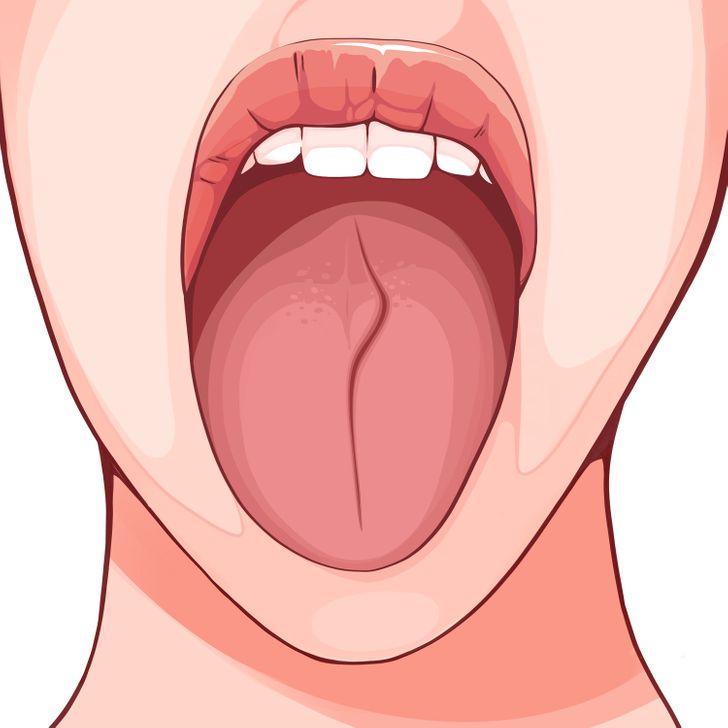
The vertical line is responsible for the spine. If it has been curved near the end of the tongue, it can mean problems in the spinal cord.
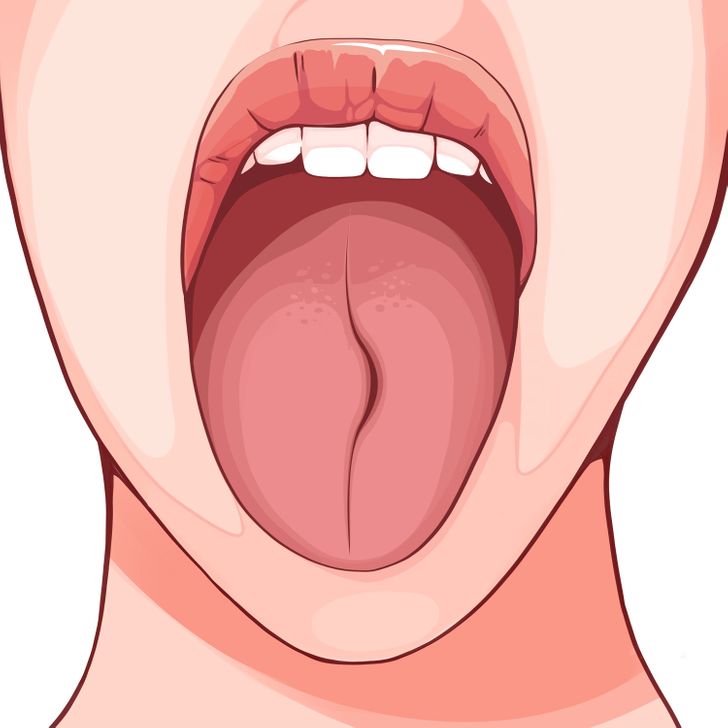
- A twist in the middle of the vertical channel may indicate problems in the chest region.
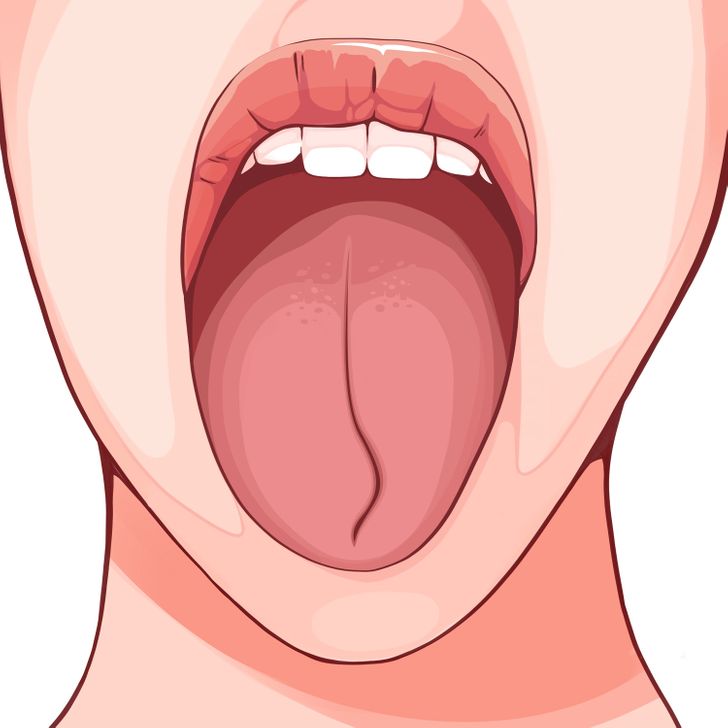
- A curved line near the tip of the tongue may indicate problems in the neck region.
- Geographic Language
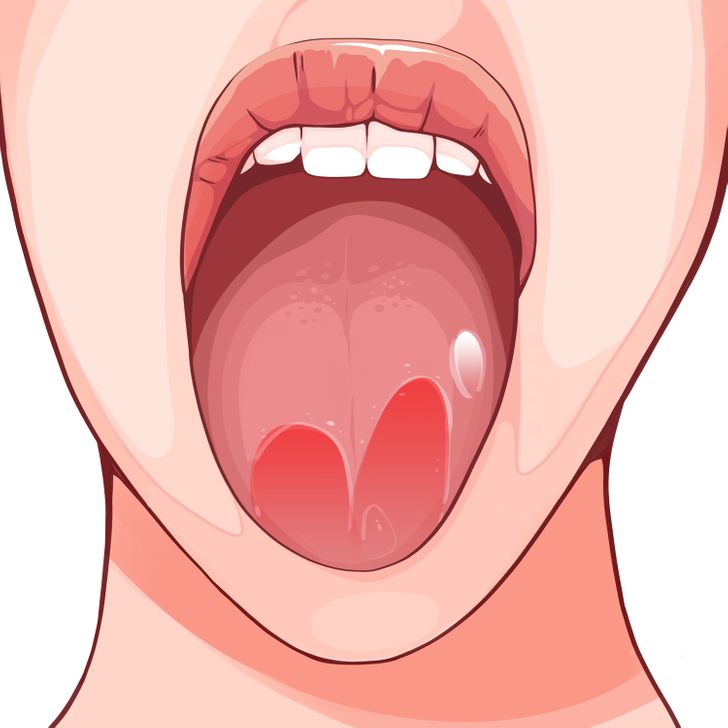
This is an inflammatory state of language with a stain of some of the regions. This may indicate hormonal explosions and a lack of vitamin B2. Sometimes it can cause burns and pain.
- Exciting Language
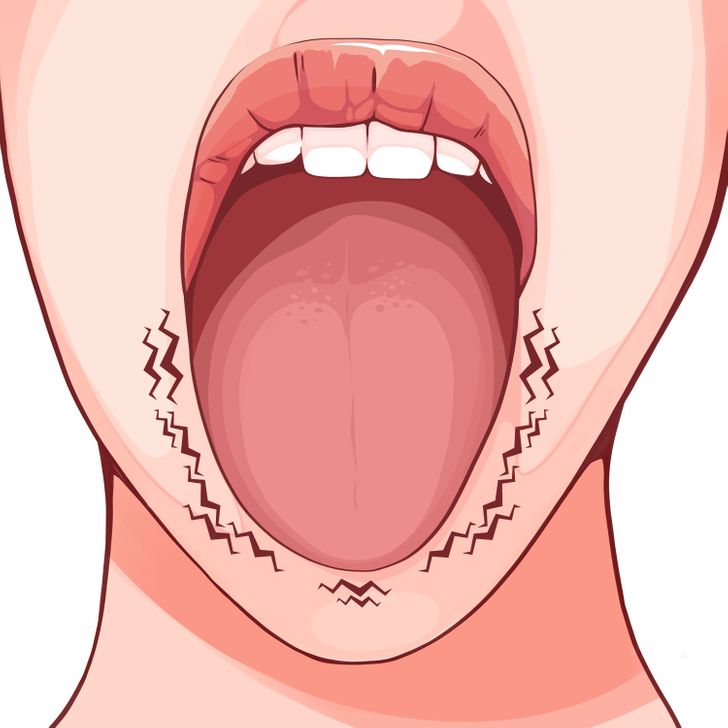
Languages can mean anxiety, hidden fear, and neurastination. This is also one of Parkinson's disease signs.
- Broken Language
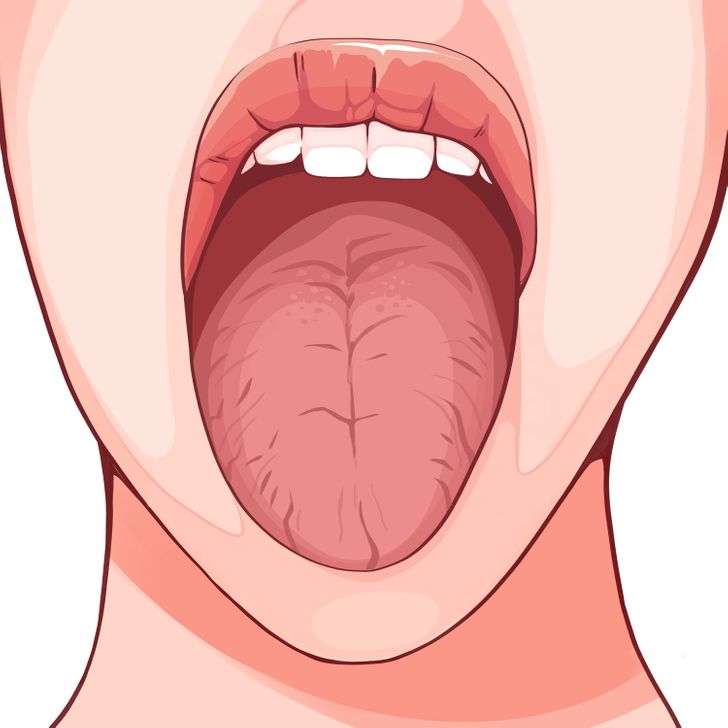
This language condition is more often hereditary. It can also be associated with Melkersson-Russenthal syndrome (a rare neurological disorder).