4 hours ago
Britain stresses that Srebrenica massacre constitutes genocide, vows to justice
Periskopi(6 years ago)
(6 years ago)Many world and European leaders have expressed condolences for the Srebrenica massacre today. Among them is Great Britain, which referred to the massacre as genocide, despite Serbia denying it, saying they are continuing their work in fighting the justice of Bosnian victims of inhumane acts by Serbs, Kosovo reports. [...]
Many world and European leaders have expressed condolences for the Srebrenica massacre today.
Among them is Great Britain, which referred to the massacre as genocide, despite Serbia denying it, saying they are continuing their work in fighting the justice of Bosnian victims of inhumane acts by Serbs, Kosovo reports.
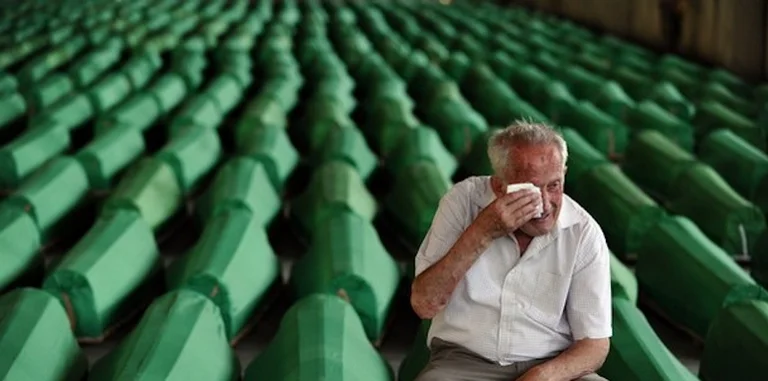
“Today marks the 25th anniversary of the worst atrocity in Europe since World War II. Over 8,000 men and boys, mostly Muslims, were killed and over 20,000 women and children were forcibly deported to the genocide in Srebrenica, Bosnia”.
Many families still don't know what happened to their loved ones. Many authors have yet to take responsibility. Today we remember Srebrenica and continue our work in the fight for justice for victims and their families”, said British Prime Minister Boris Johnson's official page.
In 1993 Bosnia and Herzegovina had indicted Serbia and Montenegro for genocide, and in this 2007 trial, the International Court of Justice agreed with the International Criminal Tribunal for the former Yugoslavia's previous finding that the Srebrenica Massacre was genocide.
But the president of the JND, Rosalyn Higgins, noted there was much evidence to prove that crimes against humanity and war crimes were committed in Bosnia and Herzegovina, such as major killings, siege of cities, mass rape, torture, exile in camps and detention centres, but the DJND had no jurisdiction over them, because the case was dealt with by <x0-cyclusctically with genocide in a limited sense of law, and not in the wider sense sometimes given to this”
Moreover, the Court found “that Serbia did not commit genocide” and neither “argued” or “promoted the execution of genocide”. However, this court found that Serbia had failed “to take all measures within its power to prevent the genocide at Srebrenica”.
The tribunal's conclusion that Serbia was not directly involved in the Srebrenica genocide has been sharply criticised.