8 minutes ago
People count: Vetevendosje represents only 11.26% of Kosovo's people
Periskopi(6 years ago)
(6 years ago)The people “have become the head of Vetevendosje Movement in the current political situation. But who is and how large are the people? What really was the people's will, and how is it represented? That's what we'll find out, this time through the numbers. “On behalf of the people, you're under arrest!” A phrase that [...]
On behalf of the people, you're under arrest! ” There's a phrase we've often heard in cinematography movies “New Albania”
On behalf of the people, new elections are needed, says the Vetevendosje Movement, which currently disputes the formation of a new government, although it brings down the current government in office through reckless actions against its partner, the LDK, and through confrontations with the US.
The people “were in the mouth of Prime Minister Kurti, Deputy Prime Minister Haki Abazi, and in the mouths of all activists of this party. But does Vetevendosje represent the people of Kosovo?
The answer to that question is Yes. However, Vetevendosje represents only a certain part of Kosovo's people.
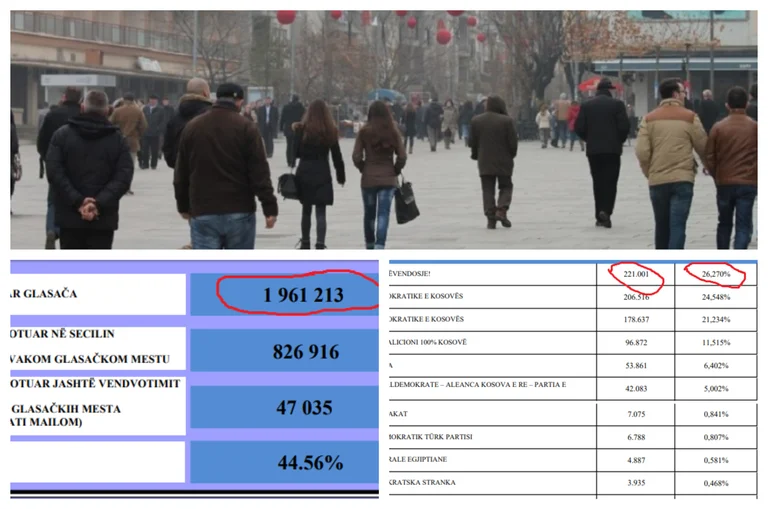
Based on the results of the 6 October elections, Vetevendosje received 26,27 per cent of the vote, or 221 thousand and 1 votes.
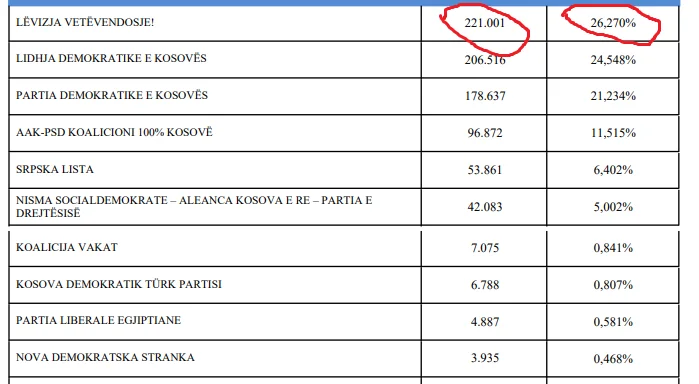
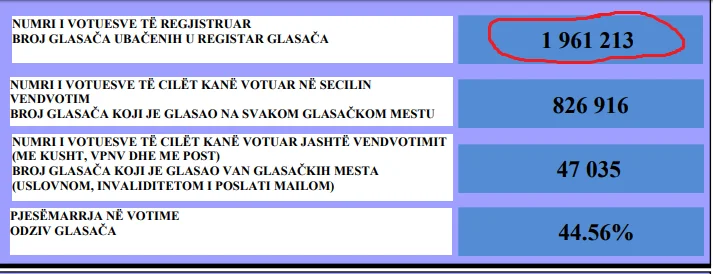
However, Vetevendosje does not represent 26.27 percent as the people are greater than just the number of people who went to the polls in that election. According to the CEC, the number of registered voters to vote in this election was 1 million and 961 thousand.
Based on a simple calculations, if we proportion the number 1 million and 961 thousand with the number 221 thousand and 1 votes, it turns out that Vetevendosje represents only 11.26 percent of Kosovo voters. And of course, the number of voters is not the total number of people, which means that the representative percentage of this party would be even smaller.
But how much of the voting people do other parties represent?
Based on October 6th elections, the LDK represents 10.53 per cent, while PDK 9.10 percent. And so on.
From this we learn that people are not a single and inseparable entity that communicates directly with the party that comes first in the elections.
Usually, the leaders who have been using the term <x0 popular” are called “opulists” just because they completely ignored different groups and diversity (not just political) of its members. /Periscope