6 minutes ago
Law disapproval exacerbates private sector situation, analysts call for unification of political spectrum
Periskopi(6 years ago)
(6 years ago)The Kosovo economy has continued to score a decline since March, when the first cases with Coronavirus were marked, reports Online Economy. Economic damage according to connoisseurs is also helping Kosovo policies, which say party policies are priorities rather than economic recovery. For Online Economy, executive director of [...]
The Kosovo economy has continued to score a decline since March, when the first cases with Coronavirus were marked, reports Online Economy.
Economic damage according to connoisseurs is also helping Kosovo policies, which say party policies are priorities rather than economic recovery.
For Online Economy, the executive director of the Council of European Investors (KIE), Emrush Wolfani, estimated that all mechanisms should be convinced that Kosovo needs help to fight this deadly virus.
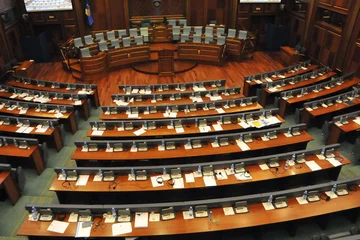
He stressed that failure to review the budget in the Kosovo Assembly has no justification.
On the other hand, Wolfani said the Kosovo Assembly has set a poor example and at the next session expects the same to be ratified and these laws to be passed as soon as possible.
“We have a polarisation of the political scene in the last three months that has been more tense in earlier periods. But for the sake of not reviewing the budget in the Kosovo assembly, there is no excuse. Even in the past there has been polarisation among political parties, which is their task”.
I think that yesterday the Kosovo Assembly has set a poor example and at the next session the same ones are ratified. There is no excuse that a parliamentary group of political parties can use to say no to these agreements. These laws must be passed as quickly as possible. The effects of David-19 will be longer term and we will face those consequences next year. What the Kosovo assembly needs to do is just the first step to create the legal infrastructure so that the budget will be there, but these agreements will also be approved under these circumstances that we are”, Ukkan added.
He cited the damage done to the private sector, making the situation in the sector even more severe.
Wolfani said that failing to adopt these laws would make the state of the private sector in Kosovo difficult.
The private sector is badly damaged, but this damage and these consequences will come by getting heavy. Just to mention, the emergency package has not yet been implemented for most of it, and now there are complaints that there are not enough means that there is not enough planning done properly, while on the other hand they are blocking the financial instruments that can help the country. I think that not adopting these laws will make it difficult for the state of the private sector in Kosovo”, he added.
Among other things, Wolfani said that without private sector contributions, even the public sector cannot survive.
The private sector is this country's tax payer. Kosovo's budget, for the most part, is what comes from taxes coming from the private sector. I think about what is the overall economic recovery here we should all be together in the public and private sectors. Without the private sector's contribution, neither the public sector can survive”, Wolfani added.
According to him, wage reduction will not be well received, so Government must find solutions for the private and public sector.
Wolfan pointed out that each category could create turmoil in our country as gastronomia and others, but they have been able to maintain peace.
“Pay reduction cannot be well received. There must be mechanisms to find a deal between two poles that are not the same. But try the Government to find a solution that would satisfy both sides”.
“Secilla category can cause turmoil in our country but have been able to maintain calmness and gastronomy and many other categories. Such a phenomenon is not due to that ministry or government, but is a pandemic and is a global phenomenon. The government needs to find solutions to support the private sector, he added.
That Kosovo is facing a deep economic crisis, says former head of the Kosovo Economic Ode (OEK), Safet Gerxhaliu.
Grojeliu in an interview for Online Economics considers MPs in the Kosovo parliament are protecting the interests of political parties more than citizens,
According to him, Kosovo is facing an alarming economic situation, where most citizens have lost hope of living here.
The “in the first place needs to be understood that Kosovo has entered into crisis with crisis and that precisely from the pandemic with Coronavirus we are now facing economic and social pandemic and what is damaging the economic current in Kosovo. We are witnessing a bitter reality created where MPs in the Kosovo parliament are protecting the interests of political parties rather than the state. And their mission is to do more for the people because they're finally in parliament thanks to the citizens' vote. With this impasse for resentment and this approach to Kosovo's parliament are damaging Kosovo in many dimensions”.
“In the economic aspect is impossible to think of economic recovery without a partnership with international credit institutions. In the first place in citizens is a disappointment they have given the vote and are degrading themselves because the MP is the time to reflect at this time of pandemics and crises and at this time when Kosovo is facing many challenges, but also in the normalisation of Kosovo-Serbia dialogue. Today we are facing an alarming economic situation and with the stubbornness of MPs in the Kosovo parliament, where most citizens have lost hope of living in Kosovo”, Gerjaliu added.
Among other things, Gerjaliu said that in a state where the private sector is bypassed and when the political agenda dominates, in this form what is dominant in Kosovo, this sector is impossible to experience recovery.
The region's “countries have taken three four steps in meeting private sector requirements, and we are still in the first phase in the emergency package that is not complete. In a state where the public sector generates jobs and has no private sector support and the private sector is what made the budget to function I believe deserves a better treatment. Kosovo in 2020 has entered without a government, without an approved budget, and budget reserves predict what challenges Kosovo is facing and the finance ministry in general”, he added.
He said Kosovo has 19 per cent of the borrowed GDP, which is 1 billion and 370m euros, leaving the debt up to 60 per cent.
According to him, political unity is needed for which, unfortunately, Kosovo does not at the moment.
“should analyse all the modalities in which the economy should be restored, should not be downplayed for Kosovo to increase public debt. We have 19 per cent of the borrowed GDP, which is 1 billion and 370m euros, we are in debt of 40 to 60 per cent. This requires a political unity where, unfortunately, Kosovo does not at the moment. But other modalities have to be seen where we have a decrease in the public sector in order to support the private sector” added Gerjaliu.