2 hours ago
Kosovo dialogue '% Serbia expected to resume after pandemic
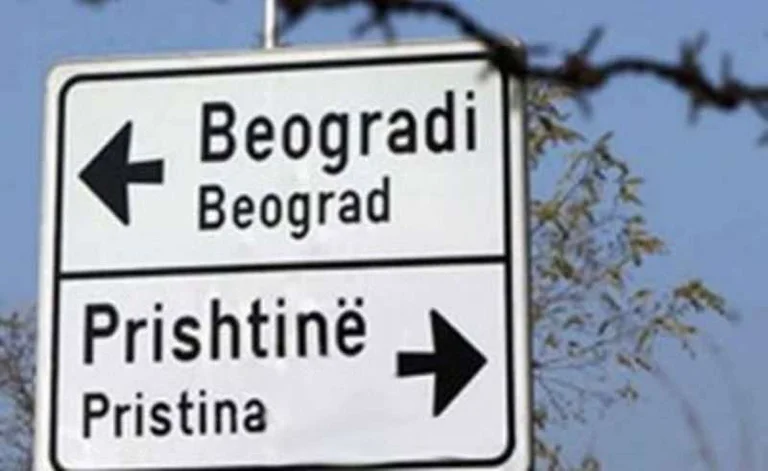
Periskopi(6 years ago)
(6 years ago)The continuation of dialogue between Kosovo and Serbia under current circumstances, when the Corleone pandemic continues, is being seen as something impossible. But this process has not been overlooked, either by actors in the talks Kosova and Serbia ʹ either by their facilitators, the United States of America and the European Union. That [...]
But this process has not been overlooked, either by actors in the talks Kosova and Serbia ʹ either by their facilitators, the United States of America and the European Union.
Since April 1st, when Kosovo's incumbent Government abolished a total of 100 per cent customs tax on imports from Serbia, the move seen as an obstacle to the continuation of negotiations, by the European Union and some member states, has been sent signals that barriers between the sides for dialogue are being overcome.
Such an EU approach differs from the position of the United States of America, which, in addition to abolishing the tax, has asked incumbent Kosovo Prime Minister Albin Kurti not to implement even the measure of reciprocity against Serbia, as the move is seen as an obstacle to continue and conclude dialogue, with the aim of reaching a peace agreement between the two countries.
Cross - impact pause
Balkan Policy Group Director Naim Rashit does not expect dialogue to start at this stage. He gives several reasons why, according to him, there are no circumstances for dialogue at this time, when the whole world is dealing with the pandemic of the coronary.
The first “, each international state is closed and will not have the ease of restrictions before May. The second concerns the fact that Serbia has postponed the elections and will have to hold them, whenever the circumstances are created, in late May or June, and, third, we have no powerful government in Pristina to deal with dialogue either. Soon, everyone will realize that there can be no dialogue in this political situation in Kosovo”, Rashit told Radio Free Europe.
Before any dialogue occurs, he emphasises, it would be desirable for Kosovo to have a full and functional government and better interpartisan and interpartisan co-ordination.
“So I don't see in any circumstances that there will be dialogue before the end of June”, Rashi says.
While continuing dialogue in the time of pandemic is seen as impossible, the issue of relief or international mediation of this process, once the circumstances have been created, remains the topic that is being discussed.
In Pristina, Kosovo President Hashim Thaci, along with the chairman of the Democratic League of Kosovo, Isa Mustafa, and the head of the Democratic Party of Kosovo, Kadri Veselin, have openly expressed their disagreement with the EU, for having appointed at the top of the dialogue, Slovak diplomat Miroslav Lajcak, who comes from an EU country that does not recognise the state of Kosovo.
Thaci, Mustafa and Wessel have not concealed the position that they love the US with a primary role in dialogue.
Meanwhile, incumbent Kosovo Prime Minister Albin Kurti has welcomed Lajcak's appointment and has held talks with leaders of several EU member states, among them, with French President Emmanuel Macron, on dialogue and the role of the EU and the most powerful European countries in the process.
For his actions, and especially for his congratulations sent to Lajcak, Prime Minister Kurti has been criticised by Thaci and Wessel, blaming him for turning his back on the US, which Kosovo authorities see as the main partner.
Meanwhile, Kurti has invited President Hashim Thaci, the speaker of the assembly, Vjosa Osmani, and representatives of the seven main political parties to join, as he has said, the idea of creating a ten-member political team for Kosovo representation in the dialogue. Along with the political team, Kurti has proposed forming an expert team.
I can't talk now about what the success of forming these two teams will be. For the second team will depend more on me, while for the first political representative team, it will depend more on their readiness”, Kurti stressed.
This attempt by Kurti, Kosovo President Hashim Thaci, has singled out more as a wish than an opportunity for implementation, even for the fact that Kurti and his government are already on the run following the assembly's no-confidence motion vote.
Coordinate lack
Analyst Life Krasniqi, from the Kosovo Democratic Institute, says the process of dialogue can be exercised from two views -- the foreign one, including the US and the EU as facilitator of the process -- and the internal perspective, which includes the institutions and the main political parties in Kosovo.
Initially, it expects the US and the EU to achieve a co-ordination about this process, while from the internal plan says institutions and political forces in Kosovo would have to find a political consensus so that they do not represent only their positions.
“Need a consensus, a strategy and position of Kosovo, also determining the red lines of talks”, Krasniqi emphasises.
By not excluding the process as a factor and the length of the coronary pandemic, Krasniqi expects dialogue to continue and possibly conclude with an agreement this year.
“Taking into account the increased role of the US and its envoy in this process, Ambassador Richard Green can be expected not only the continuation but also the achievement of a final agreement this year, though all depends on the length of the pandemic”, Krasniqi points out.
“The US seems determined to lead states towards the agreement through higher support, directly from the president itself, through his envoy, Ambassador Greenell, promising investment and economic development”, Krasniqi says.
The conclusion of the dialogue with the final agreement, she emphasises, can also be expected for the fact that US President Donald Trump, and his envoy, Richard Green, are showing a determination to close this issue before the US presidential elections, expected to be held in November.
Talks on the possibility of reaching an agreement between Kosovo and Serbia have been interrupted at the end of 2018, as the then Kosovo Government had imposed the tax on goods imported from Serbia and Bosnia and Herzegovina.
Dialogue between Kosovo and Serbia has started in 2011 under the ease of the European Union and with the support of the United States of America.
The goal of dialogue, as stated by the facilitator, is to normalise reports between Pristina and Belgrade and reach a peaceful agreement, as a necessary condition of bringing the two countries together with the integration process in the European Union.
But, in recent months, a stronger and more active US role has been observed in this process and President Donald Trump's representative for Kosovo talks Serbia, Ambassador Richard Green.
Under the mediation of Ambassador Greenell, Kosovo and Serbia agreed in principle to establish the airline, Pristina Belgrade, as well as the opening of railway lines and highways that would connect not only those two countries but also the region with the EU.
The end of the dialogue now remains to reach a final agreement that would pave the way for Kosovo for membership in the United Nations and other international organisations and mechanisms, while Serbia would present it with its EU integration./rel/