an hour ago
6 body areas that grow older and show you older
Periskopi(6 years ago)
(6 years ago)Skin and cell aging is affected and accelerated by many factors. Stress, diet, environment, and hormones all play a role in aging. Some organs in your body, such as your heart and your brain, regenerate faster, while your skin is the organ that reflects more aging as it faces [...]
Skin and cell aging is affected and accelerated by many factors. Stress, diet, environment, and hormones all play a role in aging. Some organs of your body, such as your heart and brain, regenerate faster, while your skin is an organ that reflects more aging as it confronts outside agents.
Although there is no scientific source of youth, you can help slow down the aging process by making some smart choices and changing life - style. But not all parts of your body grow old at the same speed, so for certain areas of caution must be higher.
1. Wing
In a study published by scientist Steve Horvath at Genome Biology in 200313, where he looked at 14,000 different samples, it was found that <x0nd of the gender area is about 2-3 years older, compared to the rest of a woman's body.
Experts and dermatologists suggest using cream with protective factors every time you expose decoltane in the sun.
2. eyelid area
At a certain age and over time, your thin eyelid skin tends to lose its natural flexibility. The result is: visible fallen eyelids and a slightly darker color than skin, giving our hair a tired and sad sight.
How to prevent it:
To prevent this, try to sleep at least 7 hours a day, reduce salt intake in your diet, and drink plenty of water during the day.
3. Face
Like hands, the face is the rest of the body which is constantly exposed to external factors. Besides being one of the body parts that age faster, signs of aging are far more visible in your face than in any other area.
Remember the importance of cleaning your face twice a day and applying products against aging, hydrated creams, and sun protection.

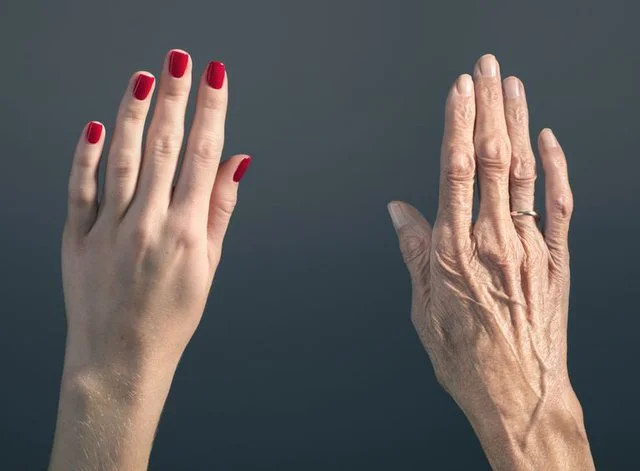
4. Hands
This part of the body is mostly exposed to a number of external factors that can cause loss of flexibility, making them sensitive to early forms of aging.
5. Knees and elbows
6. Qafa
The skin in your neck area is thinner than your face. Hence, the neck may easily seem much older than anything else.
To prevent this, retinal and peptide products are recommended to help increase collagen production.