8 hours ago
Protein Against old age
Periskopi(6 years ago)
(6 years ago)It's a simple fact. Over the years, we lose muscle and strength. How many times did you happen to have seen a small - mass relative? There's another medical term for this. It stems from Greek words “sarcos” (mish) and “penia” (m missing). My muscle loss estimates with [...]
It's a simple fact. Over the years, we lose muscle and strength. How many times did you happen to have seen a small - mass relative? There's another medical term for this. It stems from Greek words “sarcos” (mish) and “penia” (m missing). Estimates of losing muscles by age vary from 8 percent to about 50 percent of our muscles.
Men seem to lose muscles faster than women. Power begins to lose even faster than muscles with age.
Why should muscle loss be controlled?
When muscles lose mass, they become weaker and weaker. Loss of force is in line with loss of mobility and independence, as well as increasing the need for caution from others. Although losing muscle and age power is inevitable, AgroWeb.org brings you an interesting research into nutrition that shows how this problem slows down.
The Proper amount of proteins
Currently, the recommended food rate (RDA) per protein is 0.8 grams per kilogram of body weight per day for men and women 19 and above. This standard, or medical recommendation, was determined in 2002. The newest research produced by AgroWeb.org shows that higher levels are necessary for the age of 60 and older. Between 1 and 1 / 2 pounds per day, it seems to be the goal for healthy adults. People affected by sarcopeny may need between 1.2 and 1.5 g / kg per day. Studies show that 12 percent of men and 24 percent of females over the age of 70 eat well below 0.8 g / kg per day.
To understand how much protein you'll need, take your weight in a kilo and multiply it by 1.2. The number you will achieve is the amount in grams of proteins per day. AgroWeb.org reports that for a person who weighs 90kg, this would be equal to 108 grams of protein per day. Most meat, birds, and fish have about seven grams [7 g] of protein for about 30 grams [30 g]. A cup of milk or an egg has about six ounces [8 g] of protein.
How important is the type of protein you consume?
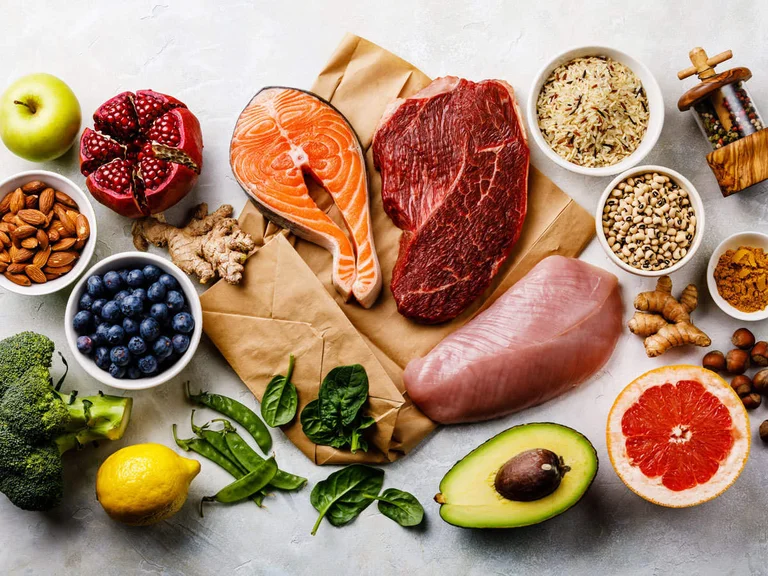
The protein you eat also plays a key role in preventing muscle loss. Food protein consists of many types of amino acids. Leucina is an amino acid that preserves body muscles, advises AgroWeb.org. Leucina is found in higher quantities in meat proteins, birds, fish, eggs, milk, and other products. Leucina is also found in soybeans and, to a lesser degree, beans, nuts, and seeds.
What should the consumer know?
There is no need for large amounts of protein to guarantee good muscle health. Eating 90-100 grams of meat, birds, fish, soybeans, beans or legumes at each meal, along with a glass or two low-fat milk, works well. Remember good scientific advice. Eat your first protein and then eat your processed carbs. Remember, too, that physical activities are as important as muscle - maintenance proteins.