a minute ago
Albanian banks advise clients: Less contact with bills
Periskopi(6 years ago)
(6 years ago)Coronavius has returned to the top of every day. The World Health Organization consistently gives constant advice on how we can protect ourselves from it by respecting hygiene conditions and avoiding frequent human contact. A very good guardian of the virus is also the bills. A study published in Daily [...]
Coronavius has returned to the top of every day. The World Health Organization consistently gives constant advice on how we can protect ourselves from it by respecting hygiene conditions and avoiding frequent human contact. A very good guardian of the virus is also the bills. A study published in the Daily Mail also estimates that this virus can survive on solid surfaces from 2 hours to 9 days.
Even in Albania, banks are advising customers not to use cash. In a report sent to its clients, the National Trade Bank suggests that they avoid touching money and signing the bill. The bank also advises customers to avoid contact in banks' facilities and use digital online channels as well as contact cards.
In addition to reports, banks have taken measures to minimize the risk of taking the virus into bank sports and to reassure their employees. Intensa Sanpaolo's sports, customers take turns abroad and are forced by physical storage personnel to disinfect their hands before entering. Clients should keep a distance of about half a meter from the sports store.
Even Union Bank in a report to clients says that because of the current situation, it has taken some measures aimed at preventing the spread of the virus through certain regulations, such as the controlled entry of customers into the Bank's branches, keeping the distance of customers waiting abroad. The bank says it is advisable not to introduce in the bank persons who have recently travelled to countries considered high-risk by O BSH, like: China, Italy, South Korea and Iran.
All banks advise customers to pay online to avoid physical contact.
The risk of taking viruses from bank notes
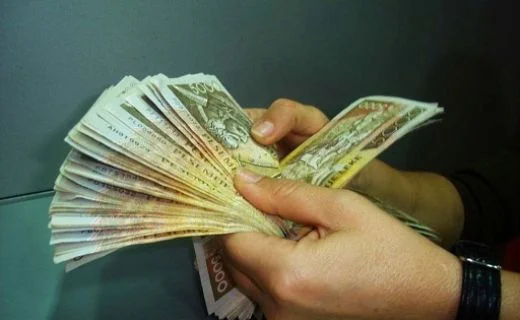
The risk of taking corona virus from the bank notes is considerable. Bills as an exchange tool circulate at high speeds into the hands of various people who use them for transactions and daily purchases. Human contact in public environments, institutions, banks and others expose us more to the virus.
To avoid or minimize these risks O BSH directs the use of smarter methods for our daily needs like Digital Banking and Accounting ( Without Contact) to avoid contaminated bills. Health experts advise consumers to use debit or credit cards to conduct shopping in supermarkets, fuels, drugstores, and so as to avoid taking out of the virus's bank notes.
To avoid or minimize these risks O BSH directs the use of smarter methods for our daily needs like Digital Banking and Accounting ( Without Contact) to avoid contaminated bills. Health experts advise consumers to use debit or credit cards to conduct shopping in supermarkets, fuels, drugstores, and so as to avoid taking out of the virus's bank notes.
These products and banking services are other additional measures to protect from virus corons that are already being followed not only in China, which are blocking the use of bank notes for preventing further spread of the virus but also in other more developed countries in Europe and North America.
Albania gets lowest use of online cards and services
While consulting having as little contact with money as possible, Albania has one of the largest cash economies in Europe (22% of total money is out of the banks), while there are lower use of bank cards and online services.
International Monetary Fund data shows that Albania had 44 credit cards per 1,000 residents in 2018. Although it has increased in proportion to previous years (the exhibiter was 28 in 2013), again we have the lowest use of them in Europe.
Low-level countries of the Balkans, such as Montenegro (64), Kosovo with 131 cards per 1,000 inhabitants, which is still three times higher than ours, Bosnia (140).
Better in the region are Macedonia (214) and Serbia (202).
In Western European countries, credit cards are a common means of payment, where each adult owns one. The record in Europe keeps Norway, with 1,592 cards per 1,000 inhabitants -- an average of every resident has more than one card, followed by Spain (1,287), Sweden (1,062).
Other data, if IMF data showed that Albania has the lowest number in Europe of ATMs (Automated Teller Machine), or machines that allow you to withdraw money through a card. Measured for 100,000 people, the country has 30 ATMs, which is nearly 6 times lower than in Austria, the state that holds record in Europe.
Of other countries in the region, low numbers have Kosovo, with 35 ATM for 100,000 people, Serbia (49), Bosnia (55), Macedonia (60) Montenegro (87).
Other IMF data showed that Albania has deteriorated to seven of the ten indicators taking into account the survey of the International Monetary Fund for Financial Access for 2018. The data showed that the number of automation is 30.43 for 100,000 adults, while the previous index was 30.47. The second declining index is that of commercial bank branches for 100,000 adults. Of the 20,56 in 2017, this index, according to the IMF, was recorded in 2018 by 30,43. The number of depositors in commercial banks for 1,000 adults was 1.085 in 2017, and in 2018 it was 1,033. The number of borrowers from banks for 1,000 adults results in 139.18 for 2017, while it was 137.51 last year.