Why Tolstoy Hated Sex
 (6 years ago)
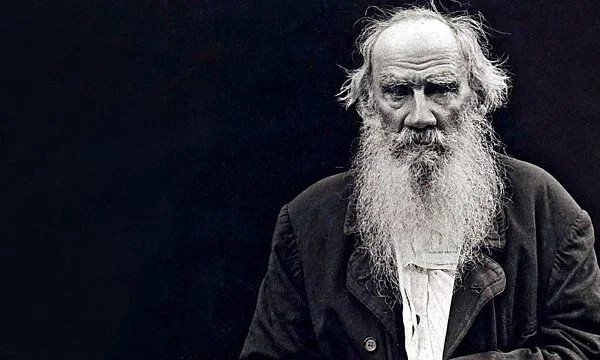
A preacher of morality on the one hand, a passionate fan of women on the other... How could both be united with the most fertile Russian writer in all meanings of the word? Tolstoy is a unique and contradictory character. In his biography, dozens of intrigues and love stories associate with sermons on morality, chastity, and family values. [...]
Tolstoy is a unique and contradictory character. In his biography, dozens of intrigues and love stories associate with sermons on morality, chastity, and family values. Has he tried to redeem his sins with the morality of his actions?
Shame and Fornication
The first was romantic and fleshly for a female he experienced when he was about thirteen years old. This is what he wrote in the diary:” A strong feeling, similar to love, I've only experienced when I was thirteen or fourteen; but [I don't] believe that this was love; because her object was an enshrined maid (true, with a beautiful face), in addition, from thirteen to fifteen years old, is the most turbulent time for a boy (adolescence); I don't know where to create and lust in this period strikes with extraordinary force. ”
In his eighteen ' s, the future writer began keeping journals at the hospital where he went for a Venetian disease. It was a real shock to him and he had to talk his feelings out. However, even the disease did not prevent the boy from looking for fun he often writes about lust and ponder over the subject.
In 1854, when he took part in the Crime War, the Corps of 26 - year - old Tolstoy spent some time in Bucharest. With obvious grief it marks again in the diary, how that “breaks”: “I've had some women, I've been lying, I've been angry, and what was most terrible, in fighting wasn't what I hoped I would be. ”
Lev Tolstoy in 1856
Two years later he went to his chip at Jasnaja Poljana, and, suffering from lemonry, writes that he was sick of everyday lust and felt terribly filthy about it. I decided, wherever it was and whether it would be two months to find a lover”. “Horrible epis, reaching physical illness”, “I wander around the garden. A beautiful peasant, a very sweet beauty. I'm so miserable with this helpless secret desire to vice. Weed would have been better than me. ”
From the writer's journal, Tolstoy may seem to have been an unprecedented feminist, and many scholars have already reached that conclusion, spreading words about a large number of children, supposedly conceived by Tolstoy and peasants (in fact known only to one child). And yet, such promiscuity and going to the public house for a junior-borrower of that time were common. And this is how furiously he reproves himself, how much attention he pays him, how much he experiences a brand entirely unusual.
Sophia Bers in 1862
Fighting the Habit
Tolstoy constantly reexamines his relationship with fleshly love and sets the goal of what a person should become. Thus, in 1855 he writes: “The man generally aims at spiritual life and to achieve spiritual goals needs to be the state in which the pleasure of fleshly desires does not contradict, or conforms to the pursuit of spiritual desires... so here's my new rule except for those I've long put to myself- being operational, reasonable and modest (4)x1>
To drown his habit, Tolstoy decides to deal with something constantly. By 1856 he is actively seeking a wife and wants to end that way of life. But with none of the partners, he couldn't get into relationships. Only after six years, when he was 30 and four years old, he will meet eighteen-year-old Sophia Bers, who he “adjusts”.
Before the wedding he tries the “to clear conscience” and tells his new journals- he wants no secrets among them and vows he won't betray her. The adventures, described there, made Sofie tear very little. However, she agrees to the wedding, and after the crowning of Tolstoy, she immediately took her to Jasnaya Poljana.
Is there happiness in marriage?
Tolstoy not only moral, but in his own way he is devout. It is believed that he was a real tyrant at home, forcing a woman to give birth after 13 children. The cause was simple: he “feared that he would anger Mr.”. It's also known when Sophia had a mountain tumor. They called the doctor, and he asked her husband for permission to operate. But Tolstoy took a long time to make the decision, believing that “you cannot resist the will of Mr.”, even if the woman could die. However, the woman loved her, her commitment was indiscriminate, directed his work (and all the affairs of Jasnaja Poljana), by dealing with children, everyday life, sometimes copied by hand the novel “War and Peace”. Tolstoy believed that the woman's fate was exactly in the family-as it was, for example, Natasa Rosova at “War and Peace”, which found happiness in children and Kitti Sherbatskaja at “Anna Karenna”, which turned him into an amor. But everyone remembers what Tolstoy did with Anna Karenina herself, who crossed through the family and became absorbed in passion, forgetting her son.
The Rejection of Sex
In the 1880 ' s, Tolstoy experienced a perspiration and completely changed his view of the world. For example, he wanted to give up completely private property and copyright for his actions. He also changed his approach to marriage. If the family in its creativity, it was once the highest value, it's already absolutely desensed in marriage- his thinking embodys in “The Sonata of Croicer”.
In his novel he speaks of the vile nature of passion, how man cannot cling to lust, or the destructive force of jealousy. The principal hero, who in his youth has been an embalmed (imoral), as the author himself, says that women are designed only to stimulate men. Out of jealousy he kills his innocent wife.
At this time, Tolstoy, not only is the most famous writer, but a true spiritual leader. Every new work the public eagerly reads, and this work exerts great influence. So “The sonata of Croicer” after publication was banned by carist censorship. Tolstoy scholar Pavel Basinskij writes: “Pass read “Croicer's Sonate”, young people gave up marriages and the continuation of the race (bres), given that the family is at the base of its unclean sexual instinct. ”
The writer's sexual pleasure is now conceived, not as a joy of youth, but as a serious addiction. “Kurvar is not a insult, (I think so and bitch) but a state of concern, curiosity and need for innovation, stemming from the connection for the sake of pleasure, not one with a lot of eyes. As a drunkard, he may refrain, but the drunkard is a drunkard and the fornicator is a fornicator, once he loses his attention, he's going to drop”, he writes in the diary. “I'm kurvar”,- Next he goes.
While working on “Croicer's Sonate” Tolstoy receives brochures from the “The Shakers”, an American religious organization preaching singleness. He writes to his friend and publisher Vladimir Chertkov that they have only reinforced his view of marriage. He already preaches not only morality and the struggle with fornication but generally freedom and singleness.
At the end of his life, Tolstoy decides to break free from marriage and generally leave his wife. Ten days later he will die at a railway station in a nearby region.
Written by Alexander Guzeva (Russia Beyond). /reader.al.