3 hours ago
Besides appointments, it is required by Government “Kurti” to have women's employment priorities
Periskopi(6 years ago)
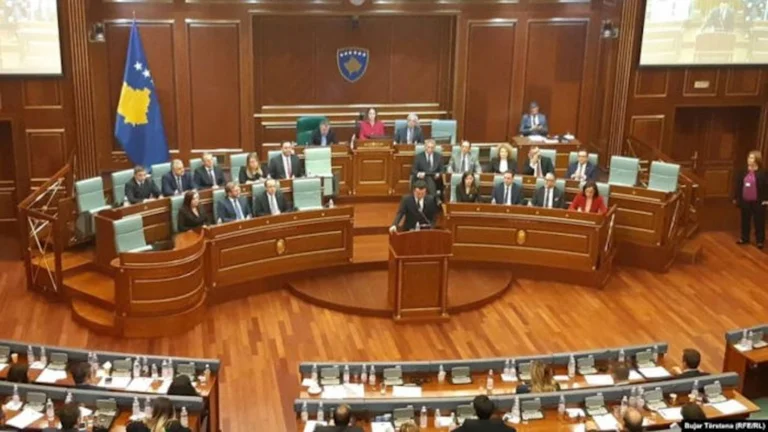
(6 years ago)The new Kosovo government, which was approved early in the week in parliament, is the first in the country's history in which five ministries are led by women. In the Kosovo Parliament, 30 per cent are women MPs, since parties are forced to run this percentage because of the gender quota set with the law [...]
The new Kosovo government, which was approved early in the week in parliament, is the first in the country's history in which five ministries are led by women.
In the Kosovo Parliament, 30 per cent are women MPs, since parties are forced to run this percentage because of the gender quota set by the law on general elections, but in government women's participation depends on the will of political parties.
Life Krasniqi from the Kosovo Democratic Institute told Voice of America that the leadership of five ministries from a total of 15 euros -- from women -- speaks of an emancipation of political parties regarding the role women should play in decision making.
The fact that we see gender equality not as a second-rate issue, but look at it as a priority by seeing that half of society is made up of women and that there are half of the human potential, the most important potential of a state, so when they're directly involved they're an added value and they bring values to the decision-making table that we all benefit, so we can say we're going to have more inclusive policies of<1>, she said.
However, Luljeta Demoli from the Kosovo Centre for Gender Studies says 30 per cent representation is not enough.
“actually for the good news, but for us satisfactory I would say, because we've expected this government to be 50-50 just as the law on gender equality gives, but we can say it's for the first time in Kosovo a 30 percent of women in government, as well as the other good news that we have a female vice president in Kosovo's parliament and also the chief prime minister. We very much hope that this will reflect sufficiently on the agenda of the prime minister and parliament, but most importantly it is to reflect on the government programme”, she says.
Mrs. Demolli says that for the Kurti government, it would have to be women's employment.
“Must urgently make affirmative measures at all levels where it increases women's employment, employing women currently is 13.8 percent, women are employed in sectors where the pay is extremely low, we have only three to four percent of women working on a salary of over 800 euros, so all other working women have a salary that is neither to support themselves nor family”, she says.
Lady Krasniqi, meanwhile, calls for involvement of women even in important processes such as talks with Serbia.
If we look at the world and on the basis of statistics in any country where there have been women's involvement in peacemaking processes, whether in post-conflict agreements, those agreements have been more stable, have lasted longer and have managed to be better implemented. To reach a peace agreement with Serbia, it is certain that women will be involved as part of the team, which will become what Prime Minister Kurti has said would form a team”, she says.
In the elections, which were held on October 6th, women won 38 out of the parliament's 120 seats, and most of them secured seats through winning votes without needing gender quotas.
Kosovo's gender equality field recognisers consistently call for 30 per cent gender quotas to be replaced by the gender equality law guaranteeing participation of 50 to 50.
In the past government, only two ministries have been led by women.