5 minutes ago
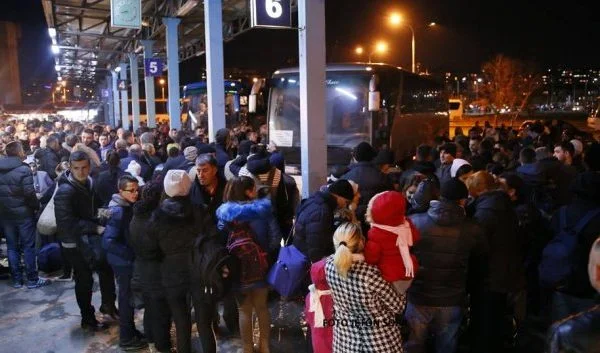
Half of Kosovo citizens willing to leave the country, those are the reasons
Periskopi(5 years ago)
(5 years ago)Exactly 48.4 percent of Kosovo's citizens are willing to leave the country, given a survey of the Group for Jury and Political Studies. Based on survey data with 1065 expanding citizens at the country level, conducted this year, G LPS has released disturbing data on readiness for [...]
Based on survey data with 1065 expanding citizens at the country level, conducted this year, G The LPS has released disturbing data about willingness to migrate. The report makes the country even worse than it did in 2015 when it was a wave of illegal citizens' departure. In this year's survey, citizens have been asked about the effect of the pandemic to see if the effects of pandemic have affected citizens' willingness to migrate, remittances and employment.
The survey's “Survey findings show a disturbing result of willingness to migrate as data represent the highest rate reported by all wave of surveys conducted, even higher than during the high migration wave in 2015. More precisely, 48.4 of respondents are willing to migrate. The willingness to migrate increased by 23% and 30% in 2020, compared to 2015 and 2019, respectively, says the GLPS report, where it becomes known that now the high willingness to migrate does not translate into illegal migration.
Eurostat statistics show that the number of Kosovars' asylum seekers dropped significantly to 2019, compared to four years ago, from 73 thousand applications to 2300.
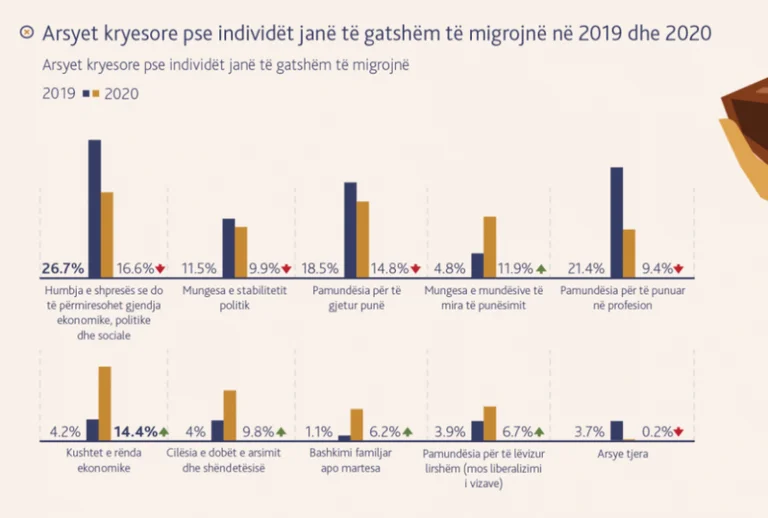
The results of the survey have shown that more than 60 percent of citizens who want to leave would consider permanent migration. The results show that lack of hope for the economic, political, and social situation are the main reasons for the desire for escape.
Most respondents who are willing to migrate blame the government and parties, portraying the failure of institutions to meet citizens' expectations.
“Unlike previous polls, the three main reasons that would convince individuals not to migrate are the best employment opportunities and the most dignified salaries, political stability and improvement of the economic situation. The data suggests that willingness to migrate is the highest among families who report to have accepted remittances”, said the clarification of reasons people can convince this year not to leave Kosovo.
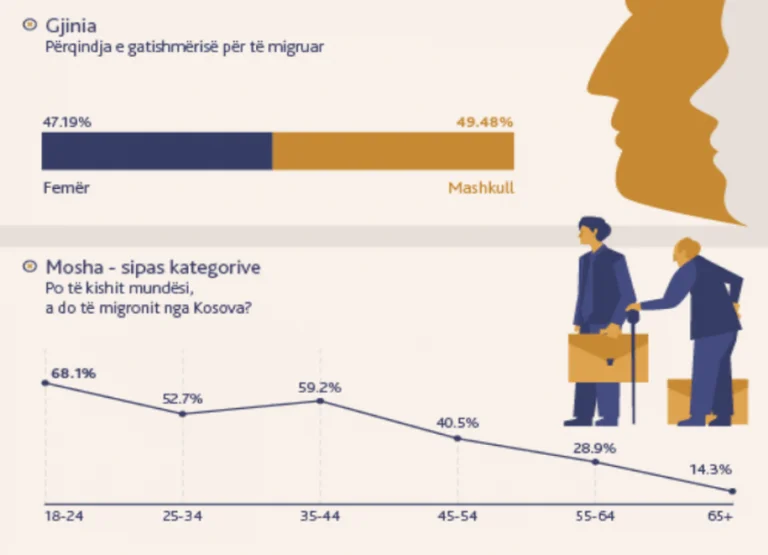
The willingness to leave the country proves to be higher in men than in women whose gender has increased readiness for migration over the years. Data shows that younger ages are ready to leave.
The highest readiness for migration is in Pristina at 56 per cent, according to GLPS.
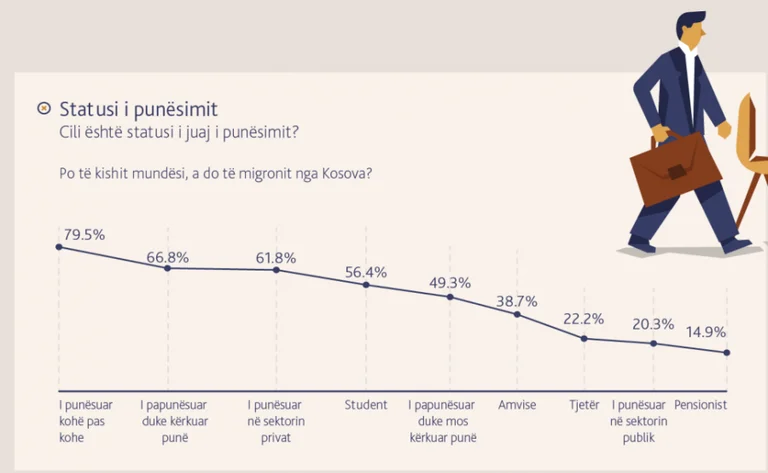
Seasonal workers (78.8%), private sector (66.8%) and students (54.5) are the categories that have the highest percentage of migration readiness.
As for education, the willingness to migrate is the highest among those with several years of middle education, those with the achievement of middle education and students.
The lower-income individuals, between 150 and 300 euros, are the highest ready to leave. About 43.7 percent of citizens with personal incomes of 900 to 1,200 euros are ready for migration, mainly blaming politics.
The respondents claim that the pandemic has influenced the frequency of remittances. According to the data, the diaspora by October has sent about 800m euros in 2020.